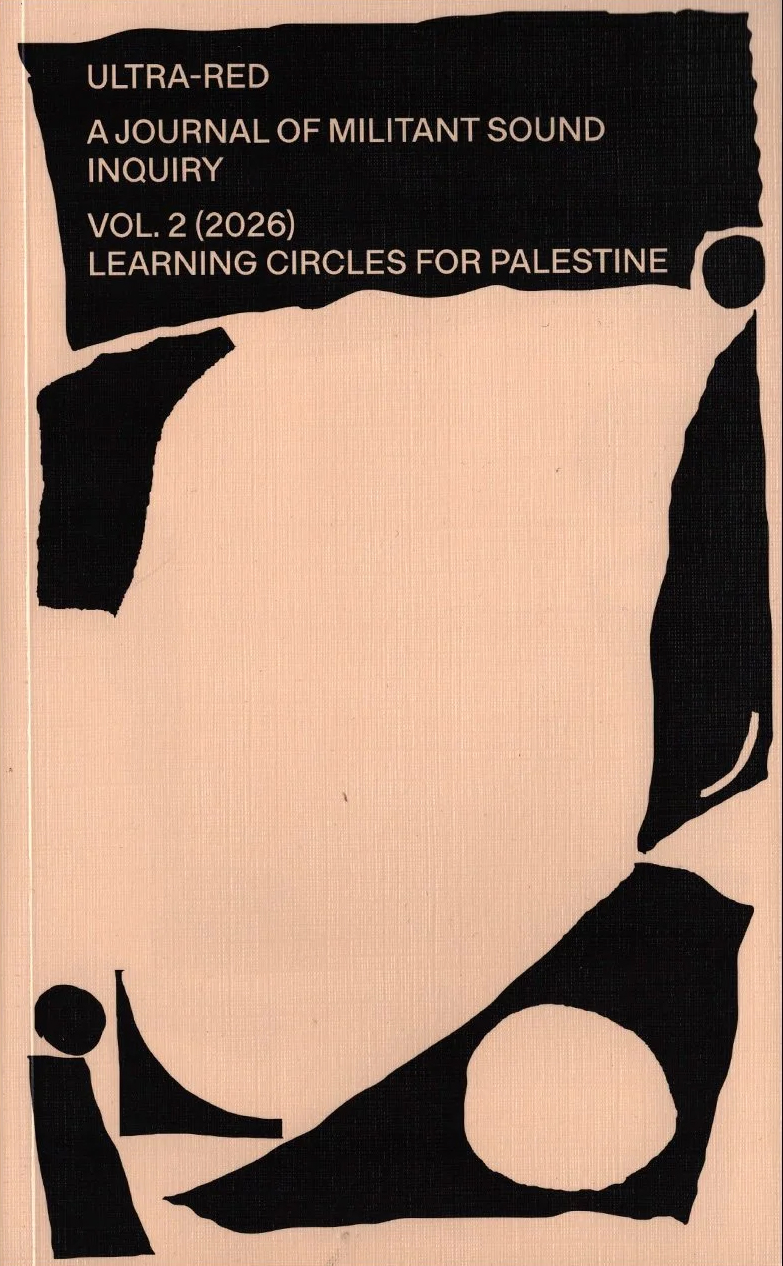
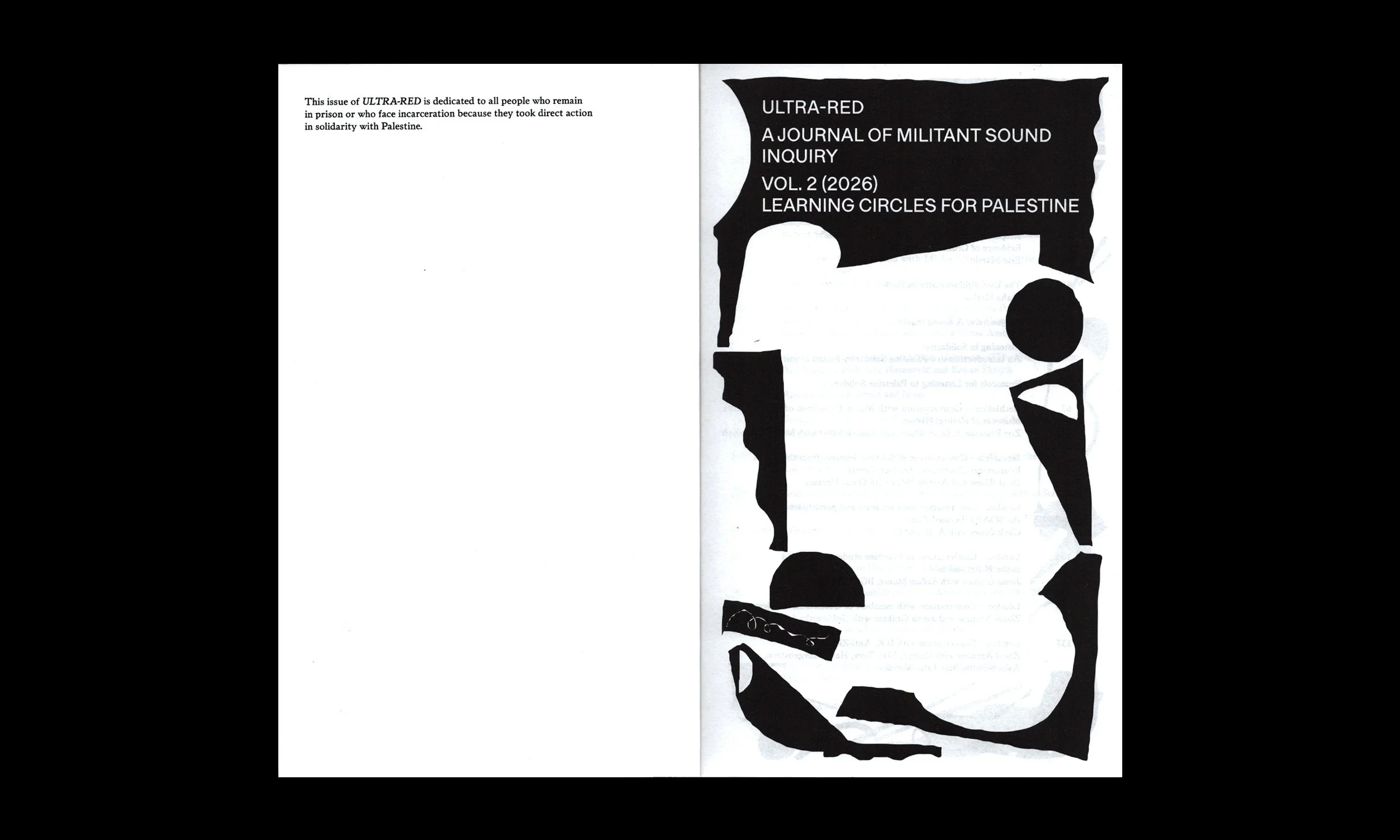
Le deuxième volume du journal militant, anticapitaliste et antiraciste du collectif international d'art sonore et d'éducation populaire Ulta-red, explorant les pratiques d'écoute fondées sur le mouvement, est consacré à la Palestine.
Contributors reflect on the current Palestine conjuncture several years after solidarity actions spread across university campuses around the world. It is now clear that the crackdown on student activism was a pretext for the dismantling or capturing of public institutions. The move against dissent also provided common ground for neofascists and liberals to enforce a consensus with imperialism.
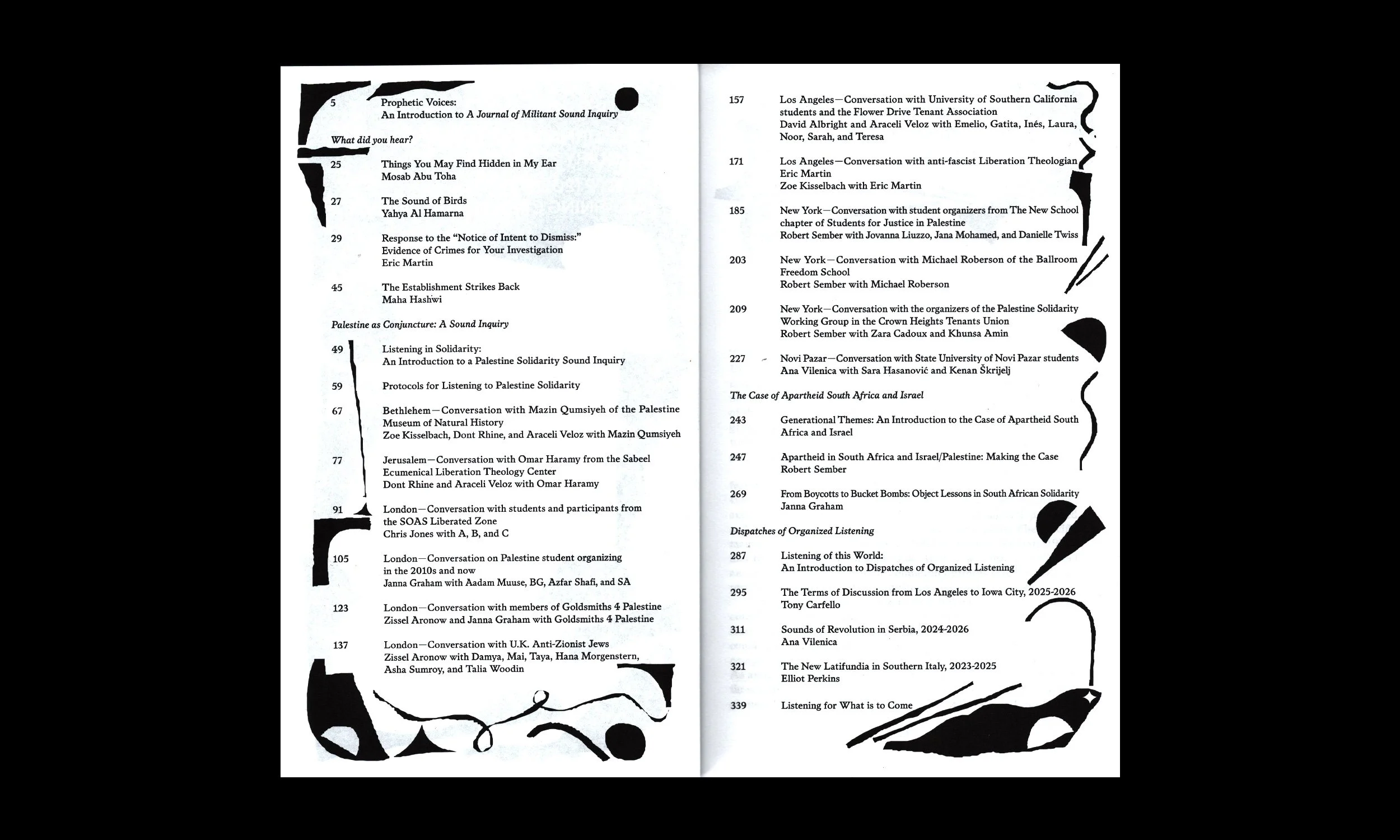
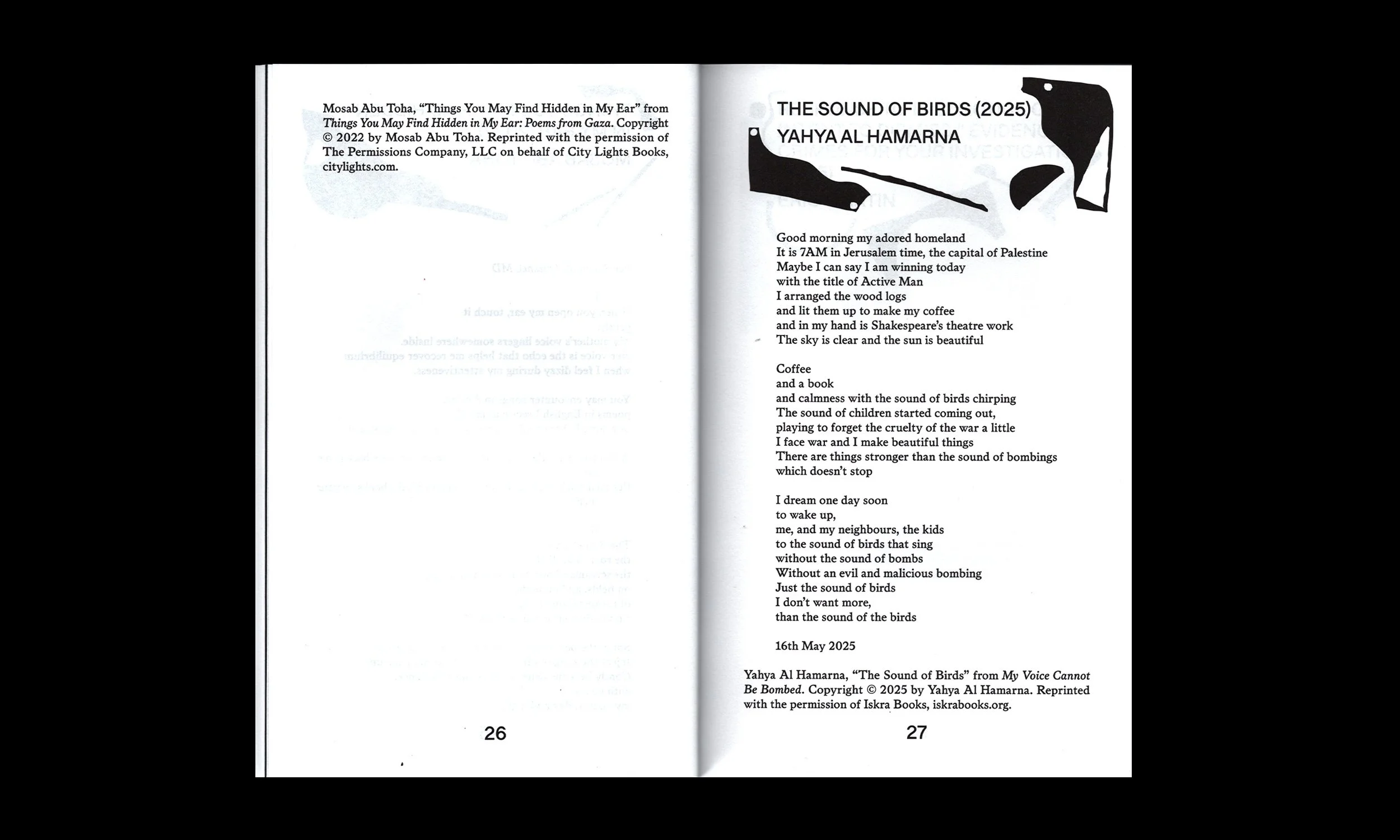
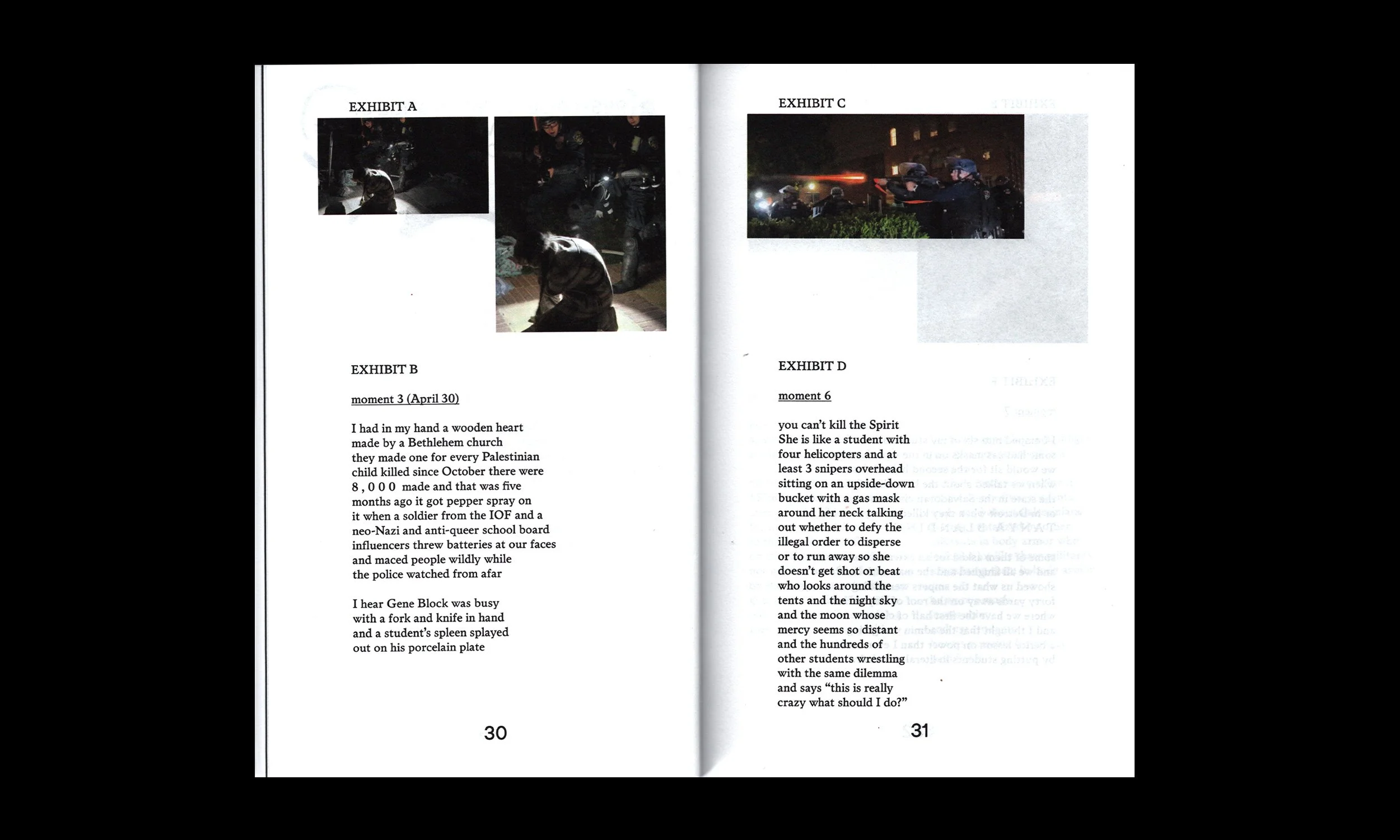
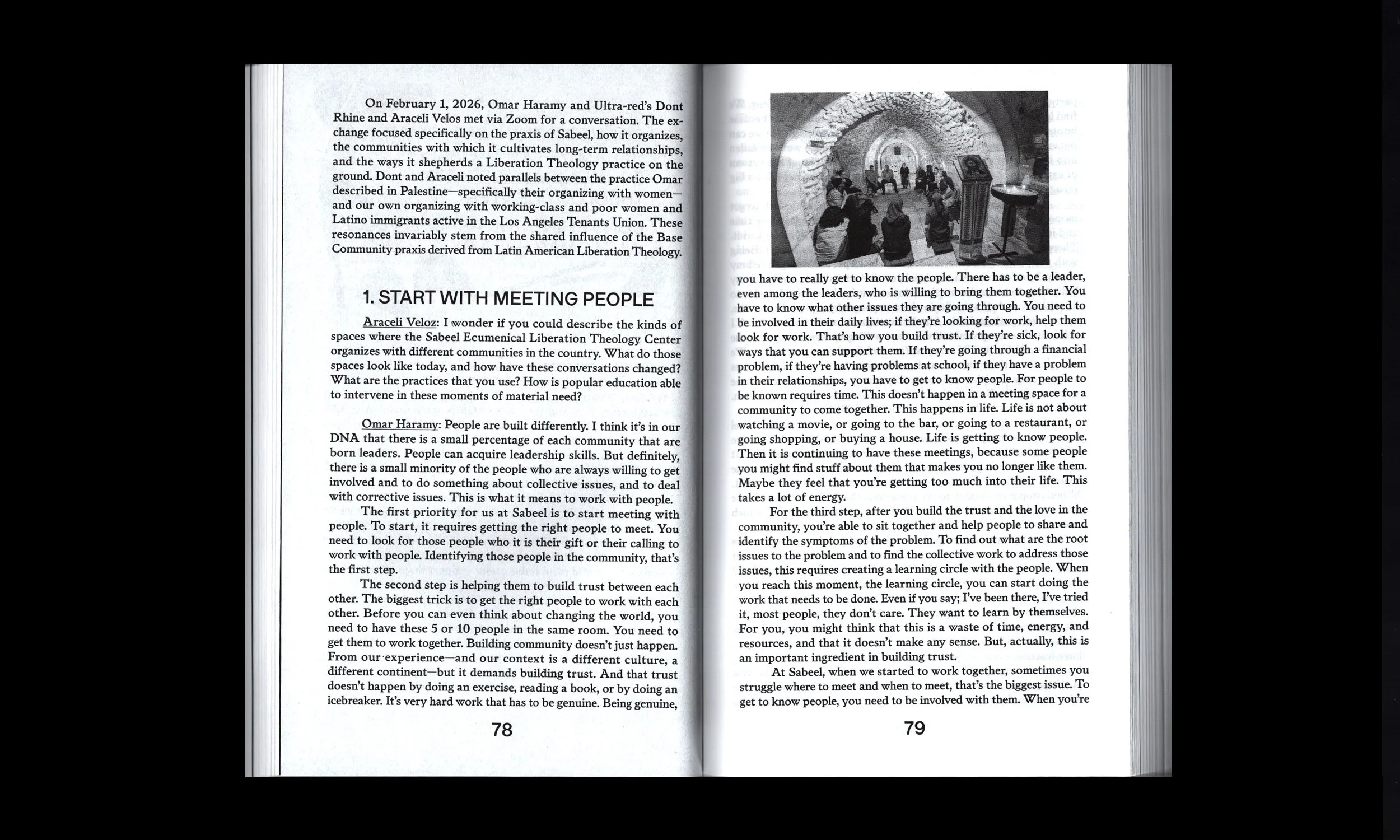
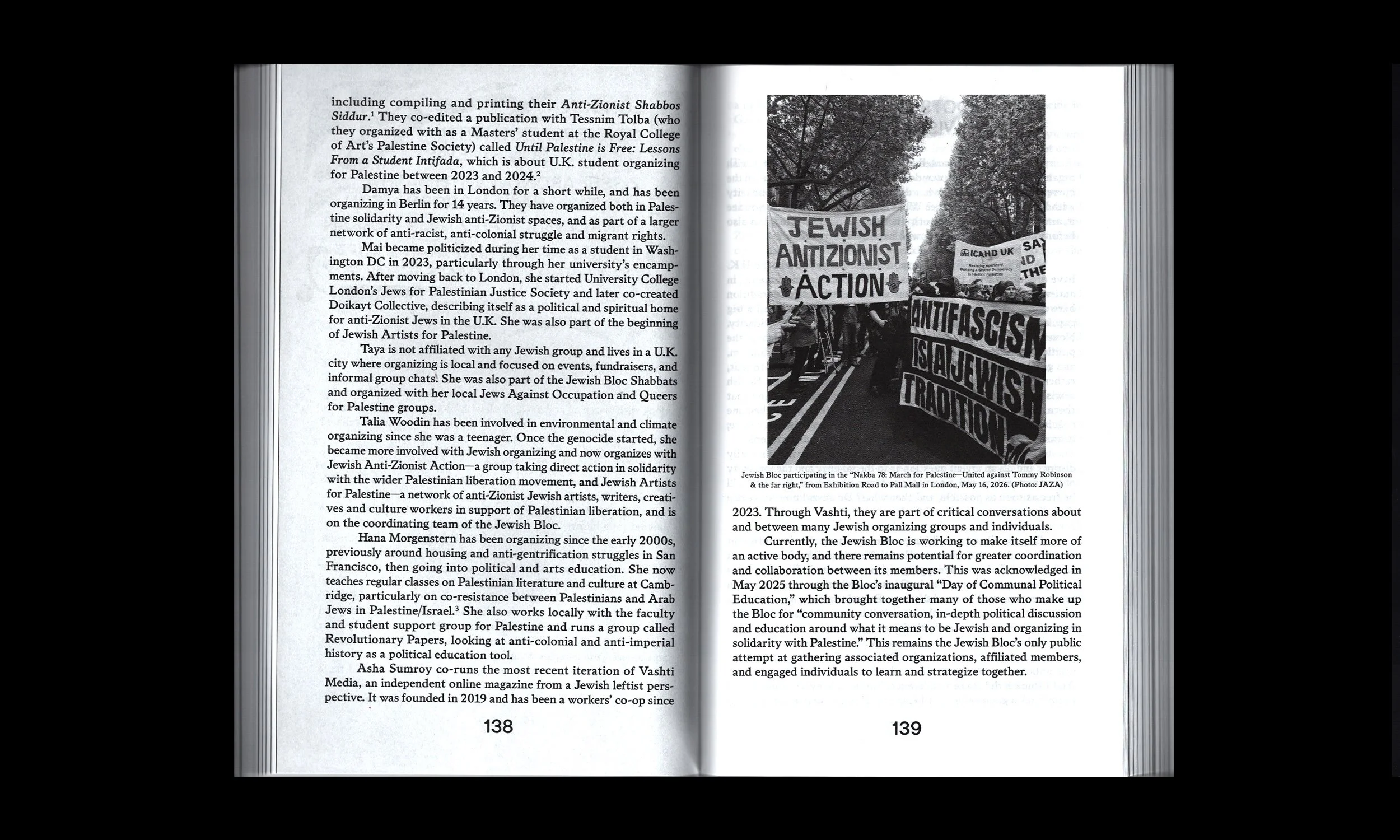
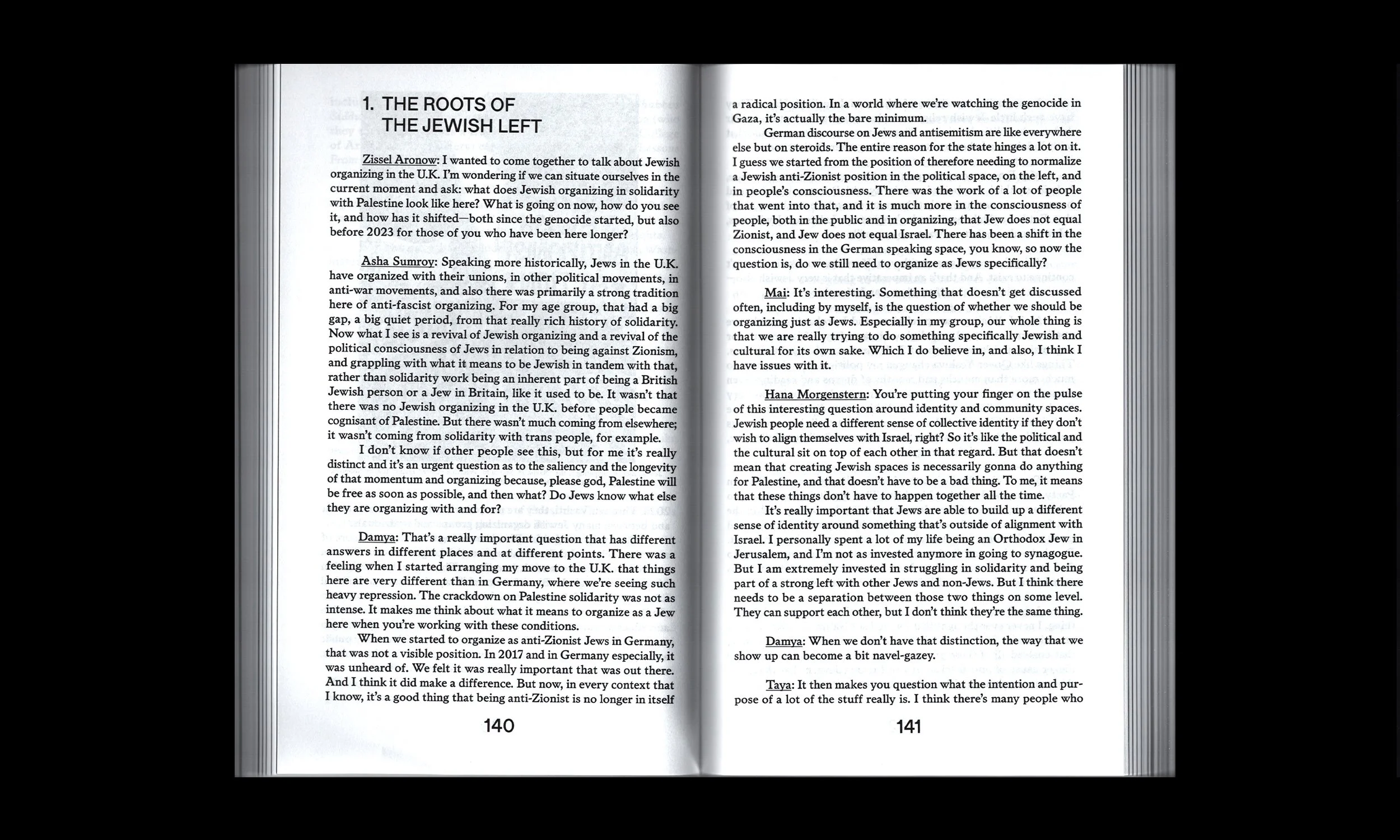
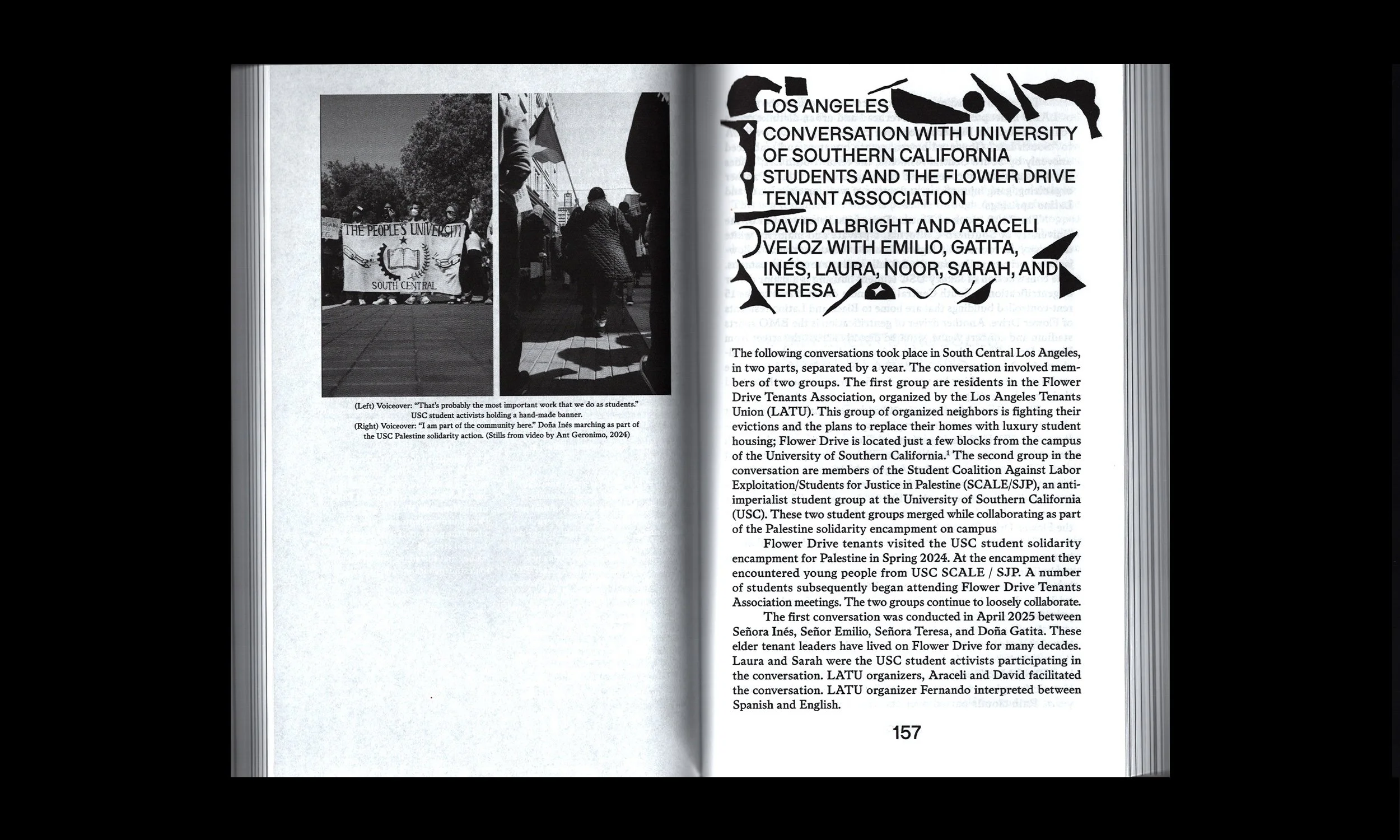
The second volume ofUltra-red begins by pairing poems from Palestine with poems detailing the attacks on pro-Palestine students on university campuses. The journal then moves into its main feature: a dozen conversations with student and community groups. Each conversation is framed as a learning circle in which reflections shape critical questions and mark contradictions that speakers (and journal readers) continue to consider in the present moment. These learning circles come to the journal largely from contexts where Ultra-red members are involved in anti-capitalist and anti-racist base-building in Los Angeles, New York, London and in Novi Pazar. Additionally, we hear reflections on the Palestine conjuncture from the Bethlemen-based scientist and public-educator, Mazin Qumsiyeh as well as Palestinian Liberation Theologian and popular-educator, Omar Haramy. Through a list of listening protocols, the journal also offers a guide for readers to pursue their own learning circle for Palestine.
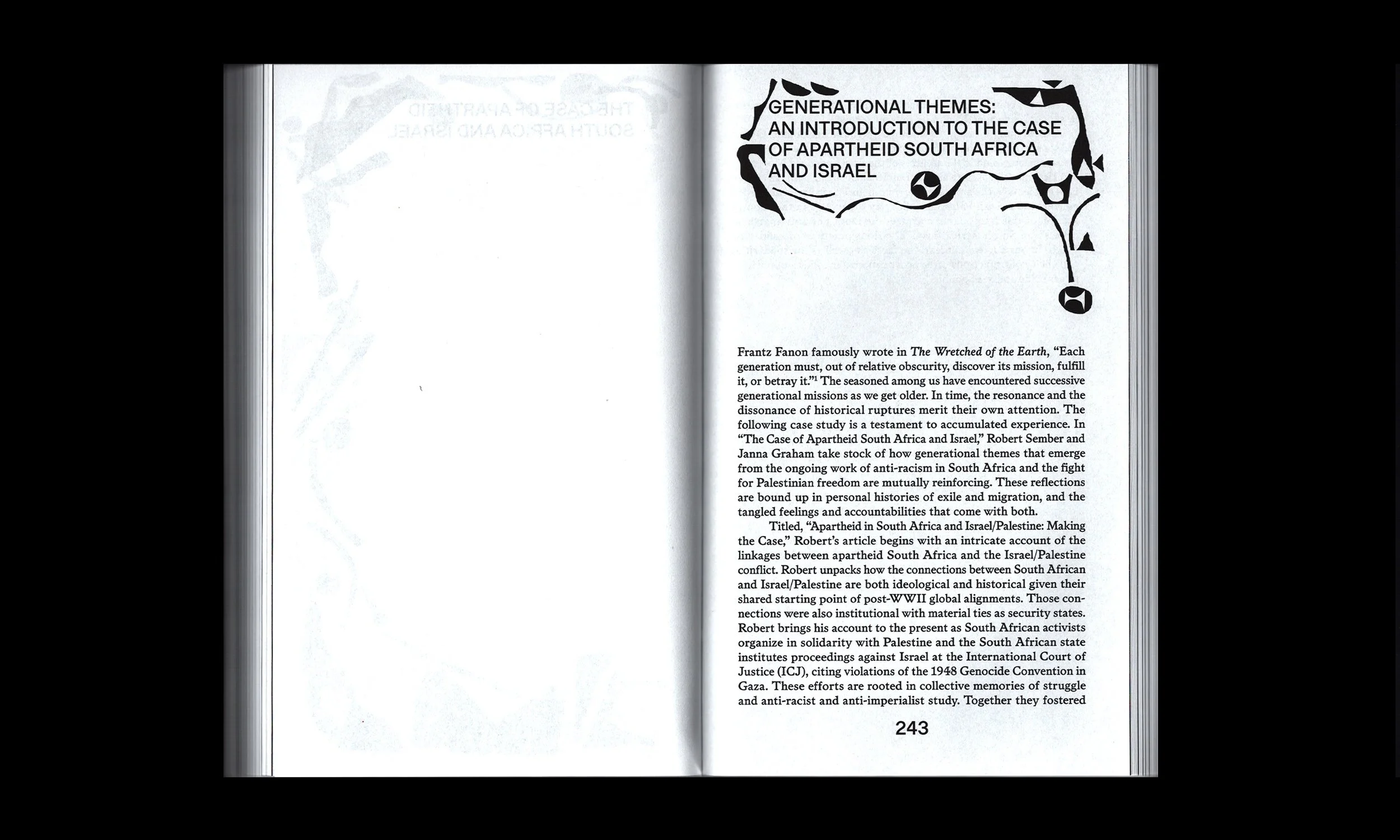
The journal continues with a special section titled, "The Case of Apartheid South Africa and Israel." This section combines historical and personal reflections on the anti-apartheid struggle in South Africa with a photo essay on anti-apartheid solidarity in the U.K. from the 1950s to the 1980s. Both articles underscore the historical links between South Africa's apartheid government and the state of Israel and the alliances established between anti-apartheid and Palestinian liberation movements.
The journal concludes with new dispatches from ongoing militant investigations. We read about Southern Italy where activists attempt to build a movement across multiple struggles from anti-extractivism to farm workers. A dispatch from the direct democracy movement in Serbia. And, an oppositional research detailing the role of neofascist operatives in pursuing hegemony in the U.S. by targeting poor people's movements and capturing university infrastructure and curriculum.
This volume of Ultra-red is edited by Dont Rhine and Robert Sember in collaboration with Zissel Aronow, Janna Graham, Chris Jones, Zoe Kisselbach, Elliot Perkins, and Araceli Veloz, and it includes numerous contributors.
Ultra-red est un collectif international d'art sonore et d'éducation populaire composé de douze membres basés à Los Angeles, New York, Berlin et dans divers lieux au Royaume-Uni. Fondé en 1994 comme un duo techno queer par deux militants de la lutte contre le sida, Ultra-red s'est élargi au fil des ans pour inclure des artistes, des chercheurs et des personnalités issues de différents mouvements sociaux, notamment les luttes migratoires, la lutte contre le racisme, contre la gentrification, le développement communautaire participatif et les politiques relatives au sida. Depuis le début des années 2000, le collectif expérimente une recherche sonore militante synthétisant diverses formes d'écoute organisée dans les mouvements de gauche et les mouvements sociaux.