Un livre d'art d'Adama Delphine Fawundu qui célèbre la vie à travers les figures féminines – grands-mères, mères, filles, artistes, aidantes, conteuses et cuisinières – qui ont façonné l'histoire culturelle et personnelle de l'artiste.
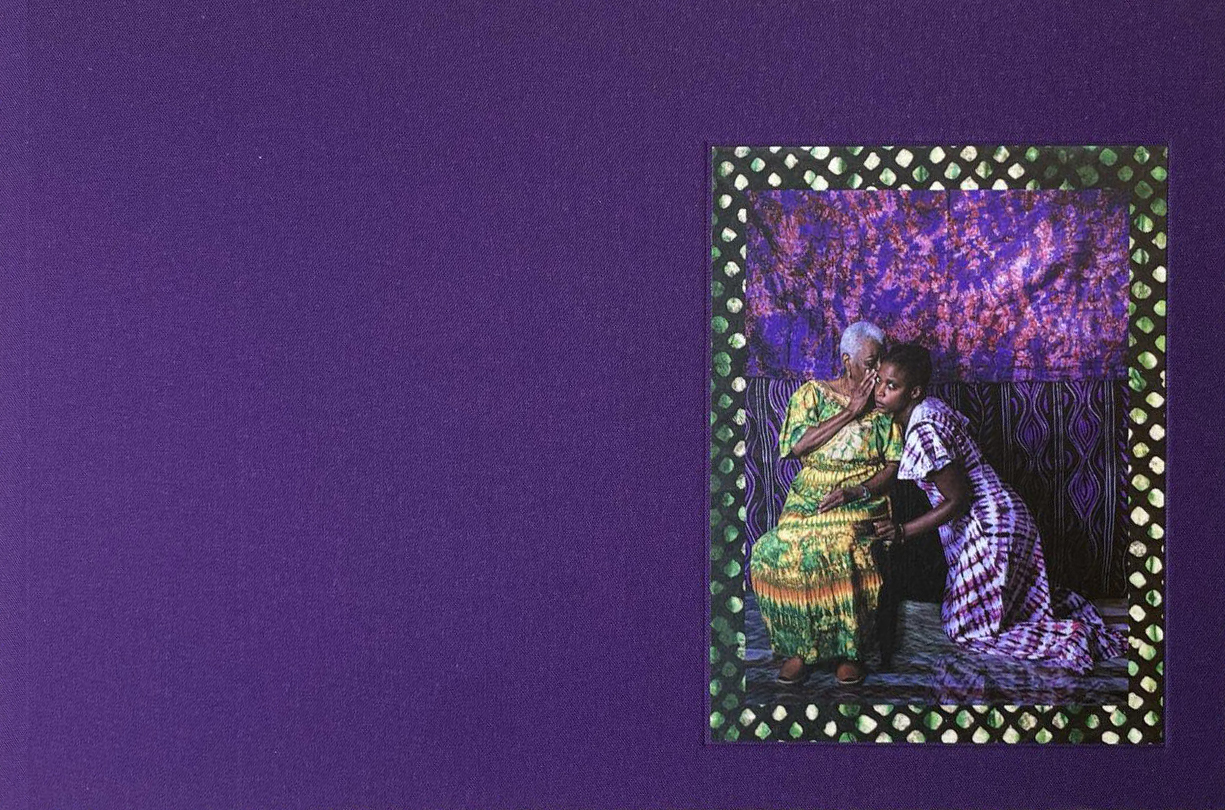
Building on the notion of "praise,"' Adama Delphine Fawundu frames this book as a celebration of life. She honors the stories whispered to her by her mother; she adorns her body in her grandmother's textile work; she elevates the memory of various named and unnamed Black women of the diaspora and documents the iconic small Civil War era styled white wooded praise house on a patch of land off the side of a road in South Carolina not far from Beaufort creating an intimate body of work of color photography of an interconnected history.
This book about female figures—grandmothers, mothers, daughters, artists, caregivers, storytellers, and cooks—explores a range of emotions that consume us about family life and history. It is both an art book and a memoir. Viewing it brings us face to face with known and unknown cultures and introduces us to various art practices shared, taught, and learned through the African diasporic traditions. Fawundu connects to the self through history, joy, and beauty and offers the reader ways to navigate fear based on migration and loss. It is a gift, too, as it allows us to imagine alongside the artist.
The energy of this book is intertwined with spiritual connections to cloth, land, and the ocean. Fawundu uses various materials, from found objects to family mementoes, to evoke experiences from a history marked by slavery and colonization, as well as uplifting stories of love and family. The book contains a wide range of photographic moments, from self-portraits to lush scenes and architectural structures, all aimed at offering a more nuanced portrayal of how the Black female body has been un/seen in the history of photography. Fawundu brings critical insights into the conditions of overlooked stories of women in history and the Black diasporic archive. She explores multiple aspects of subjectivity, pleasure, violence, and identity formation throughout her oeuvre, seeking connections through the lens.
Fawundu's work questions and challenges ways to explore diverse yet connecting stories from South Carolina to Argentina to Sierra Leone. She examines the complexity of the representation of women in visual culture by focusing the camera on her own body as representing the past, present, and future. Thus, Fawundu transforms old narratives and engages new stories about memory and the archive in contemporary art. Fragmented personal memories and swatches of fabric, with their sense of nostalgia, are integrated throughout this book as the photographer tackles migration by posing in vintage gowns and batik dresses from her mother and grandmother's trunks, wearing shells, grass, African Masks, ferns, and carrying flowers, and walking in clear and murky waters.
Adama Delphine Fawundu (née en 1971) est une artiste basée à Brooklyn, New York, d'origine Mende, Bubi et Krim. À travers la photographie, la vidéo, des sculptures textiles et la performance, elle crée des entités incarnées inspirées des systèmes de savoirs autochtones et des traditions spirituelles à travers le temps et l'espace. Elle est maître de conférences en arts visuels à l'université Columbia.