Une série de réflexions sur la recherche et le travail de terrain qui recontextualisent les conditions de l'exil, du statut de réfugié, de la migration et de la construction de communautés en marge de la société.
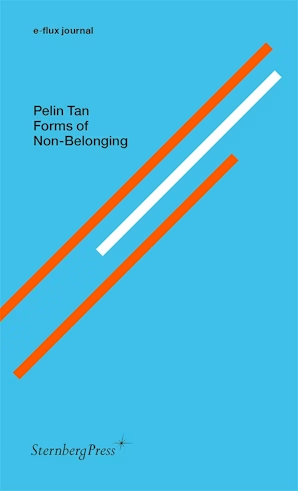
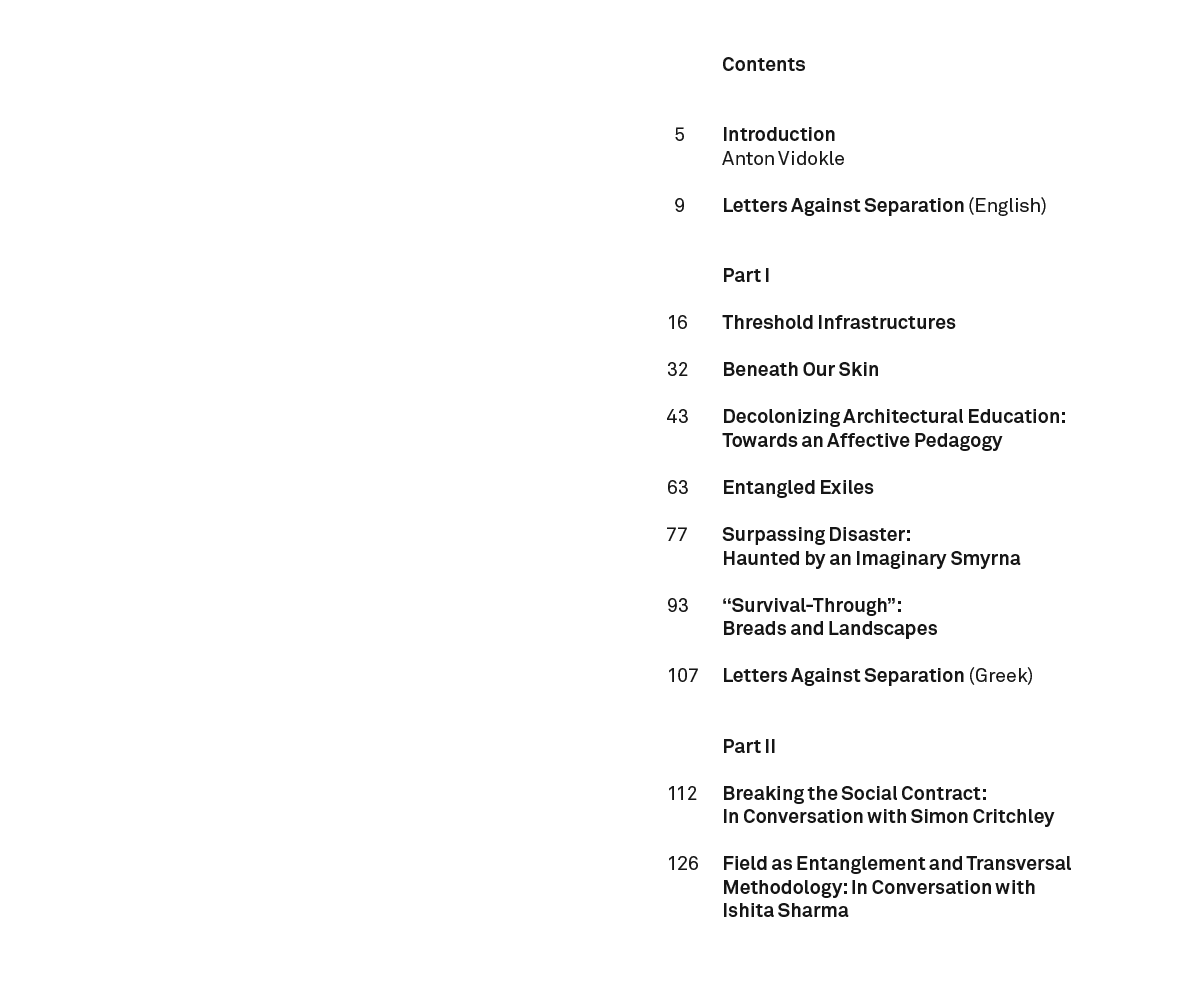
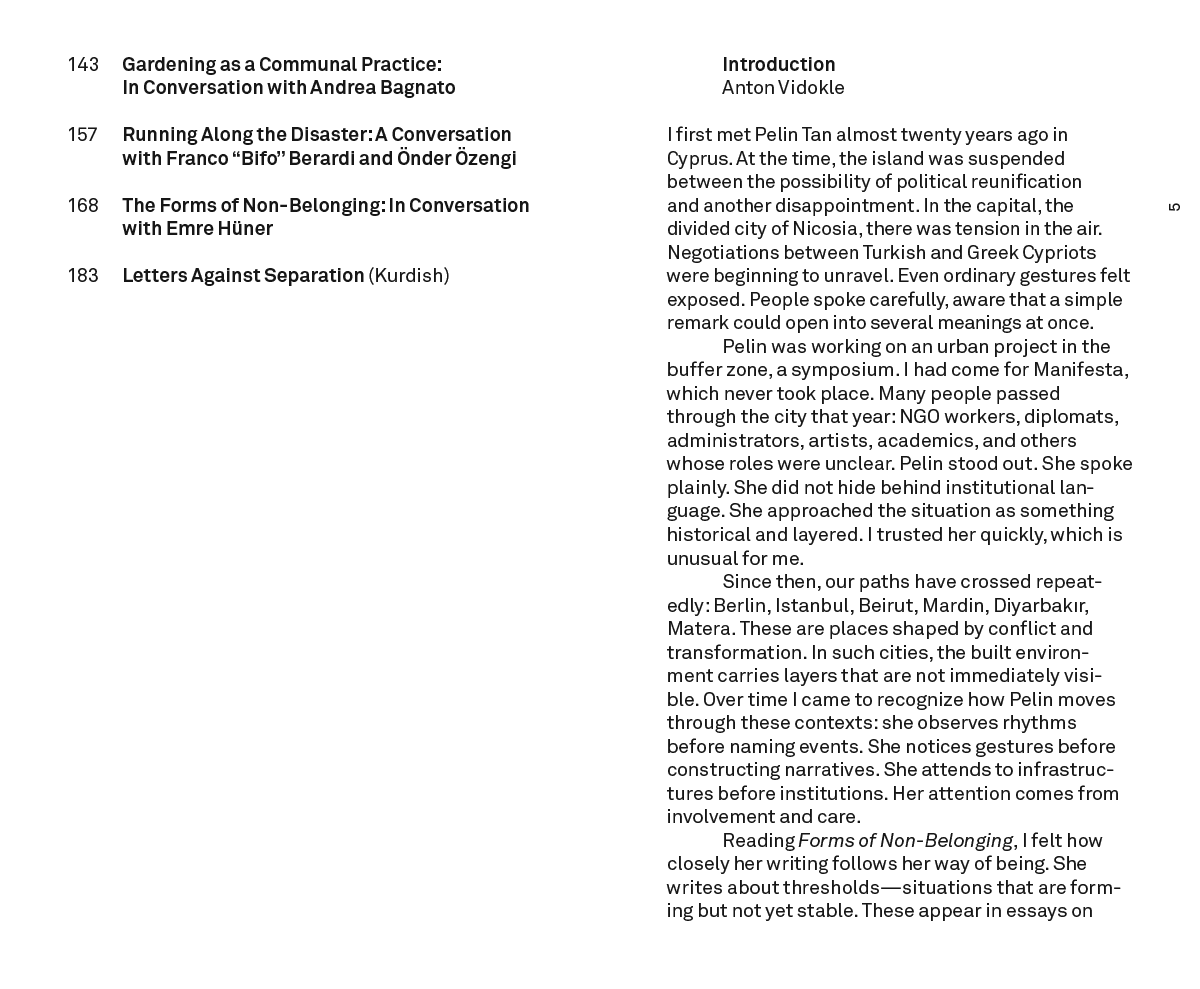
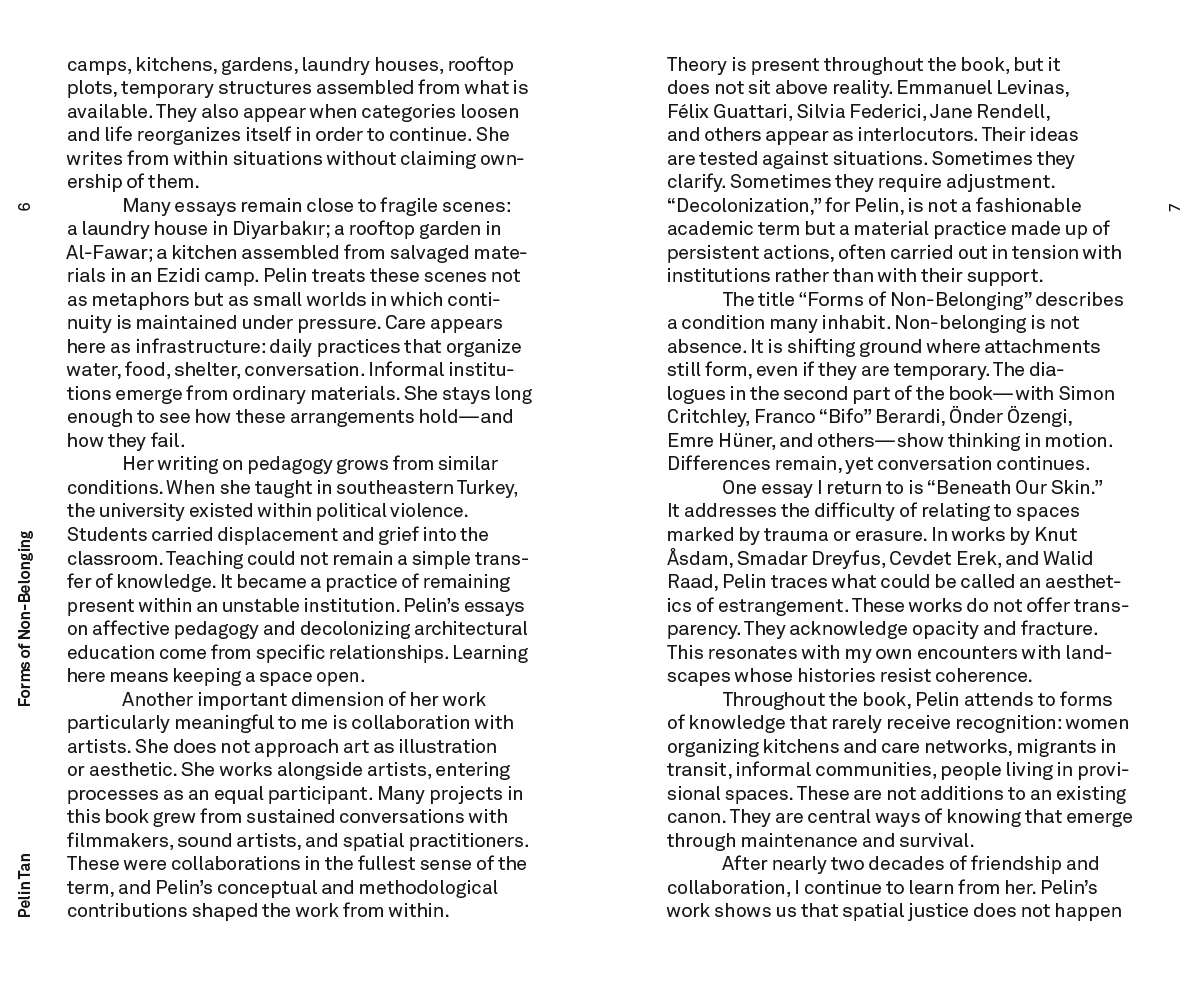
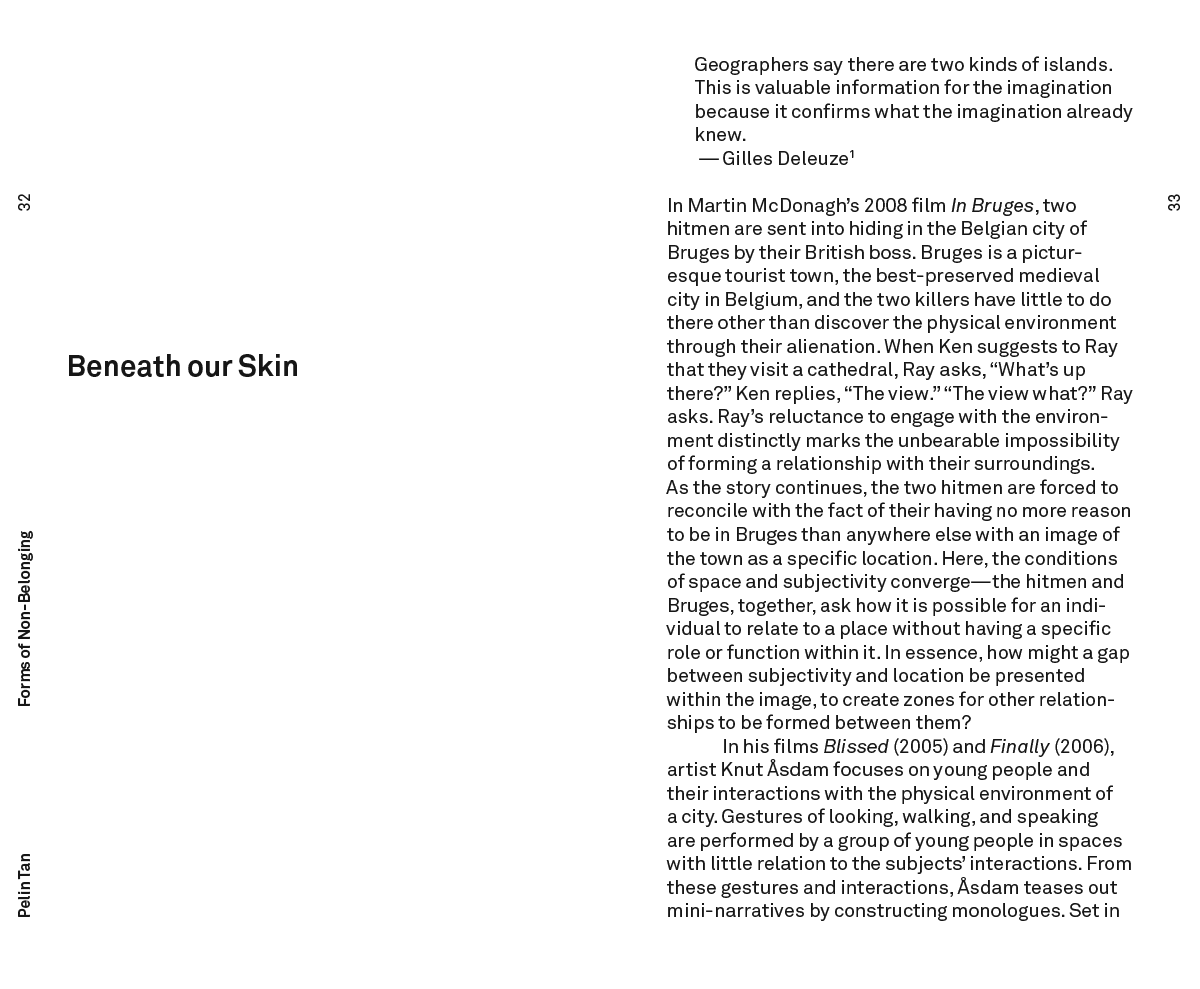
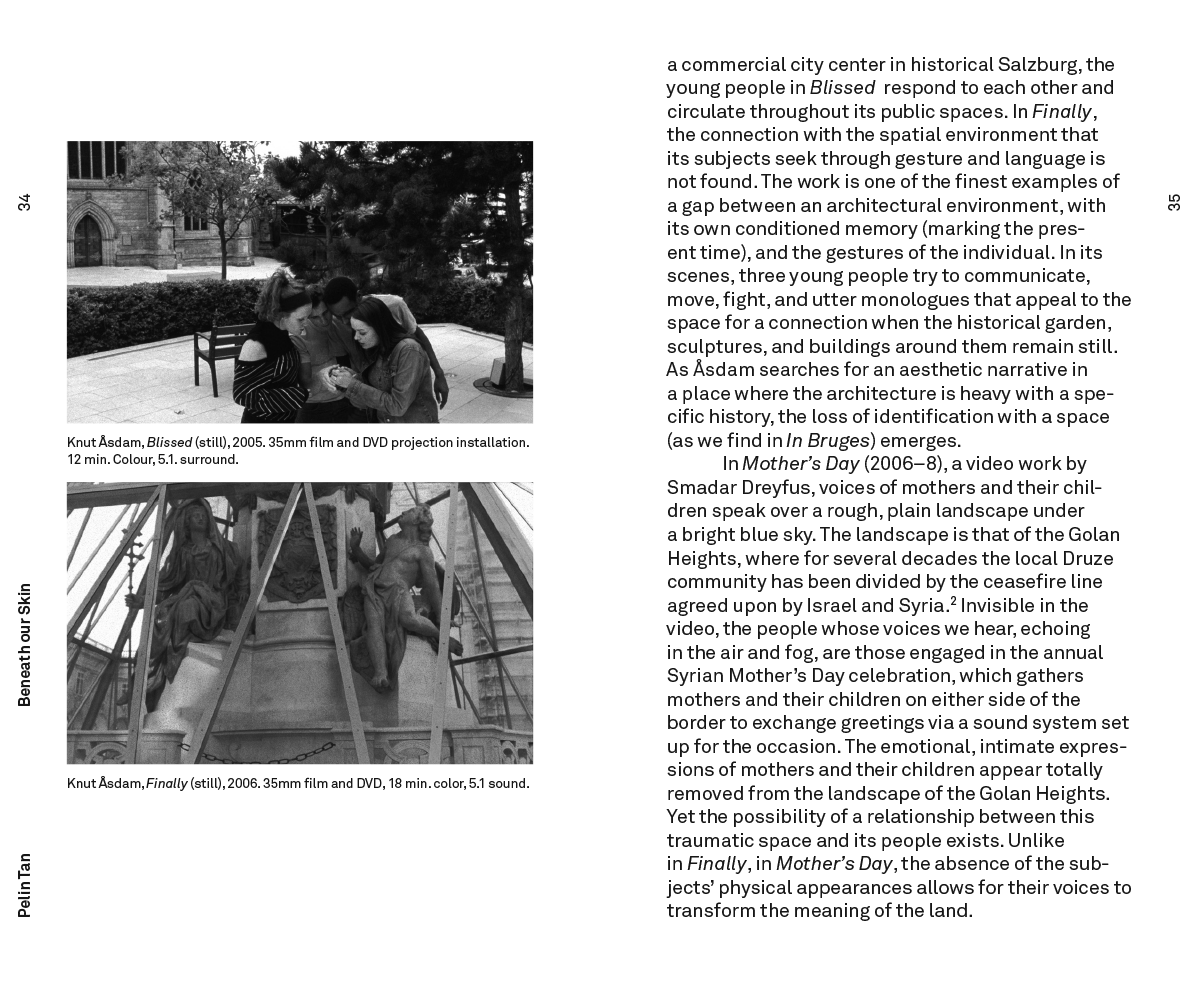
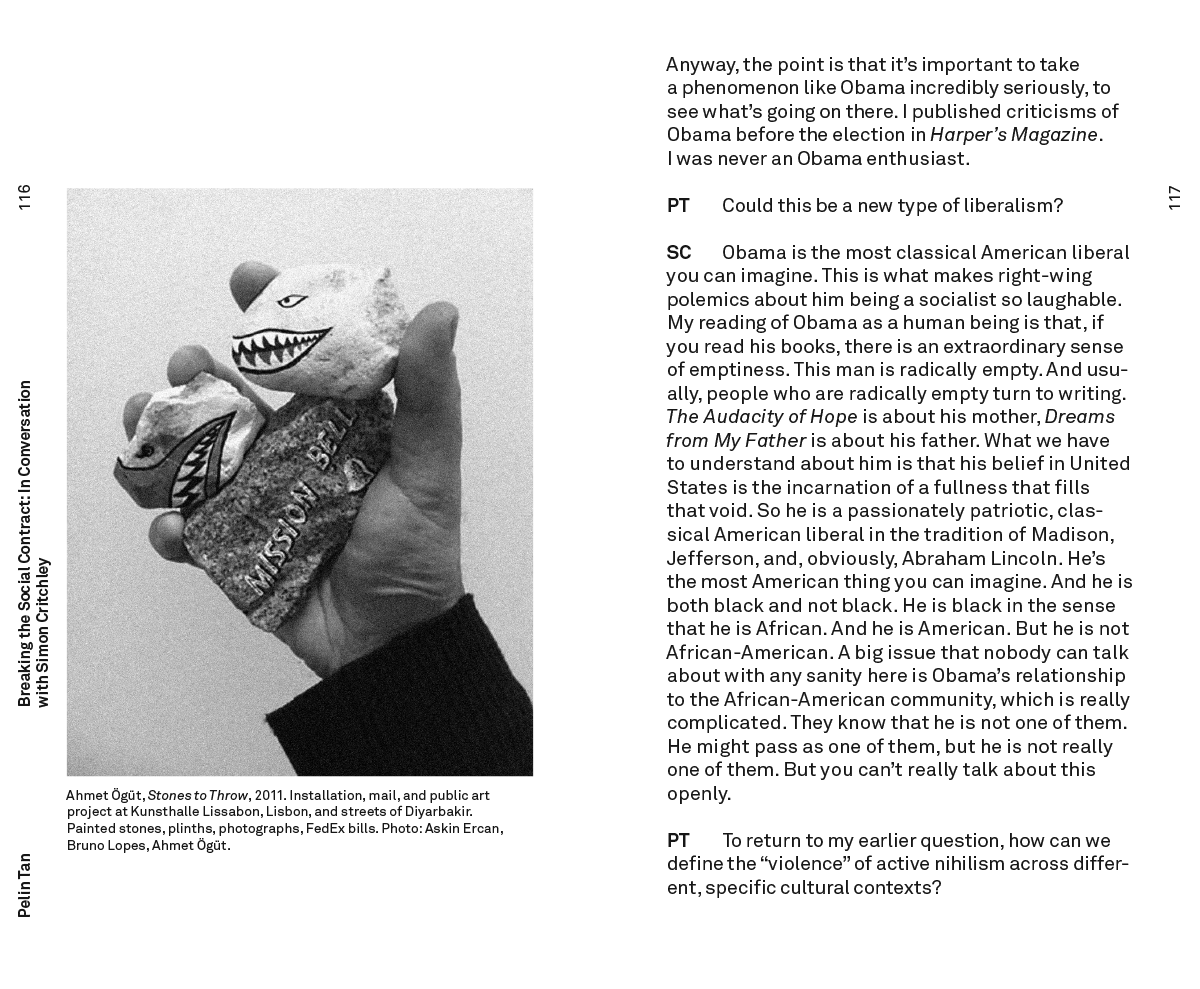
According to Pelin Tan, there are forms of belonging that do not quite belong. In this collection of essays drawn from twenty years of research and fieldwork, alongside conversations with artists and practitioners, she locates the conditions of contemporary exile, refugeehood, migration, and community-building proximally to the production of space, forms of structural violence, shifting landscapes, and the desecration of the environment. She also engages methodological questions integral to critical practice, including radical pedagogy, forms of commoning, non-hegemonic institutional practices, and the reimagination of survival.
How can art reveal and embody the voice contained within apocalyptic landscapes? How can the effects of large-scale disasters be memorialized through artistic and architectural methodologies? In addressing such questions, this book aims to advance collective critical thinking by inviting the reader to engage with particular artifacts and architectures as traces of an apocalyptic era, territories as strata of violence, and exile as a form of semi-voluntary collectivity.
Pelin Tan est sociologue et historienne de l'art. Elle vit entre Tire et Mardin (Turquie). Elle est professeure au département cinéma de la faculté des beaux-arts de l'université Batman, en Turquie.