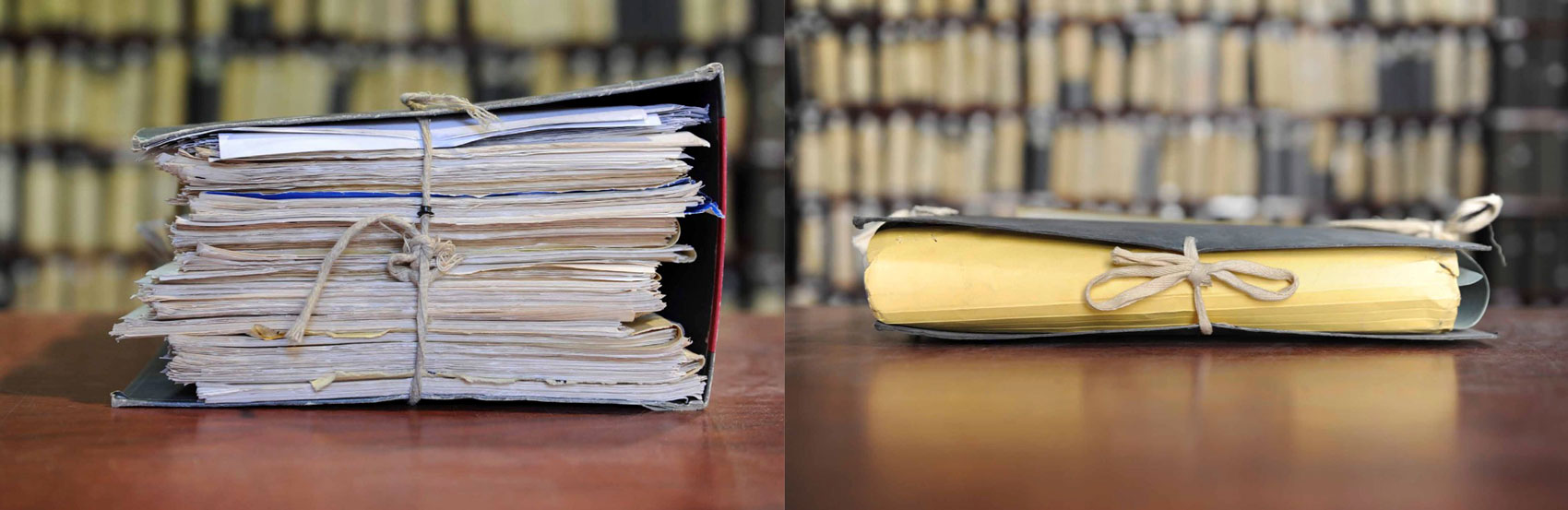
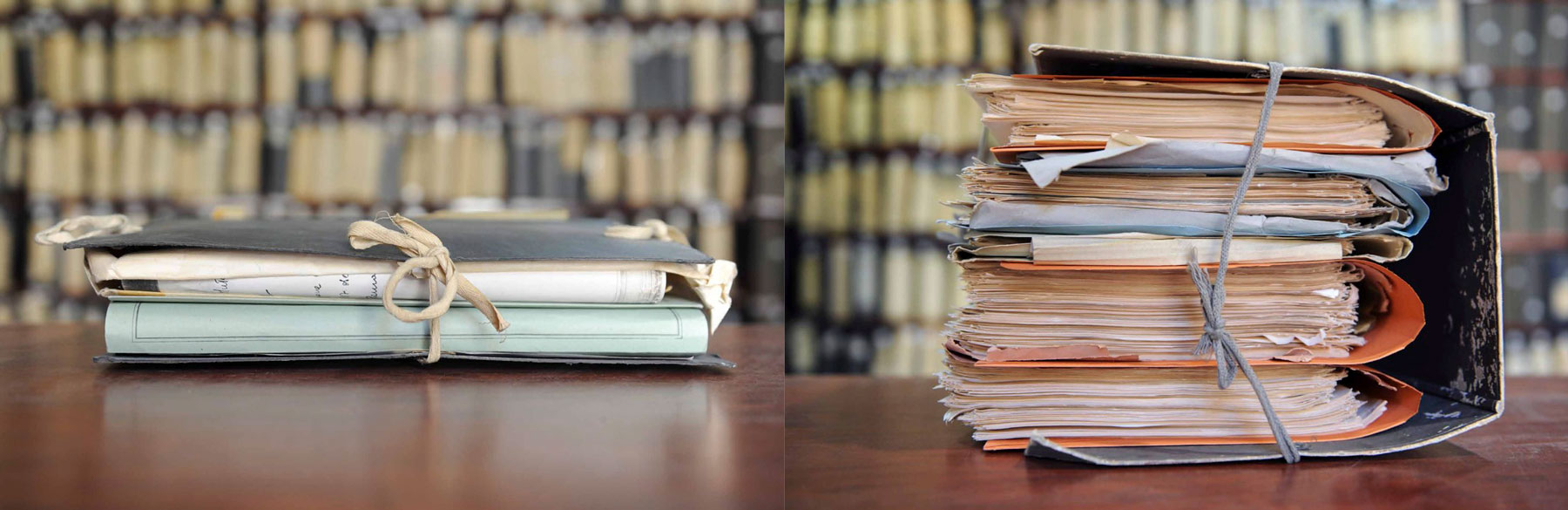
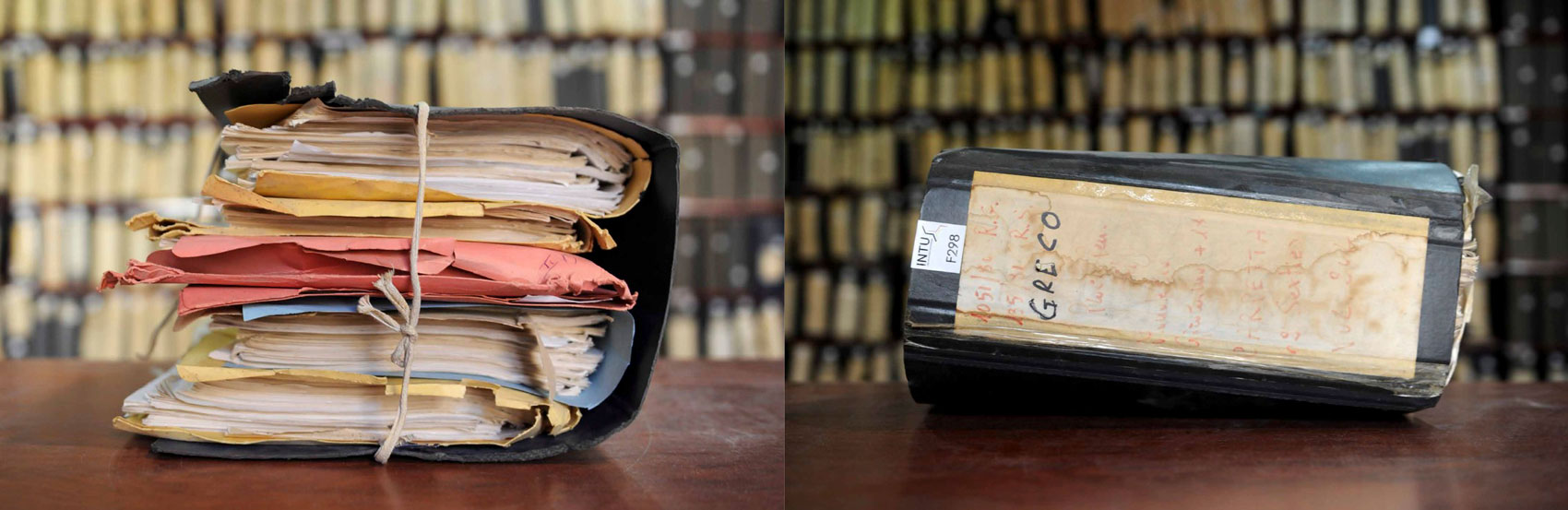
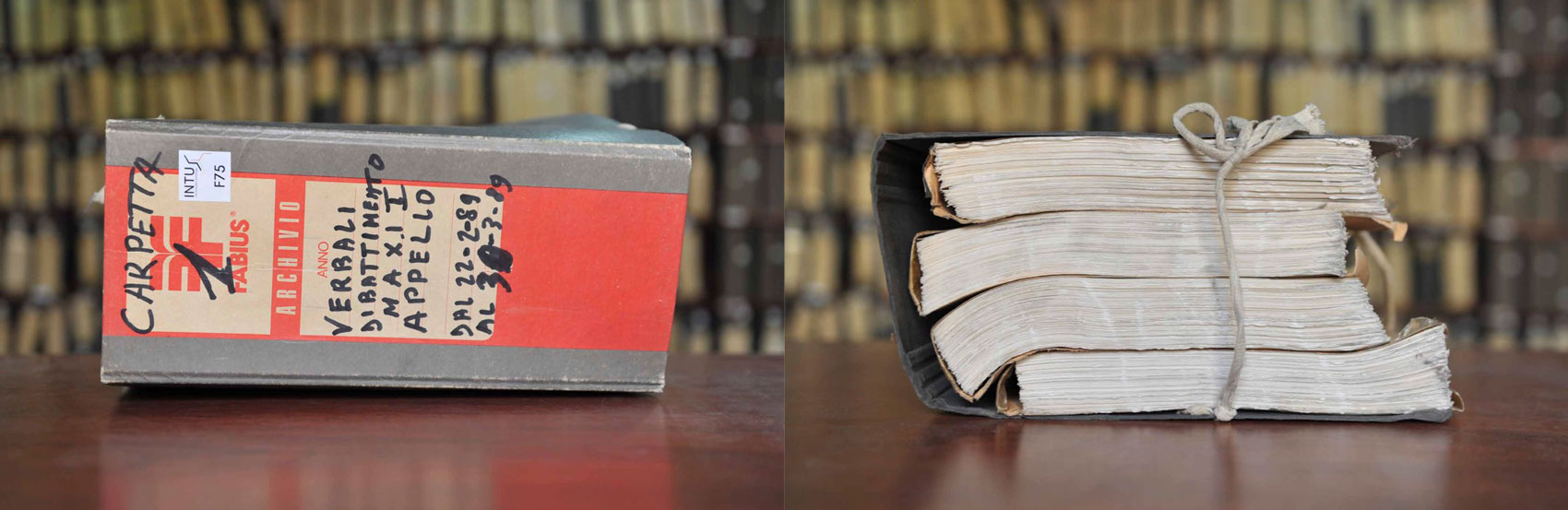
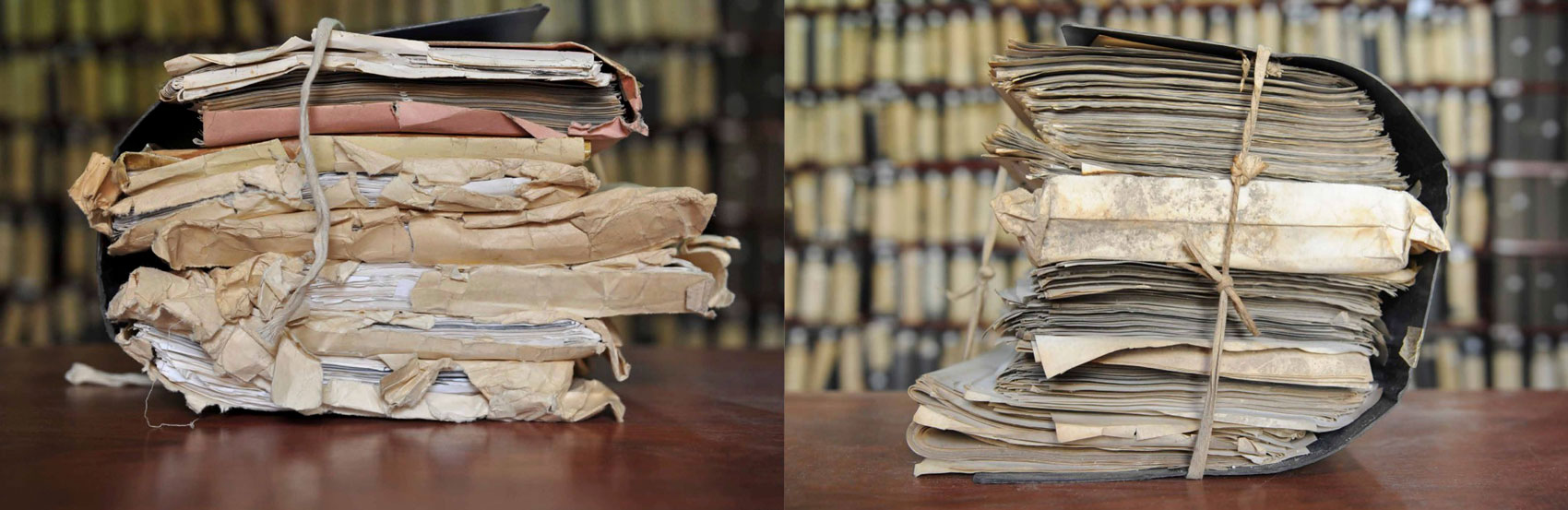
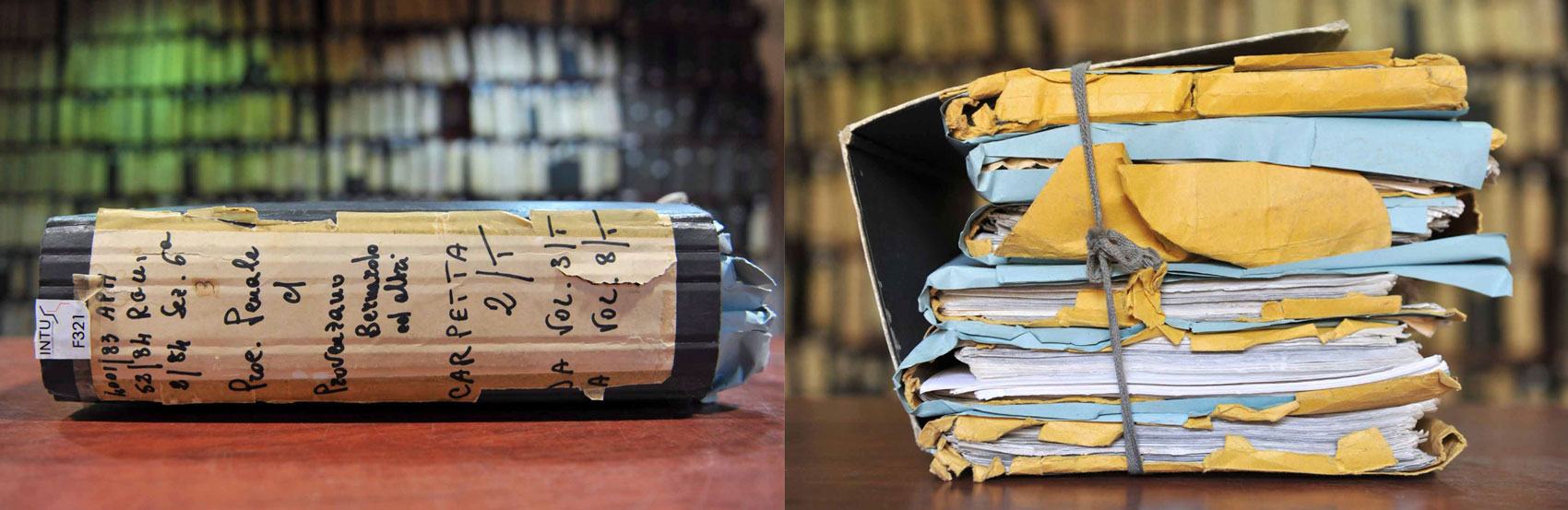
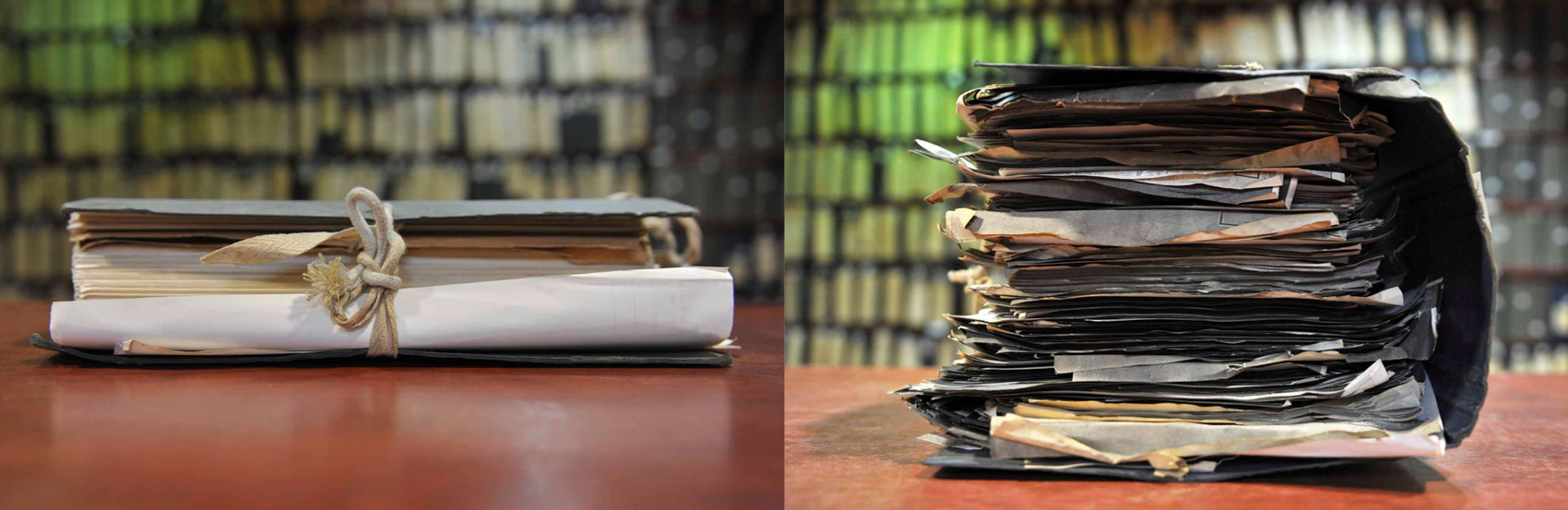
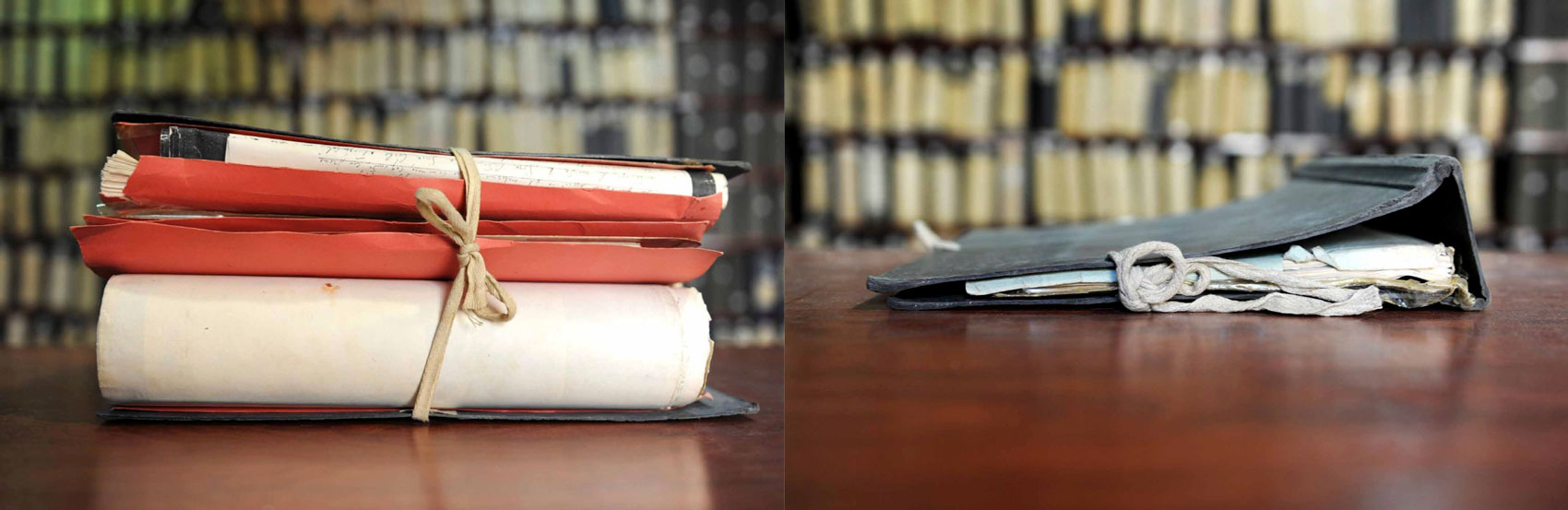
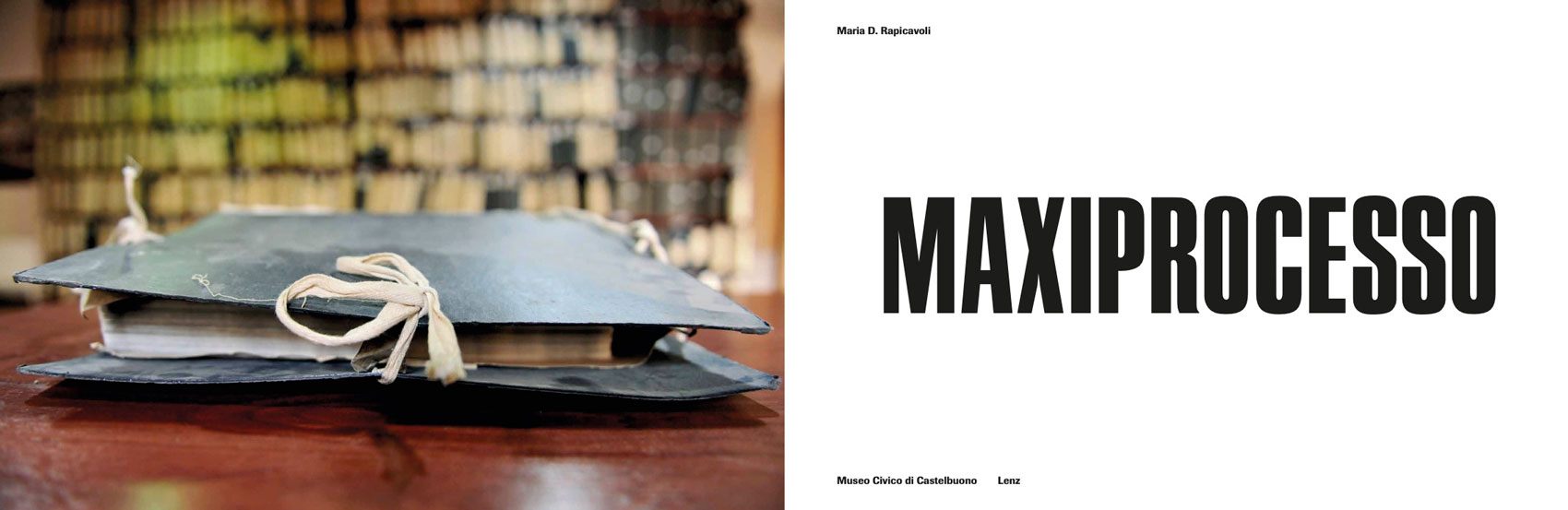
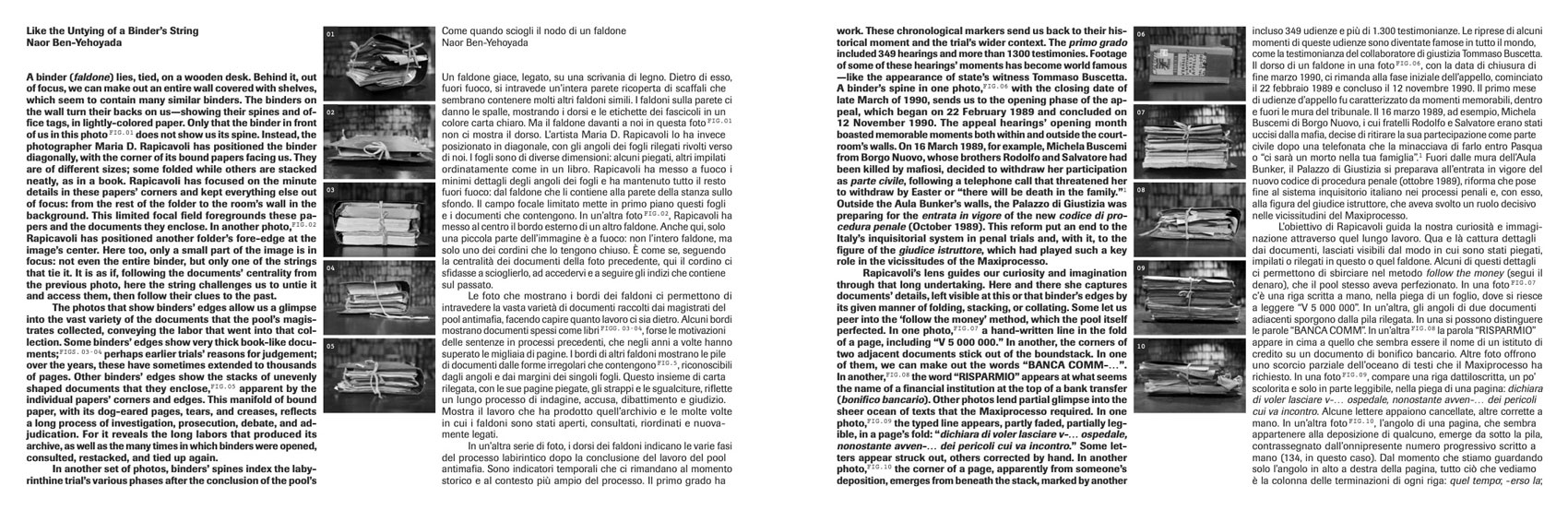
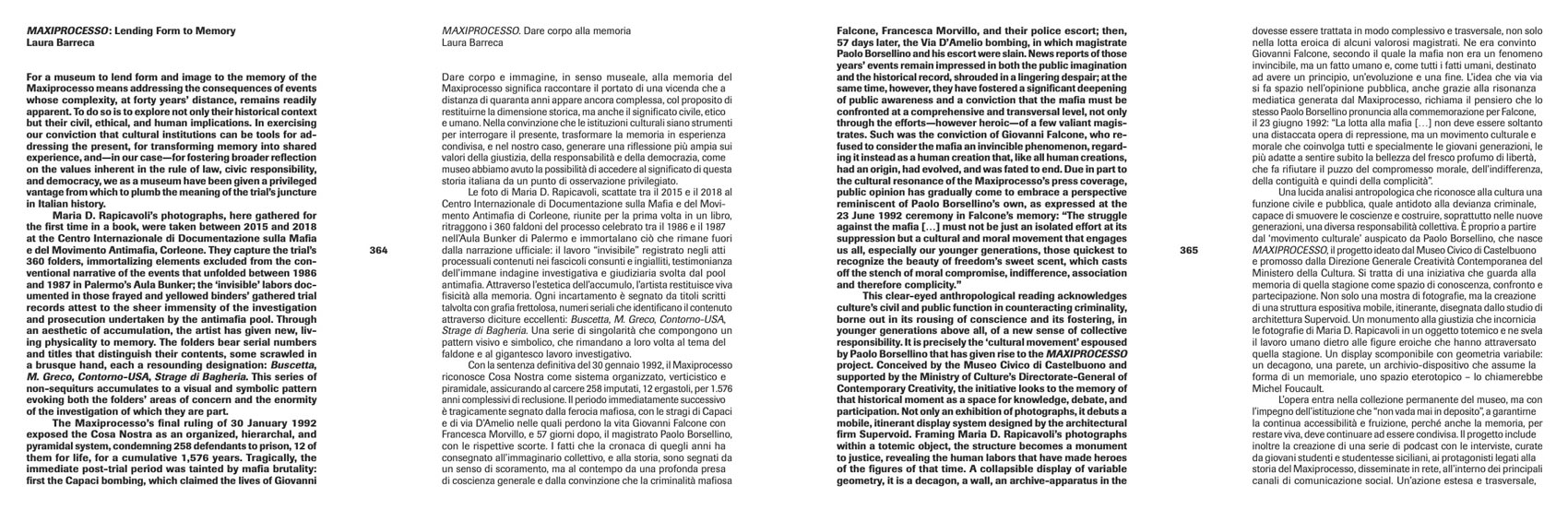
Maxiprocesso dévoile la série photographique complète éponyme de Maria D. Rapicavoli : 360 clichés, un pour chacun des dossiers d'archives qui, ensemble, documentent le plus grand « maxi-procès » mafieux de l'histoire, qui s'est tenu à Palerme de 1986 à 1987.
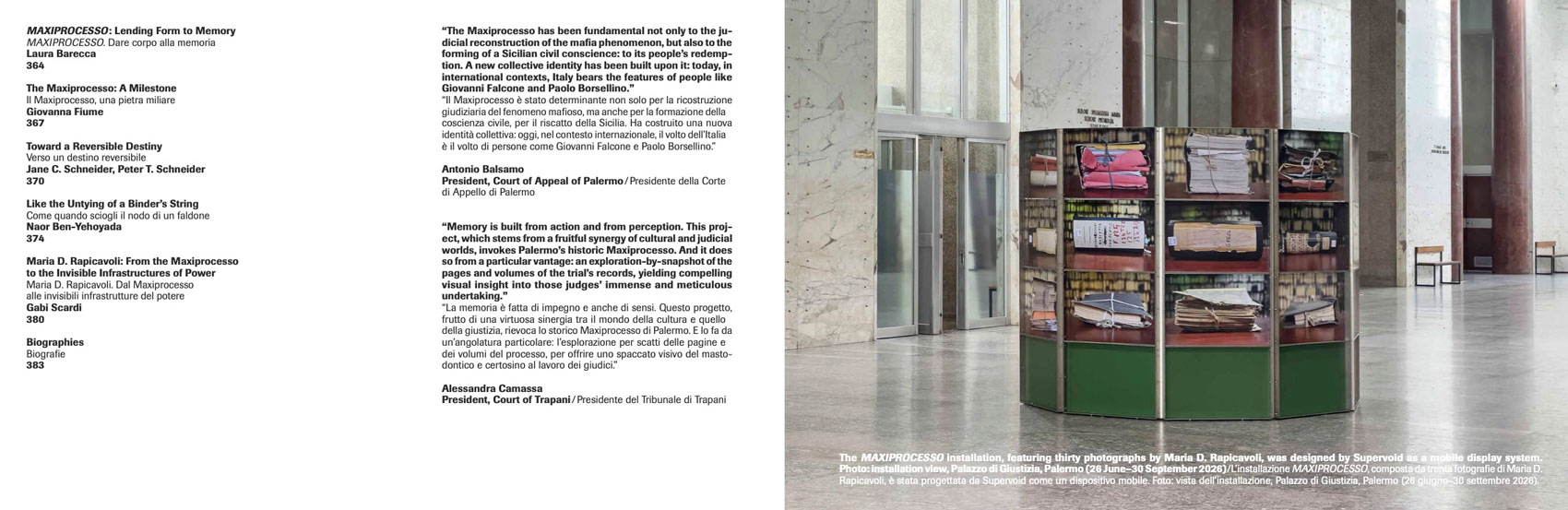
A selection from Rapicavoli's series was exhibited at the Court of Palermo in 2026, housed in an installation designed by architecture firm Supervoid. The photographs convey the physical dimension of the exacting work underpinning the trial: reports, interrogations, wiretaps, depositions, and other documents charting Cosa Nostra's activities. Together, they form the material footprint of the Palermo antimafia team's vast investigation, which reconstructed and exposed the organization's hierarchical structure for the first time.
In photographing the folders as a series, Rapicavoli moves beyond documentary representation. The images' apparent repetition conveys the sheer volume of evidence produced by the investigation, making visible the scale of an archive whose contents usually remain inaccessible. By publishing the complete sequence, this volume communicates the materiality and magnitude of what is a crucial body of archival heritage. Thirty of Rapicavoli's photographs have entered the permanent collection of the Museo Civico di Castelbuono, which has committed to ensuring their enduring accessibility and to fostering continued awareness and discussion of the historical legacy they represent.
The project also extends into the digital space through a series of podcast interviews pairing young Sicilian students with figures personally involved in the history of the Maxiprocesso. The initiative aims to encourage younger generations to interact more closely with this history and to develop a heightened sense of social responsibility. As Laura Barreca, Director of the Museo Civico di Castelbuono, observes: "As a public museum, today we reflect on the active role that cultural institutions can play in building a more aware, responsible, and engaged society. In Sicily, this duty assumes a still deeper meaning: here the memory of the Maxiprocesso will continue to be preserved, reinterpreted, and handed down to new generations, lending full expression to the power of contemporary art as as a tool for interpretation, dialogue, and dissemination."
Maria D. Rapicavoli (née en 1976 à Catane, Italie) est une artiste dont la pratique s'est développée à partir d'une formation en photographie, cinéma et vidéo, et s'est étendue à la sculpture et à l'installation in situ. Son travail explore les conditions et les expériences du pouvoir, de l'aliénation, de l'invisibilité et du déplacement à travers une critique des systèmes économiques et politiques mondiaux.
Edité par Laura Barreca et Giovanna Fiume.
Textes de Laura Barreca, Naor Ben-Yehoyada, Giovanna Fiume, Gabi Scardi, Jane C. Schneider, Peter T. Schneider.