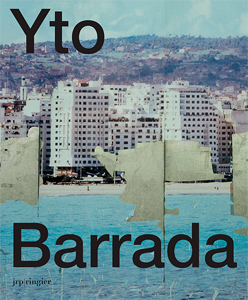
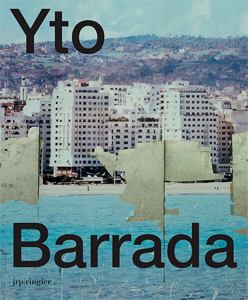
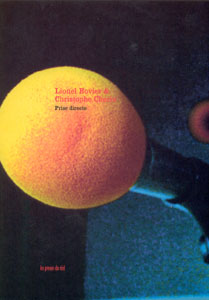
Reference monograph.
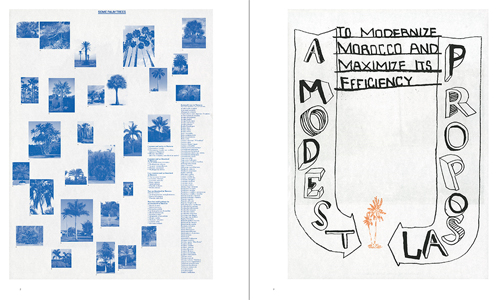
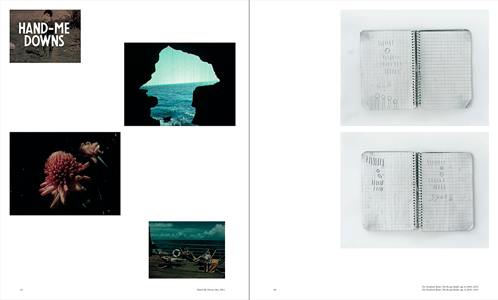
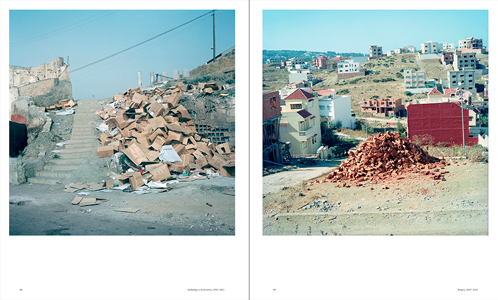
Introduced by Spanish writer Juan Goytisolo, this reference monograph puts together a retrospective essay by the art critic and curator Marie Muracciole, a visual essay by the art historian and theoretician Jean-François Chevrier, and an interview with Sina Najafi, the editor-in-chief of "Cabinet" magazine. Together with a large selection of works, these texts offer an overview of Barrada's work—a practice that deals with history and geography, family stories, and layered memories.
French-Moroccan artist Yto Barrada (born 1971, lives and works in Paris and New York) is one of the most important voices in contemporary art today. Since the early 2000s, her multidisciplinary practice—films, installations, sculptures, textile works, publications, photographs, site-specific projects—has explored cultural phenomena and subaltern histories, strategies of resistance and disobedience, historical narratives and natural processes, the transmission of knowledge, and methods of archiving and collection. Undertaking long-term projects, often in collaboration with other artists, amateurs, and experts, she has successively focused on botany as politics and geography, the history of education, the economics of prehistoric fossils, postcolonial links between Morocco and the West, and a reinterpretation of the history of abstract pictorial avant-gardes to offer an alternative vision of modernity. The playful resources of language, the dynamics of translation, and the infinite possibilities of print occupy a prominent place in her practice.
Yto Barrada is the founding director of the Cinémathèque de Tanger.
She is
Hamid Barrada's daughter.