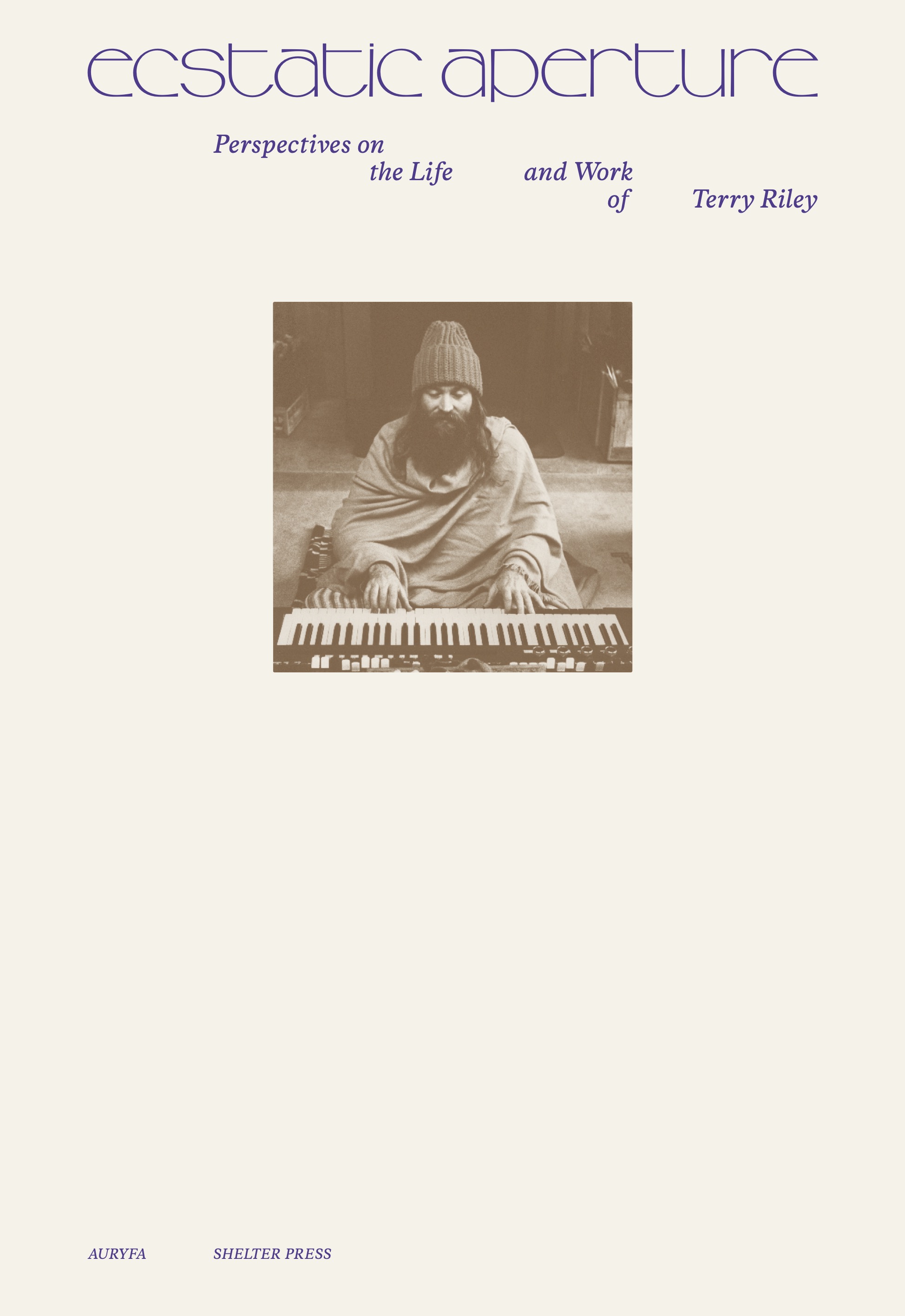
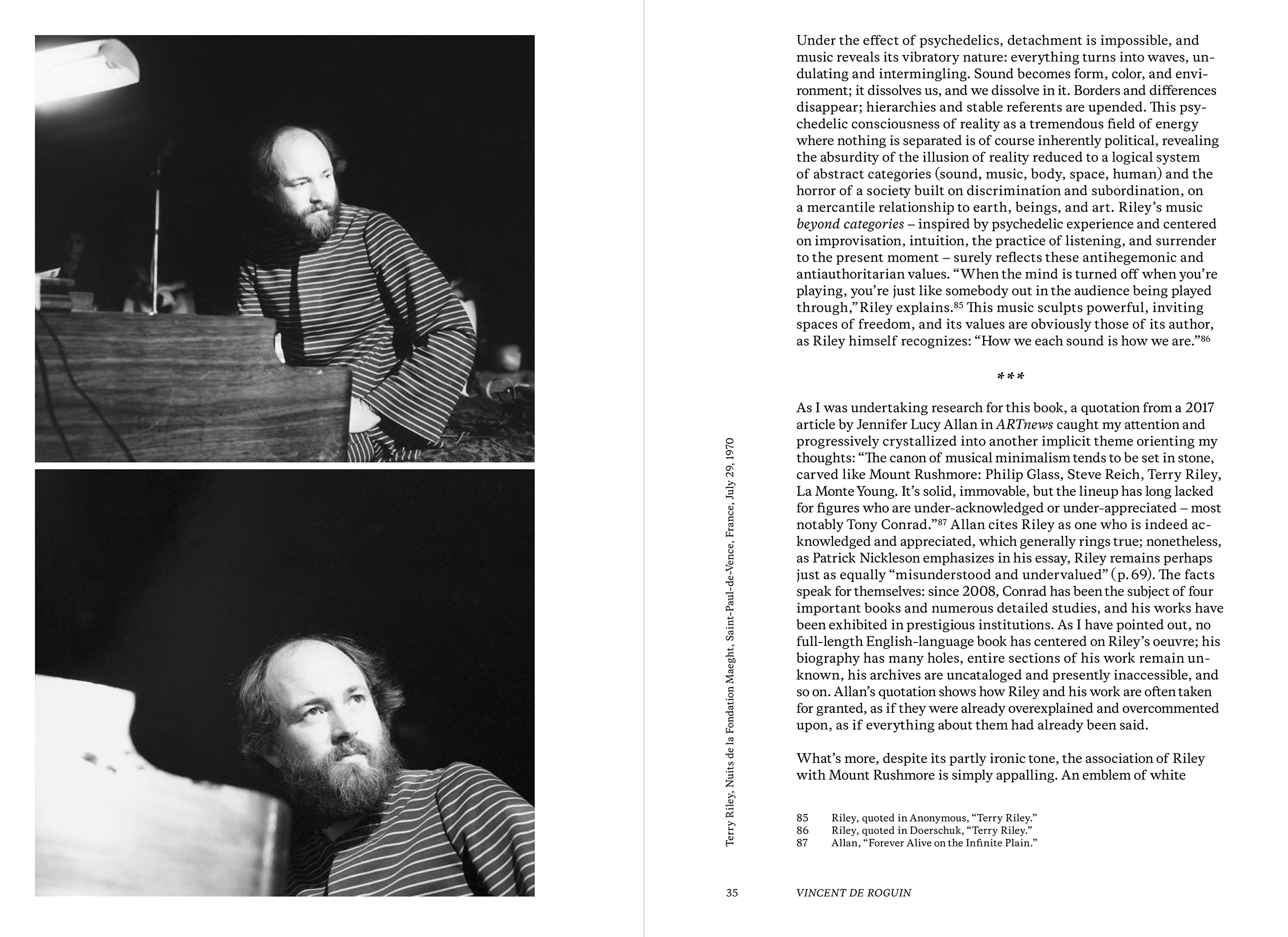
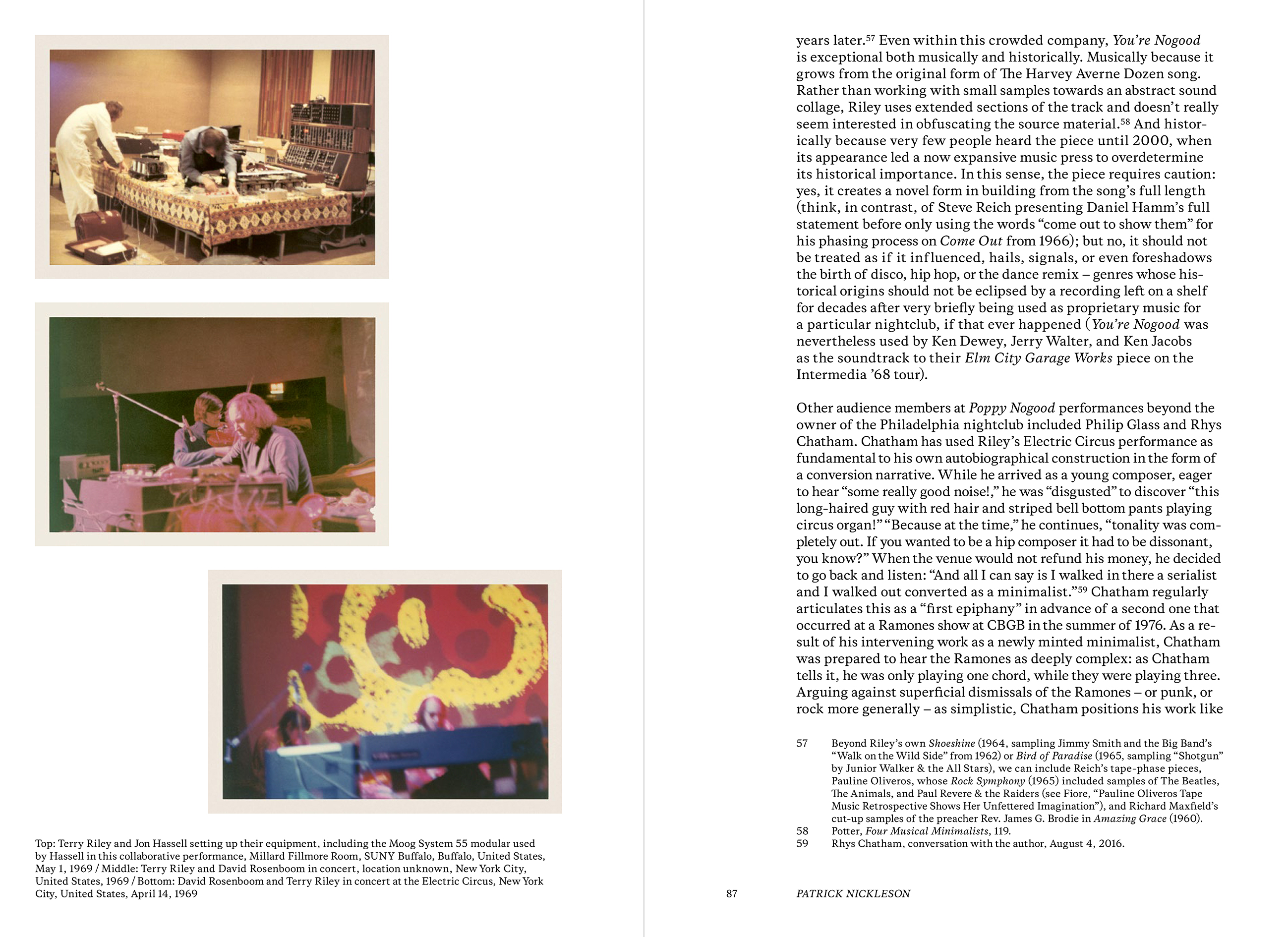
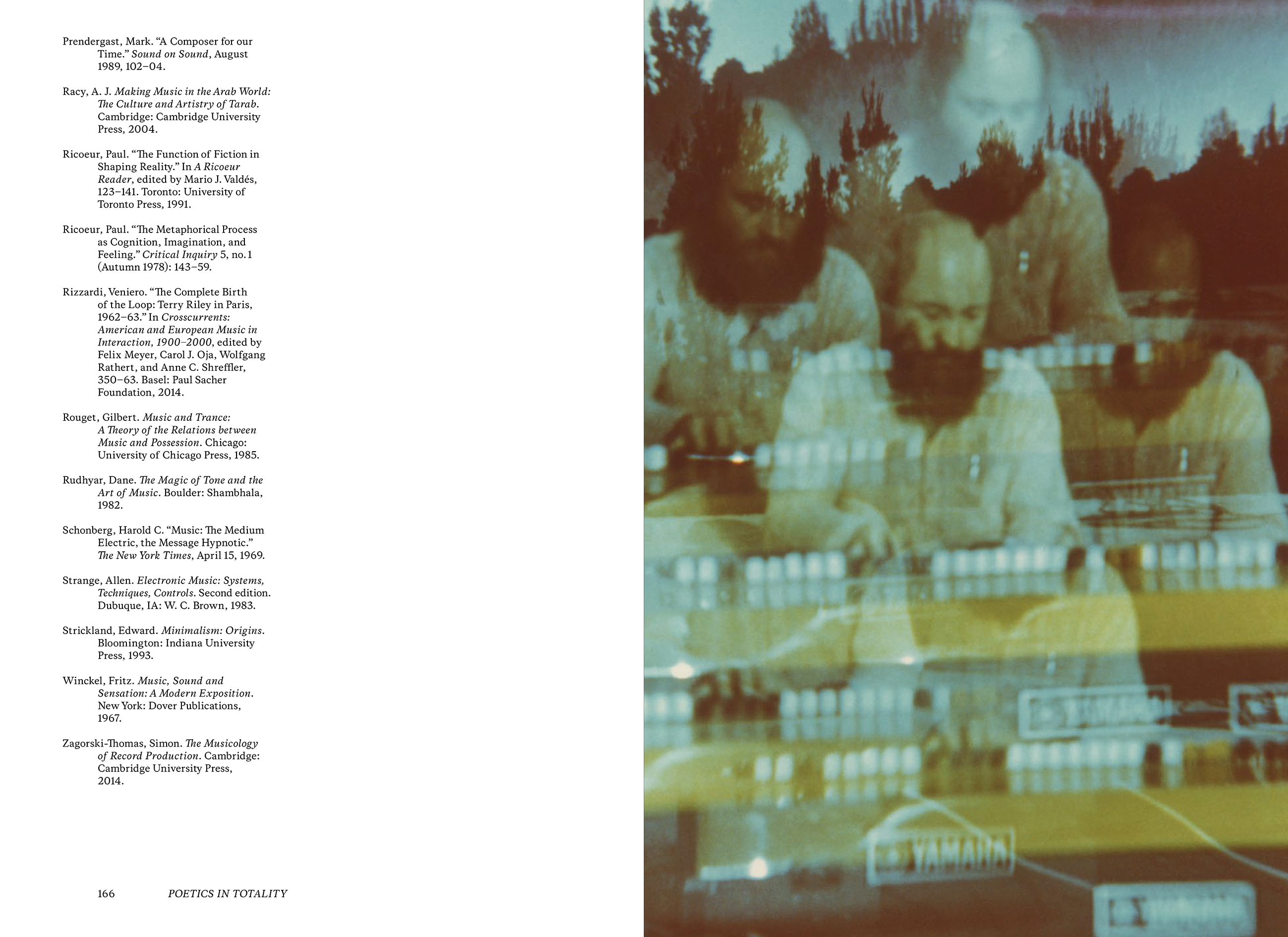
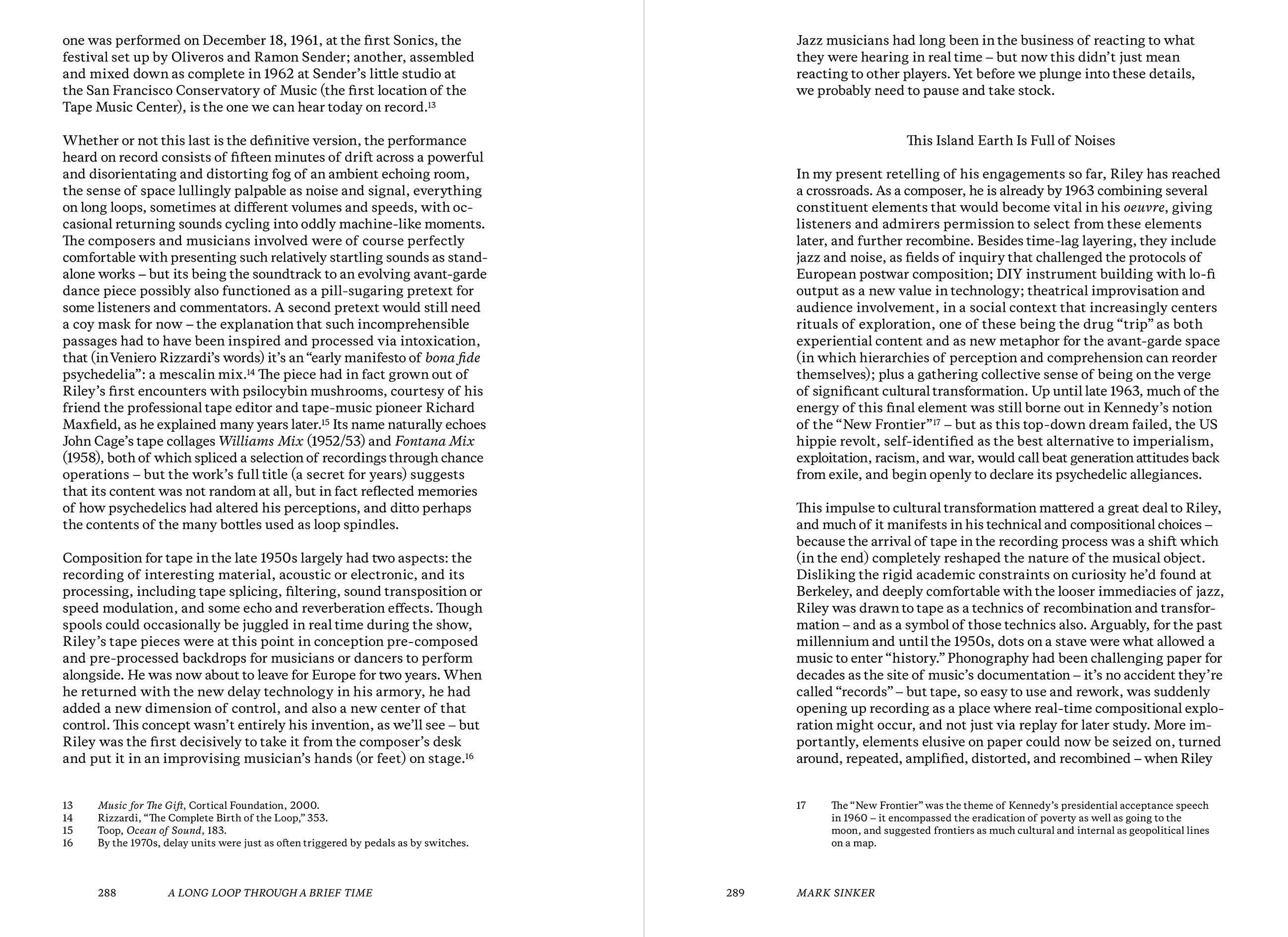
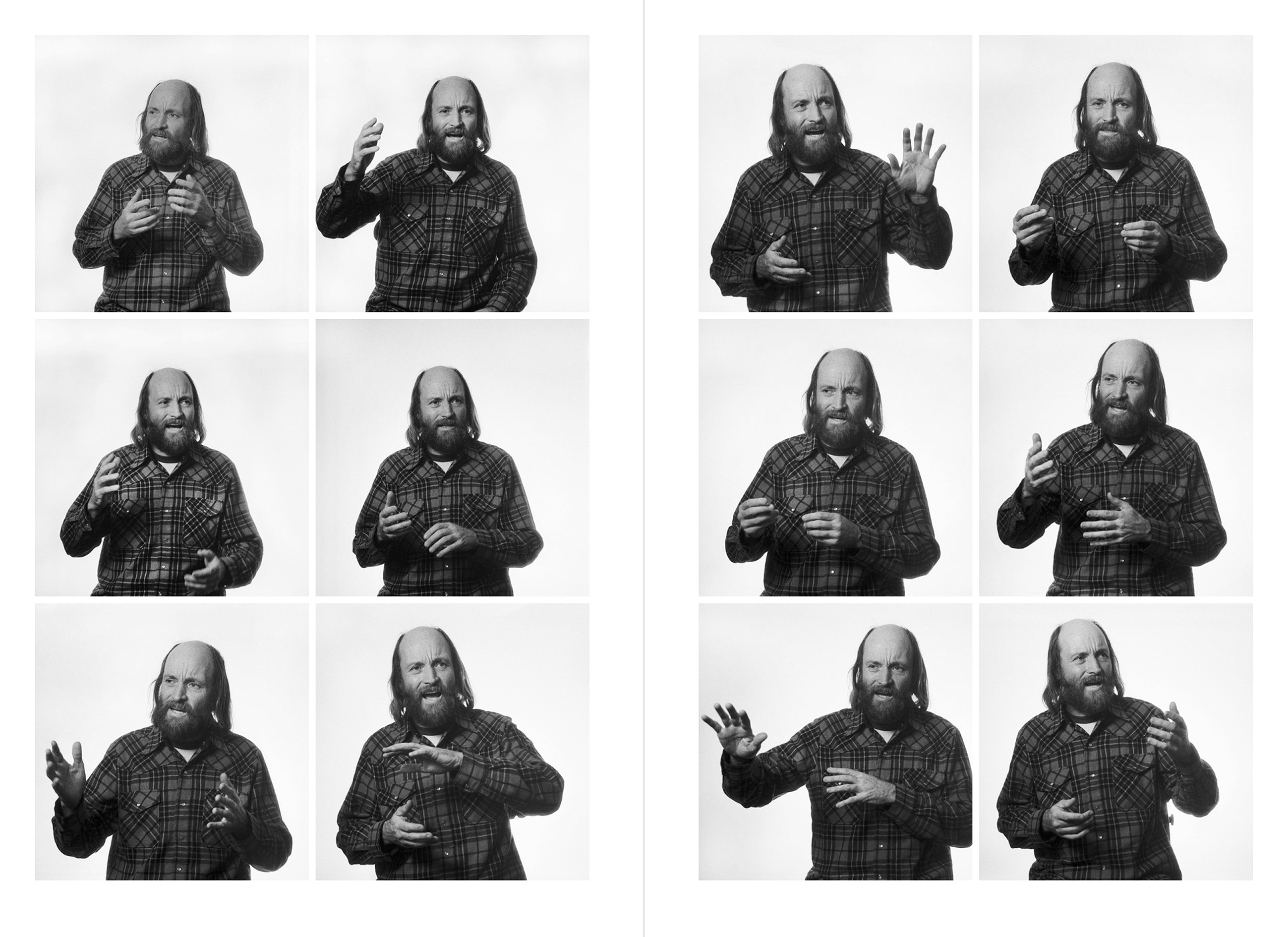
This book brings together a series of previously unpublished essays on the work of Terry Riley, accompanied by numerous never-before-seen archives. It is the first major work to offer such an in-depth exploration of his body of work and his artistic career.
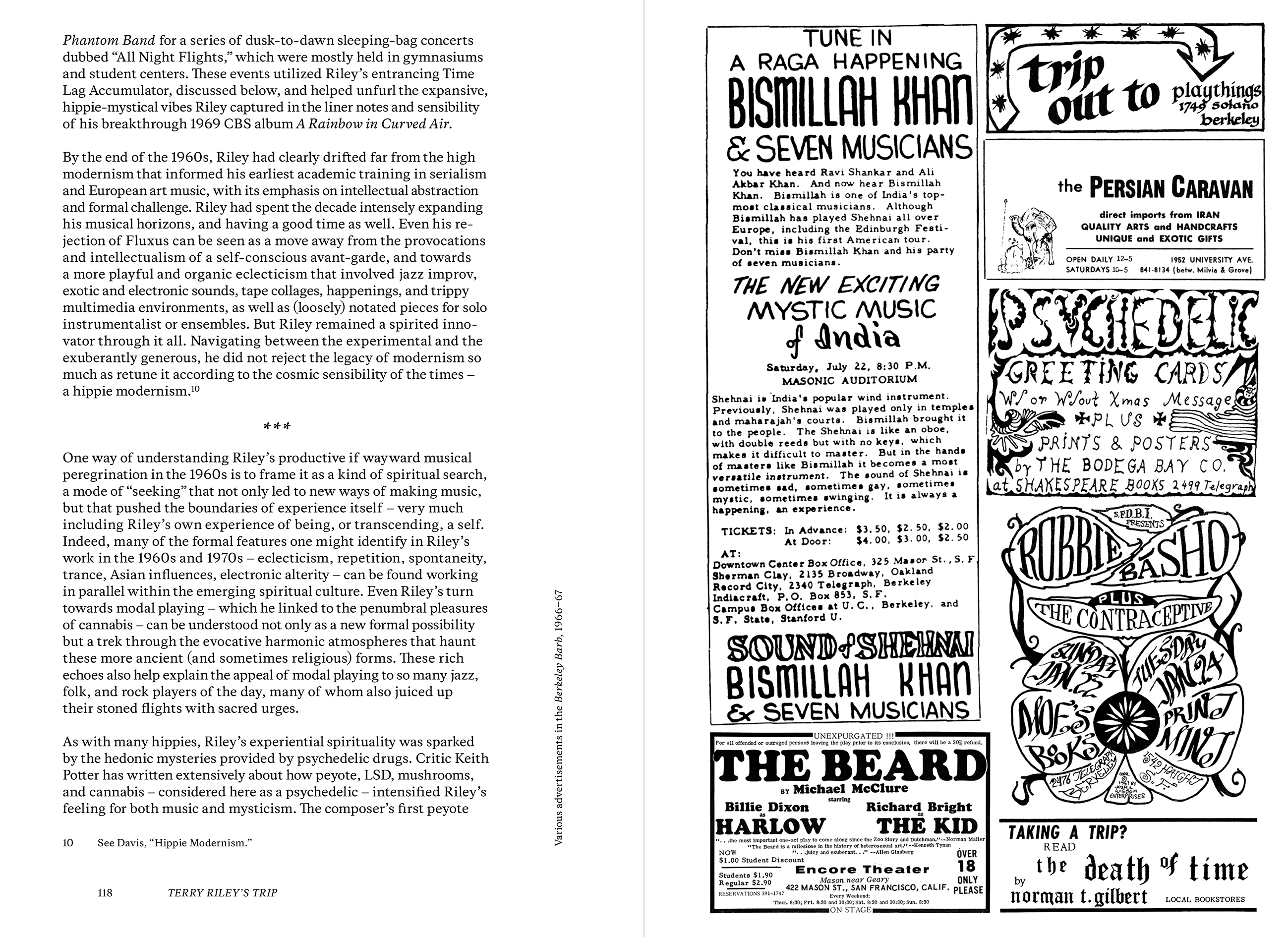
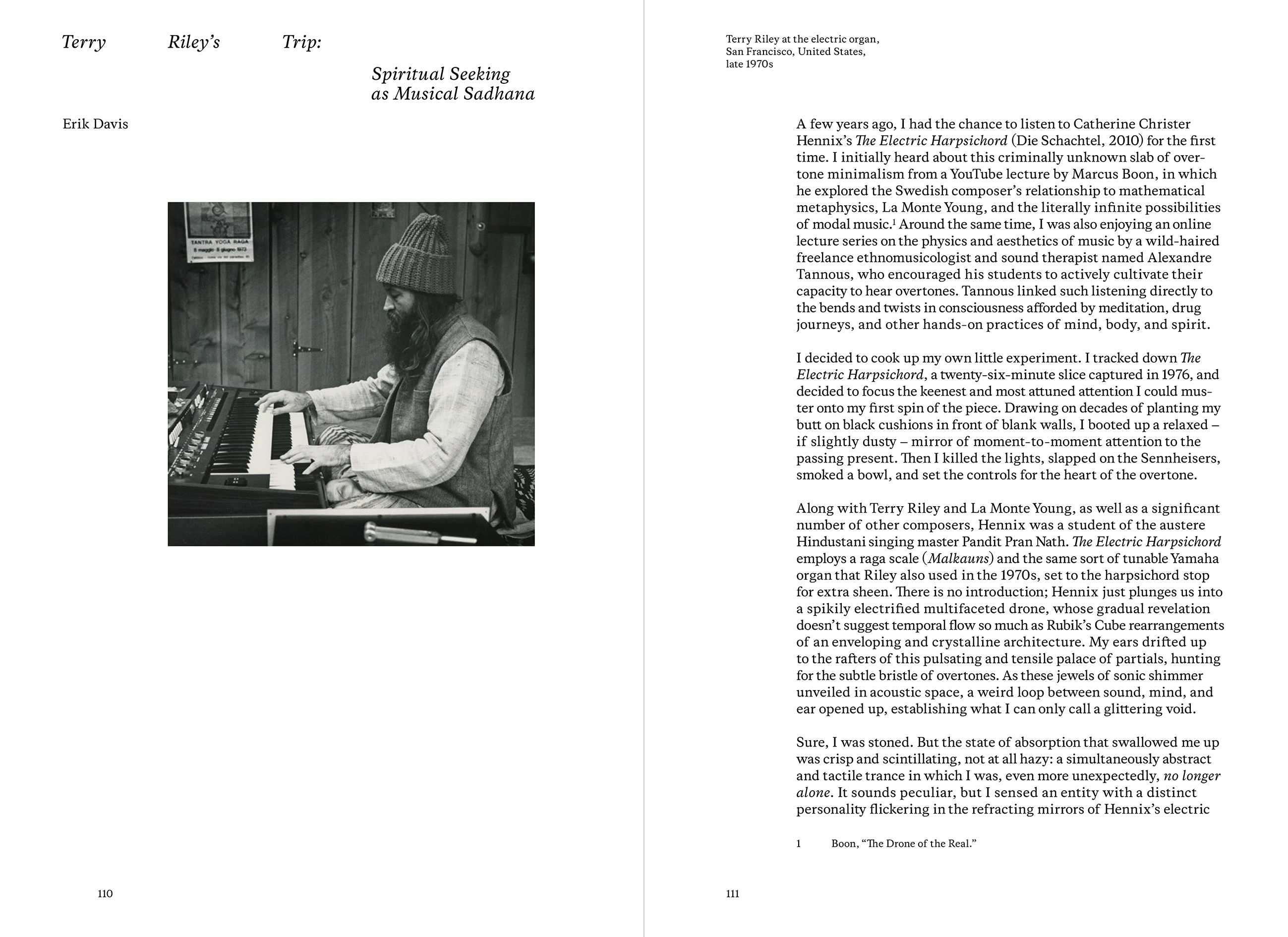
The culmination of many years of research, Ecstatic Aperture is the first comprehensive publication devoted to Californian composer Terry Riley. Spanning seven decades of creative activity, it brings together a collection of original essays alongside an extensive selection of documents, photographs, and musical scores, many of them previously unpublished and drawn from the composer's own archives. The book invites readers to move beyond familiar narratives and rediscover a truly singular and remarkable figure in the history of Western music since the 1960s. Despite the scope and enduring resonance of Riley's multidimensional oeuvre, it has rarely been the subject of sustained historical or critical attention. Ecstatic Aperture conveys the complexity and continually renewed vitality of his work, while illuminating the networks of affinities and shifting cultural contexts in which it emerged and flourished – as well as those that his music continues, to this day, to nourish and inspire.
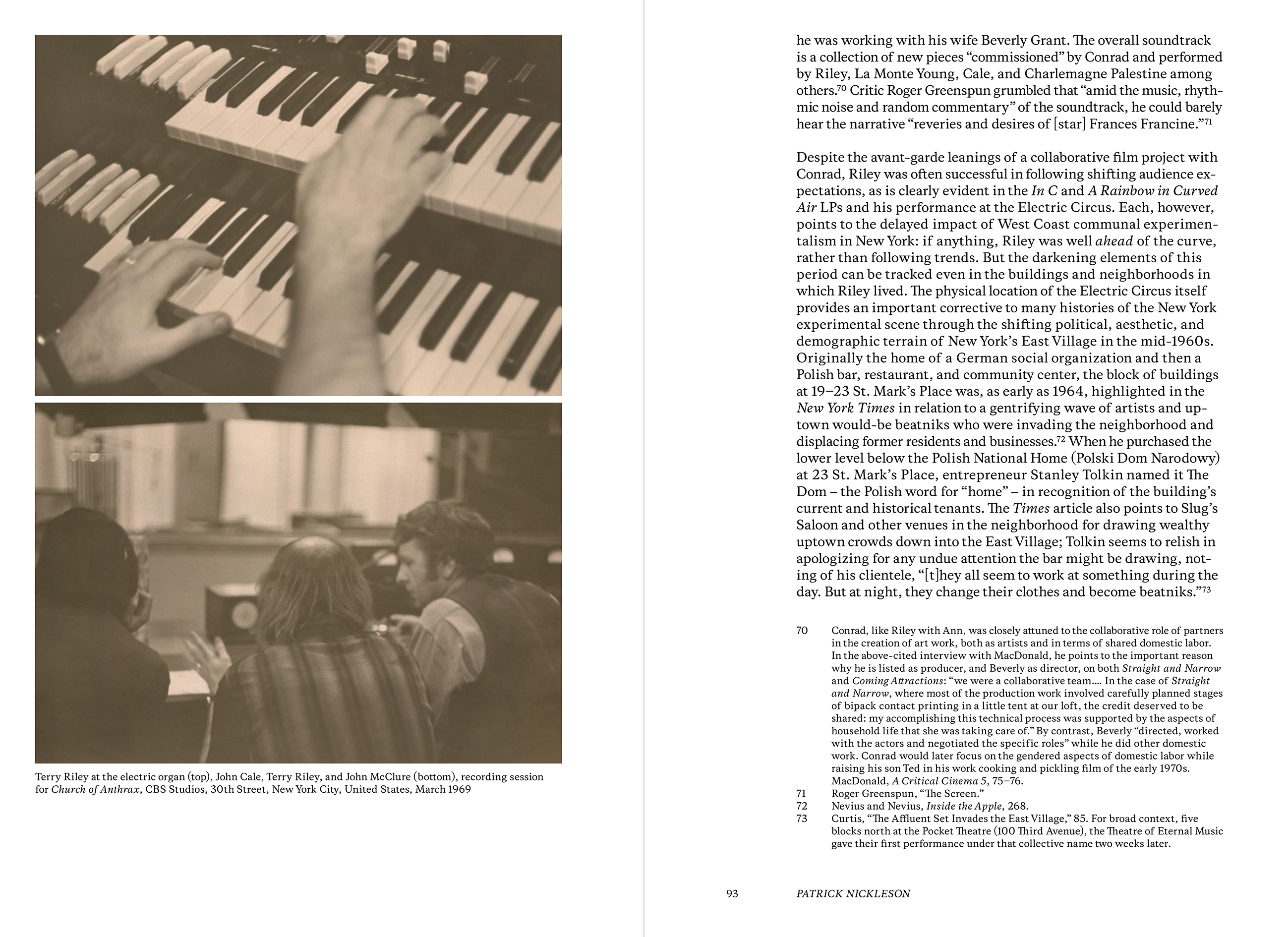
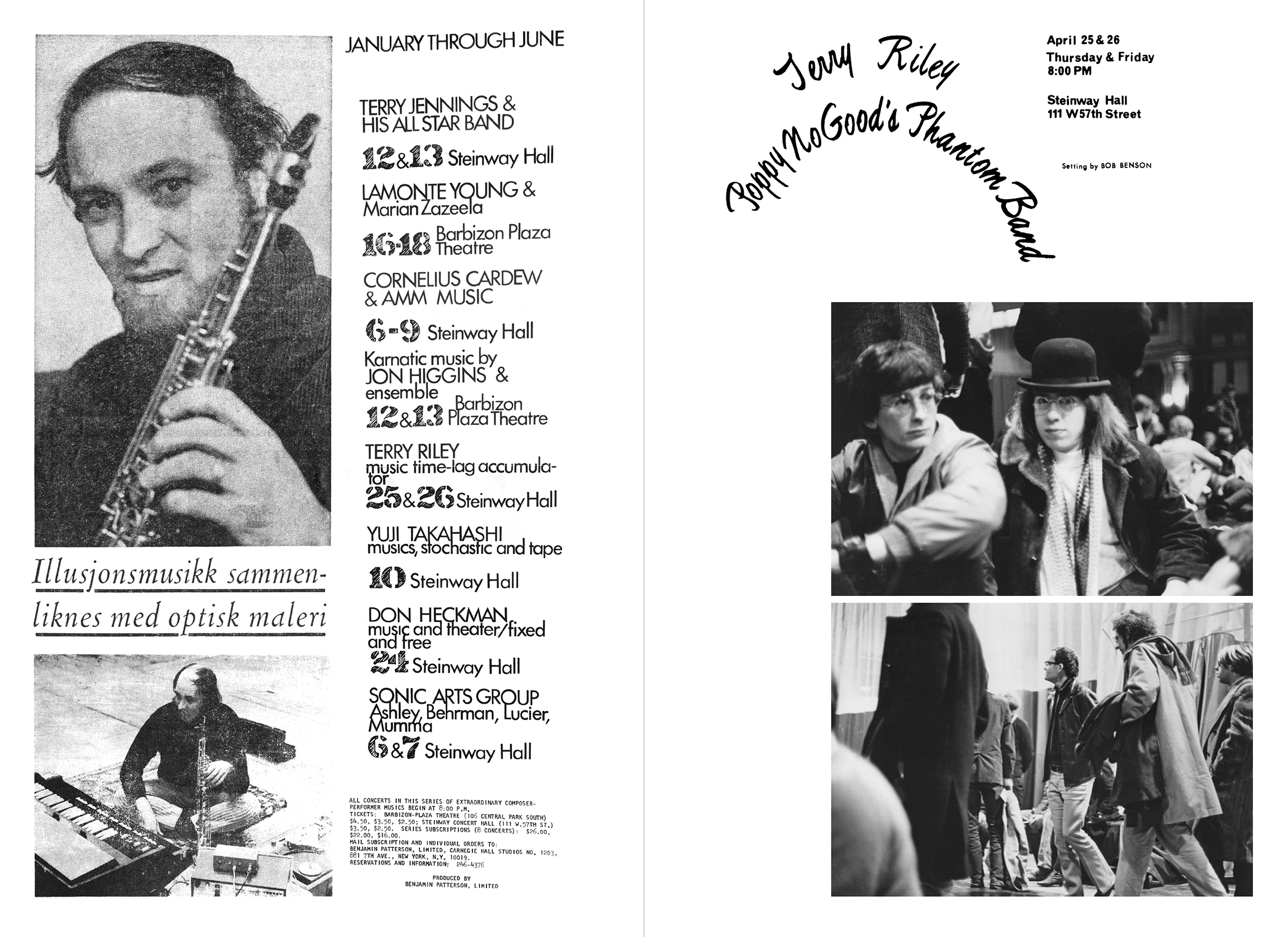
California composer Terry Riley (born 1935) launched what is now known as the Minimalist movement with his revolutionary classic "In C" in 1964. This seminal work provided a new concept in musical form based on interlocking repetitive patterns. It's impact was to change the course of 20th century music and it's influence has been heard in the works of prominent composers such as Steve Reich, Philip Glass and John Adams and in the music of rock groups such as The Who, The Soft Machine, Tangerine Dream, and many others. His hypnotic, multi-layered, polymetric, brightly orchestrated eastern flavored improvisations and compositions set the stage for the prevailing interest in a new tonality. Riley has worked with Kronos Quartet, La Monte Young, members of Fluxus, Chet Baker, Pandit Pran Nath, his son Gyan Riley, choreographer Anna Halperin, and many others over the years.
Edited by Vincent de Roguin.
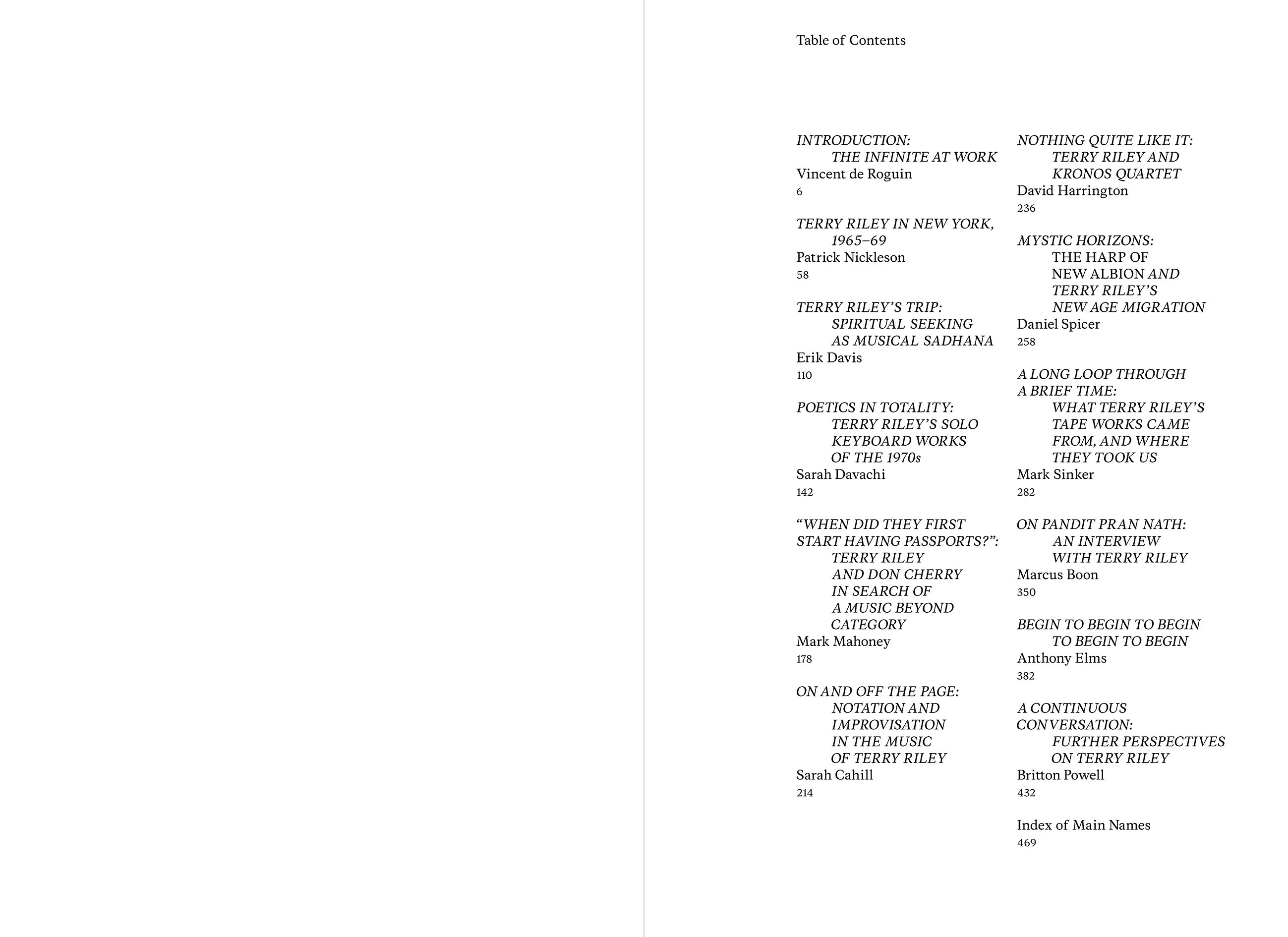
Contributions by Marcus Boon, Sarah Cahill, Sarah Davachi, Erik Davis, Anthony Elms, David Harrington, Mark Mahoney, Patrick Nickleson, Britton Powell, Vincent de Roguin, Mark Sinker, Daniel Spicer.
Graphic design: Nicola Todeschini, David Mamie, Vincent de Roguin.