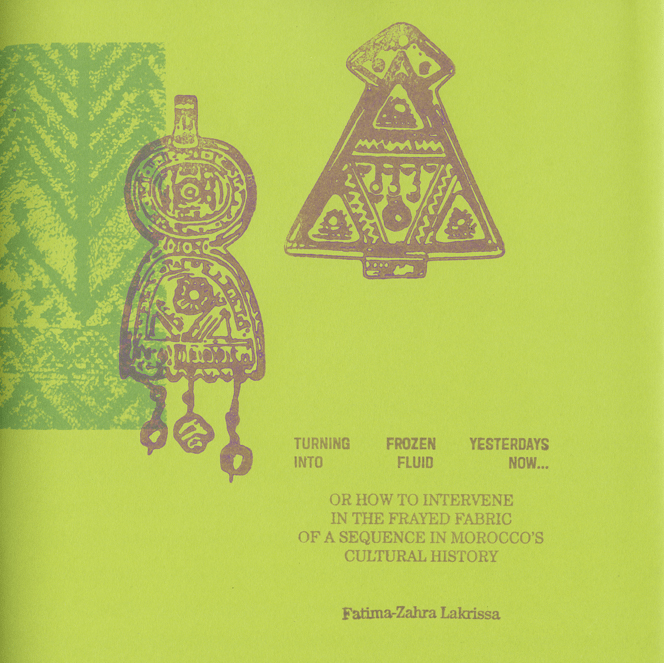
Fatima-Zahra Lakrissa revisits a sequence of Morocco's cultural history: the encounter of two anthropologists and the intersecting history of their approaches to popular and traditional art objects.
This essay accompanied the eponymous exhibition presented by the curator Fatima-Zahra Lakrissa as part of the curatorial project "School of Casablanca" at ifa-Gallery in 2024 in Berlin initiated by KW Institute for Contemporary Art (Berlin) and the Sharjah Art Foundation (Sharjah), in collaboration with ThinkArt (Casablanca),
Zamân Books & Curating (Paris) and the Goethe-Institut Morocco.
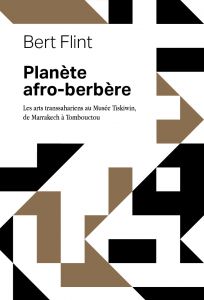
The essay and the accompanying exhibition are devoted to the contemporary reception of Maghreb Art, a biannual journal of the Casablanca School of Fine Arts, published in three issues under the editorial direction of the artist Farid Belkahia (1934-2014), the Italian art historian Toni Maraini (1941), the Dutch anthropologist
Bert Flint (1931-2024), and the artist Mohamed Melehi (1936-2020), who was also its artistic director.
Maghreb Art accompanied the first attempts to structure a new field of knowledge, situated at the intersection of artistic and pedagogical experimentation, anthropology, material culture, and art history. Over the three years of existence, the journal Maghreb Art established itself as a pedagogical tool and as a fully active witness to the interaction between experimentation and theory, which forged the avant-garde reputation of the school in the wake of Morocco's independence.
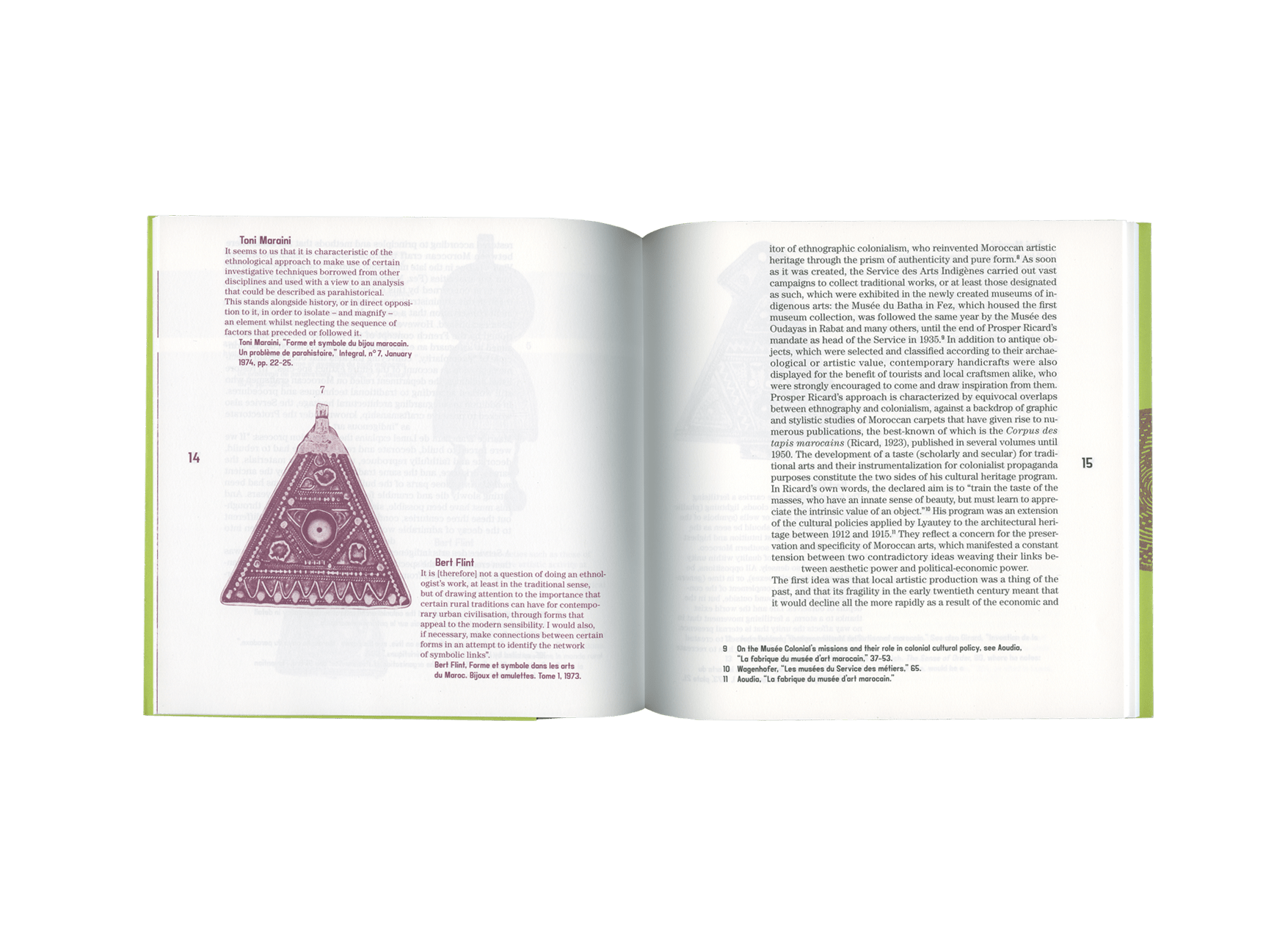
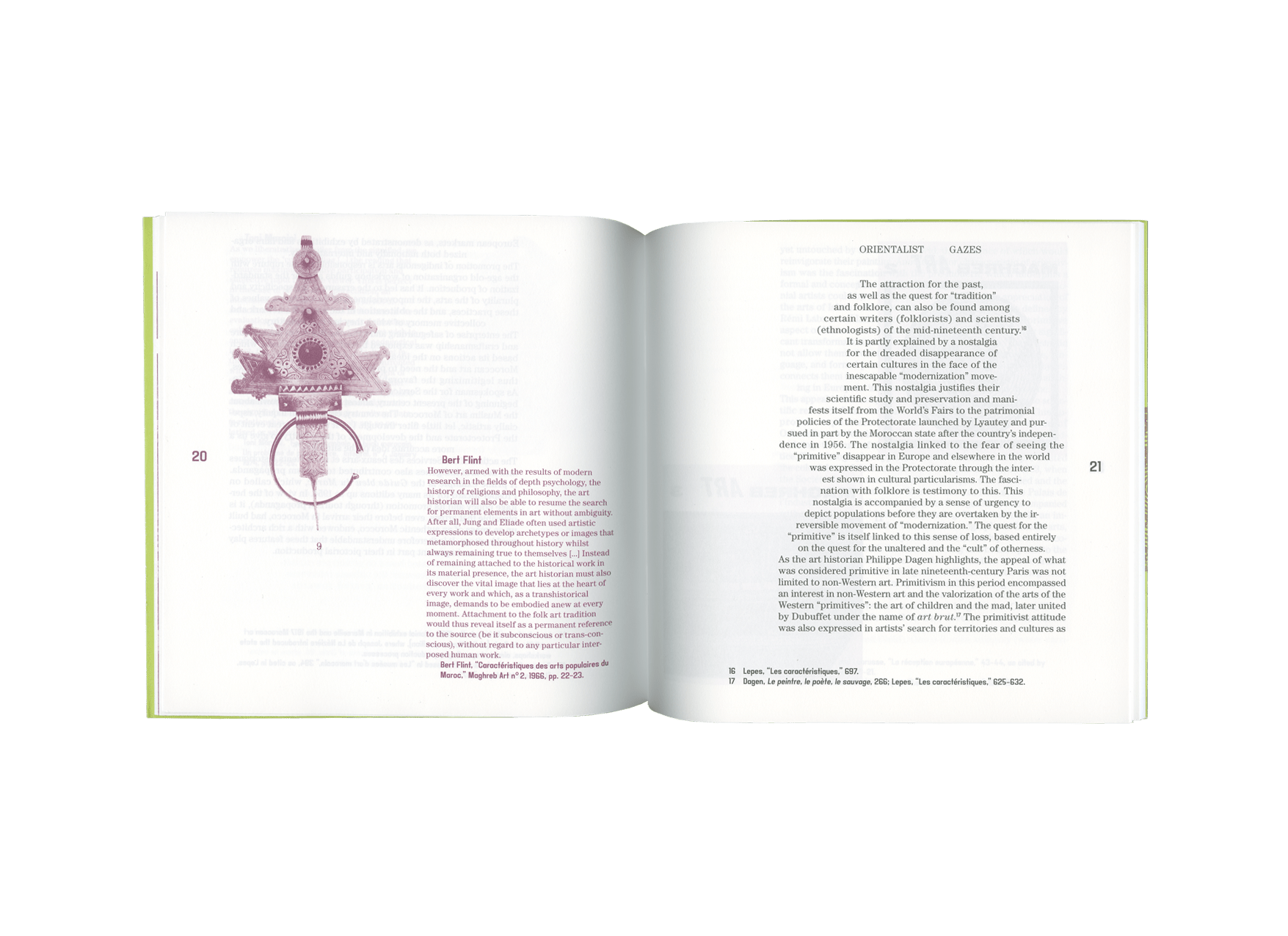
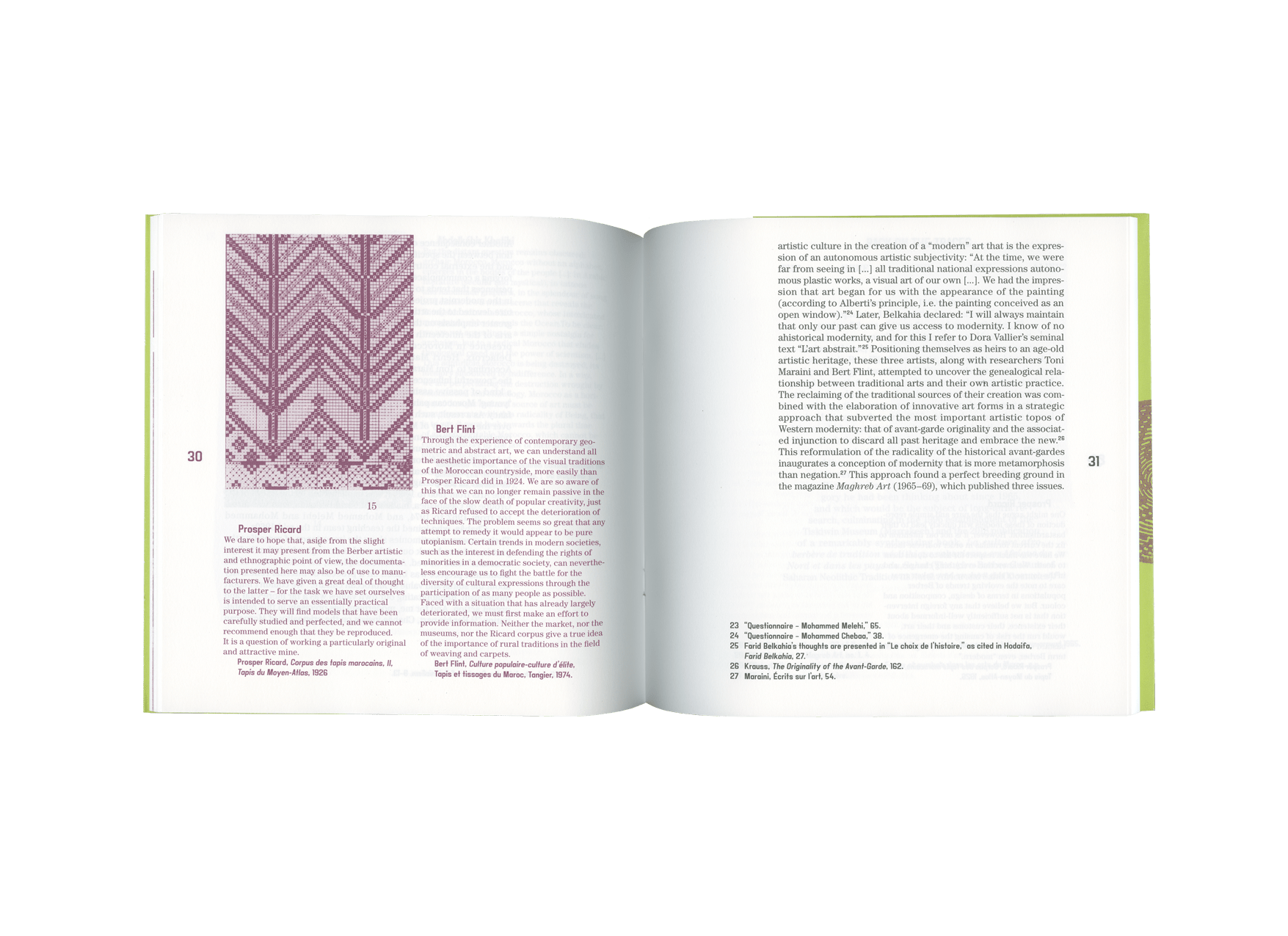
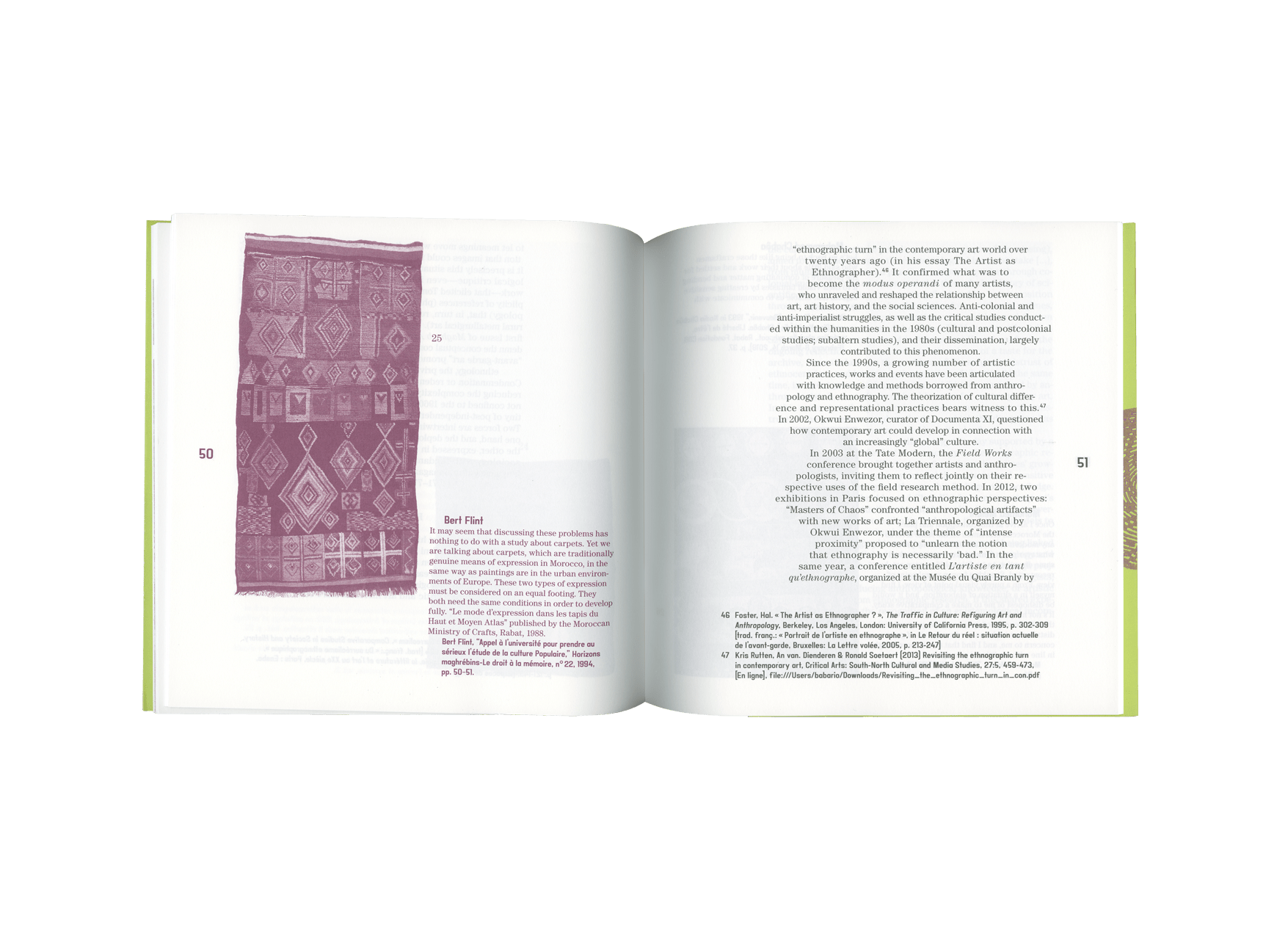
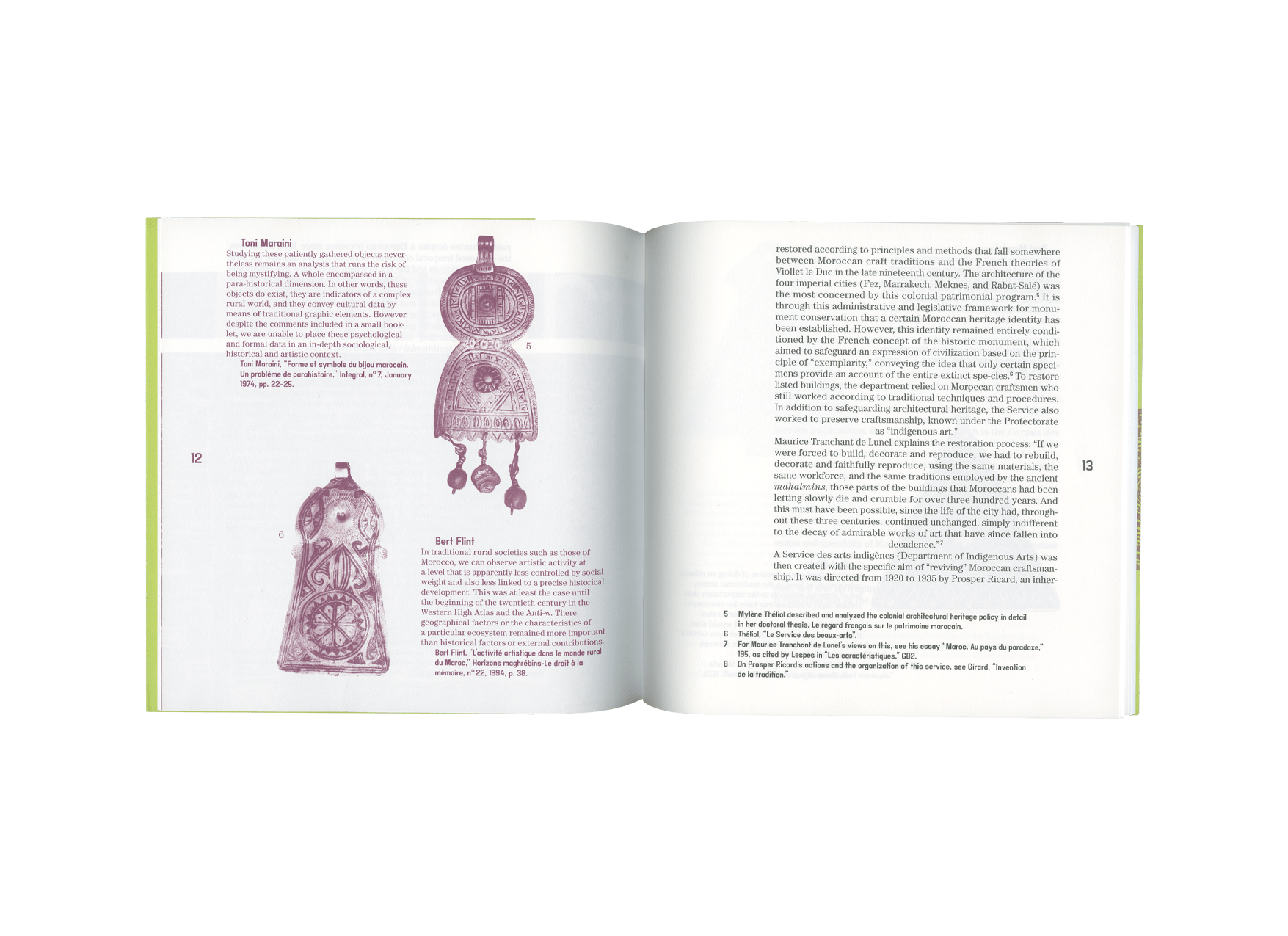
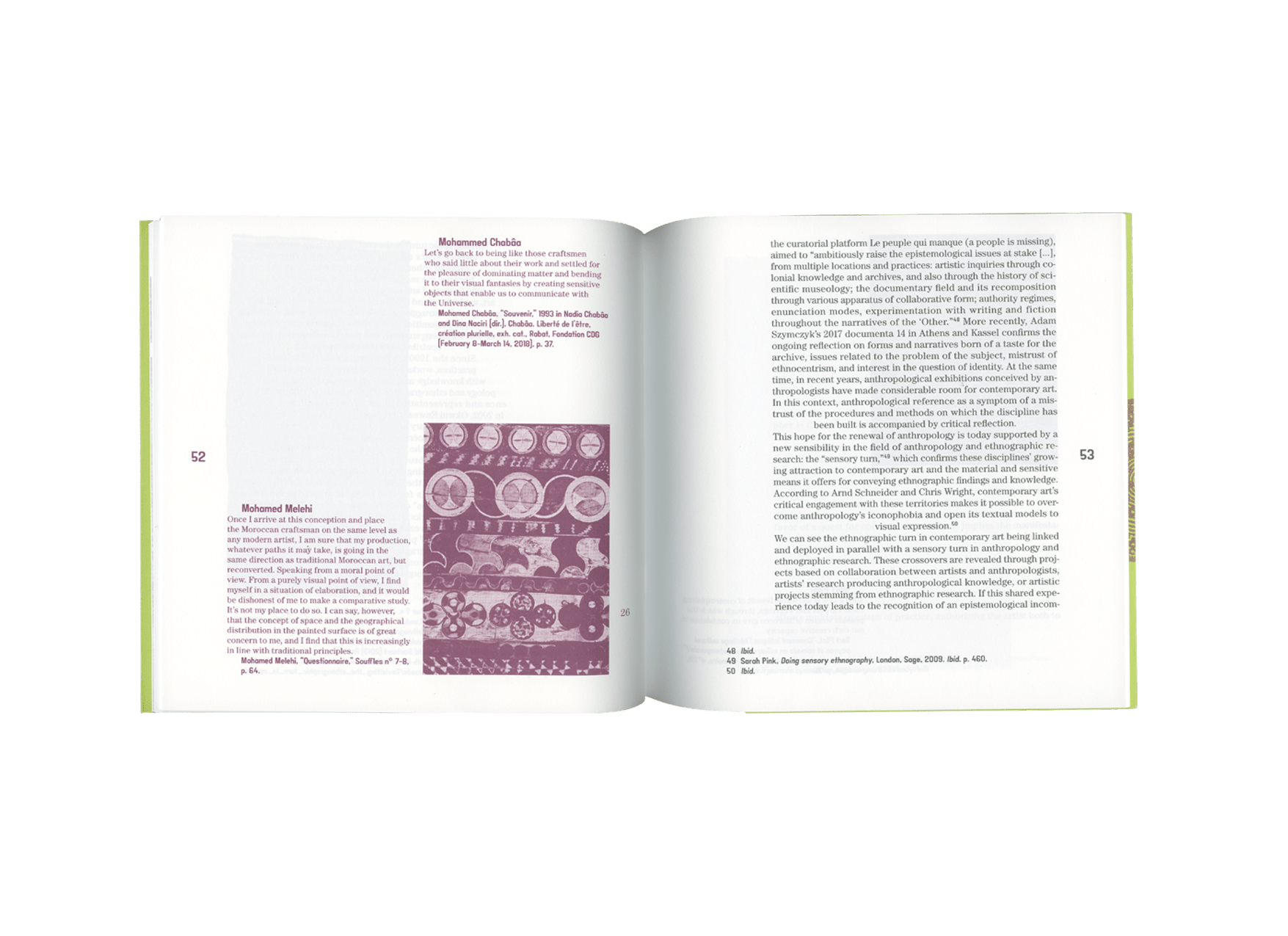
Turning Frozen Yesterdays into Fluid Now… focuses on the intersecting and complementary, but also fundamentally unique approaches of Toni Maraini and Bert Flint at the time of Maghreb Art. The essay draws attention to the context, both theoretical and practical, in which the emerging paradigm of a post-colonial art history was debated. It is connected to a fictional dialogue between the two Maghreb Art's theorists: a montage of fragments of their published writings from the period 1960-1990. It highlights the question of method and their respective gazes on the objects, as well as the interpretations they put forward. Other questions focus on the shifts in meaning induced by the transfer from the "field" or "original context" to the museum or school. The opposite process, which aims at re-interrogating the social function of art is addressed by
Gilles Aubry, sound artist, musician and researcher, who has been invited by Fatima-Zahra Lakrissa to consider the contemporary reception of Maghreb Art.
Fatima-Zahra Lakrissa (born 1976 in Rabat) is an independent curator and researcher. She began her professional career in Morocco at the National Museum Foundation, then at the Mohammed VI Museum of Modern and Contemporary Art as head of cultural programming (2013-2018). She is interested in the layered subjectivities of European modern art history and the construction of Moroccan modernism through the works of artists engaging with the vernacular. Her research is oriented towards the sociology and history of the artistic avant-garde in Morocco during the 1960s and 1970s Lakrissa also studies contemporary art practices that tend to reorganise relations between rural and urban areas, scholarly and popular culture and crafts and fine arts, and analyses the new patrimonial and historiographical perspectives they reflect.