Une réflexion critique et multispéciste sur la manière dont les plantes façonnent l'espace, le savoir et les hiérarchies, à la croisée de l'histoire, de l'écologie et de l'épistémologie.
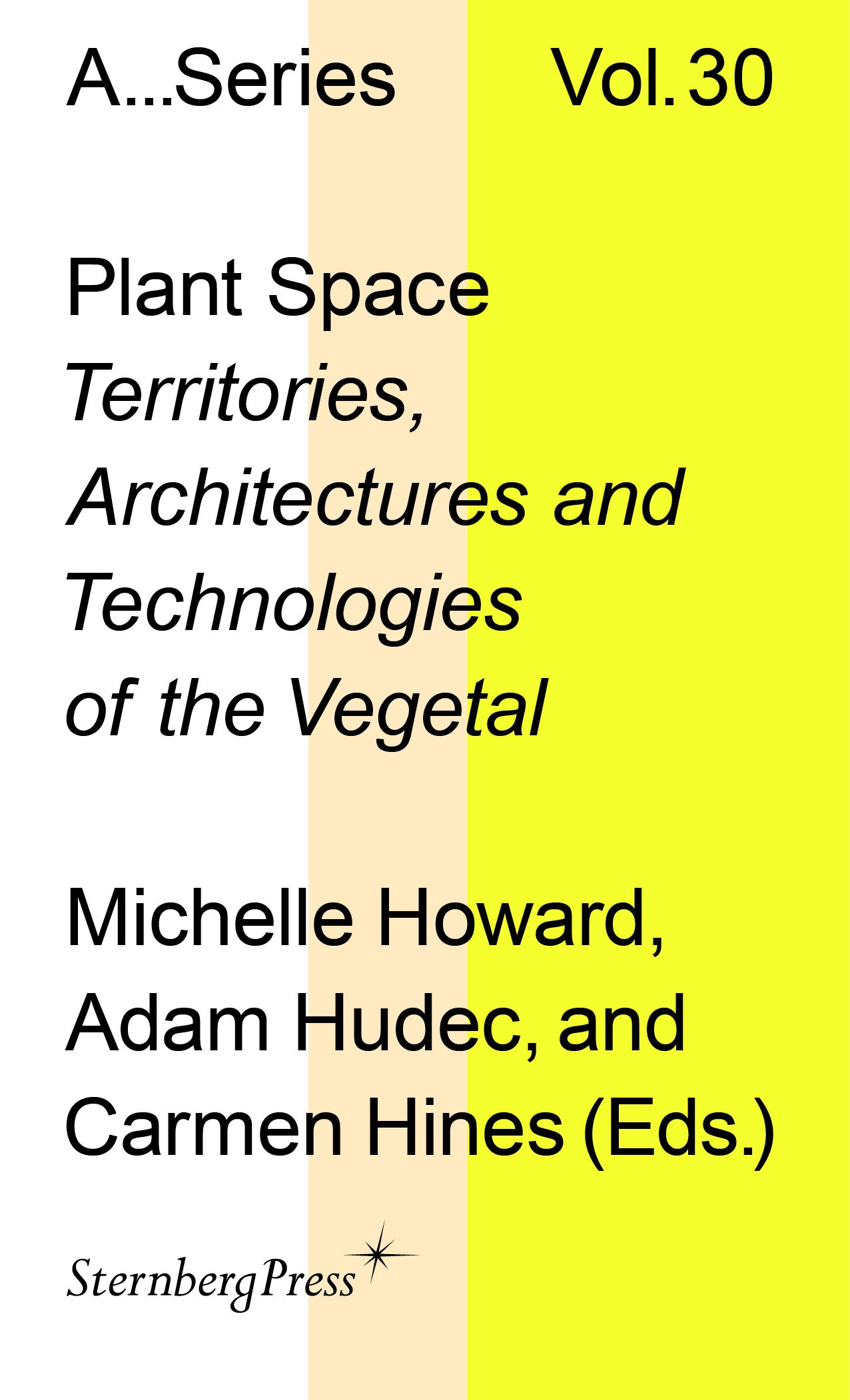
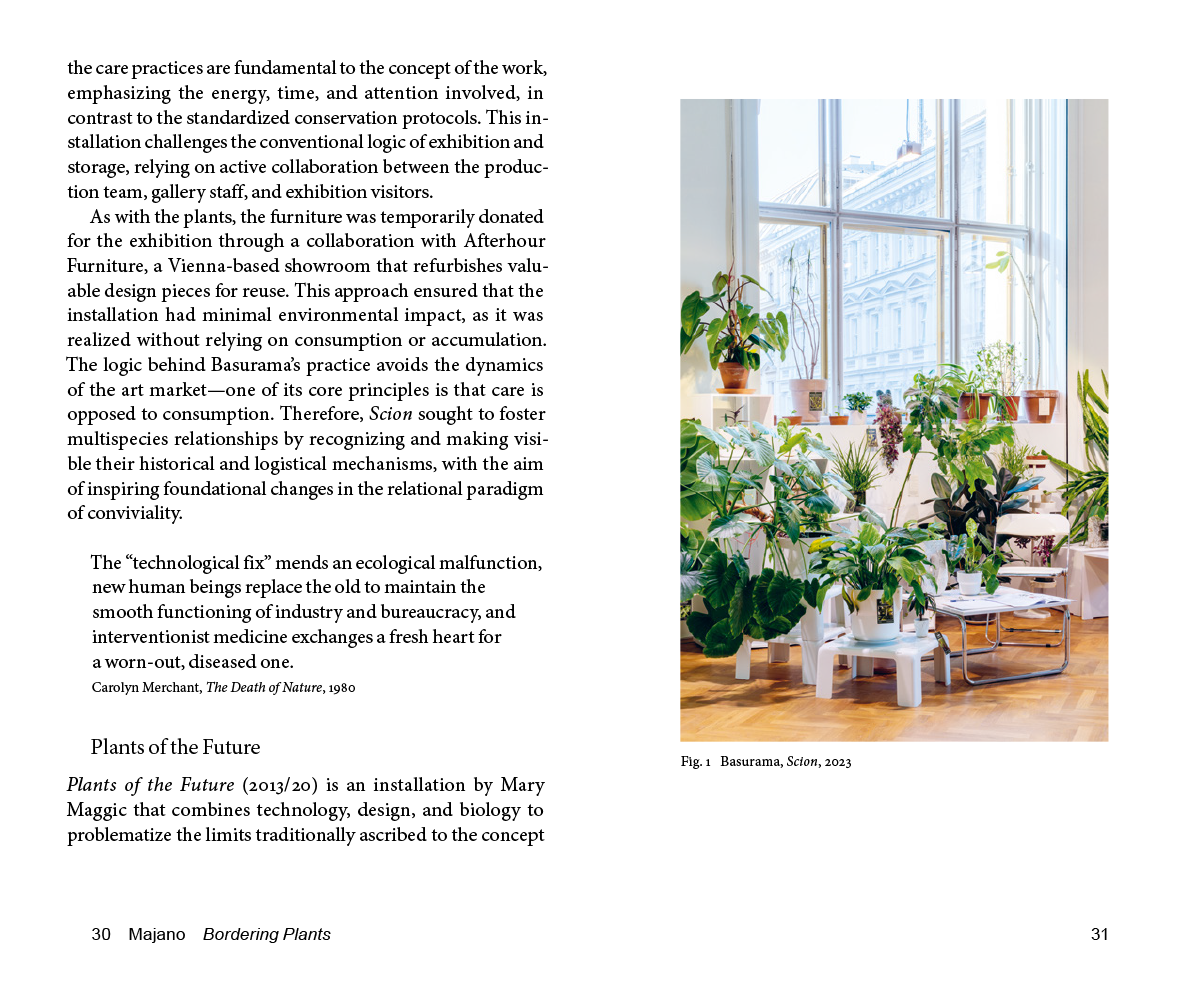
Plant Space: Territories, Architectures and Technologies of the Vegetal brings together eighteen international contributors working across critical theory, philosophy, art, design, architecture, and critical ecology to radically reimagine the role of plants in shaping the built environment and its overlapping economies and ecologies. Framed by the entangled histories of extraction, enclosure, and domestication, this volume resituates plants not as passive scenery or symbolic decoration, but as formative presences: agents of spatial composition, political tension, and epistemic possibility. Developed in the context of the exhibition "Bordering Plants" at the Academy of Fine Arts Vienna, essays and experimental formats examine the infrastructures, colonial residues, and aesthetic regimes that render plant life visible, governable, or expendable. From houseplants, the imperial gardens of Vienna, and the global circuits of plant trade, to AI-rendered plants and satellite images in herbicidal warfare, the volume traverses the architectures, imaginaries, and techniques through which vegetal life is organized and resists.
Edité par Carmen Hines, Adam Hudec; Michelle Howard.
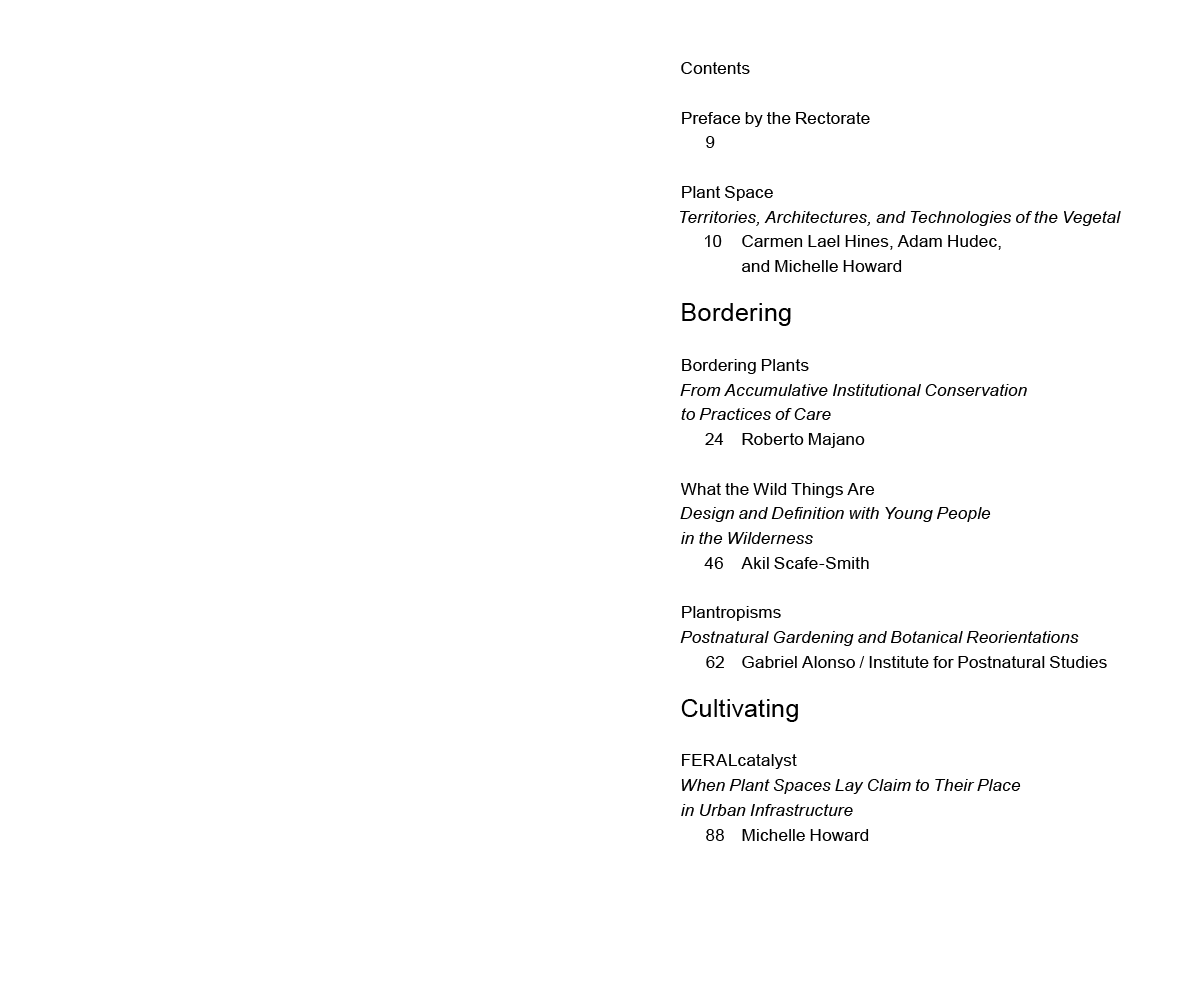
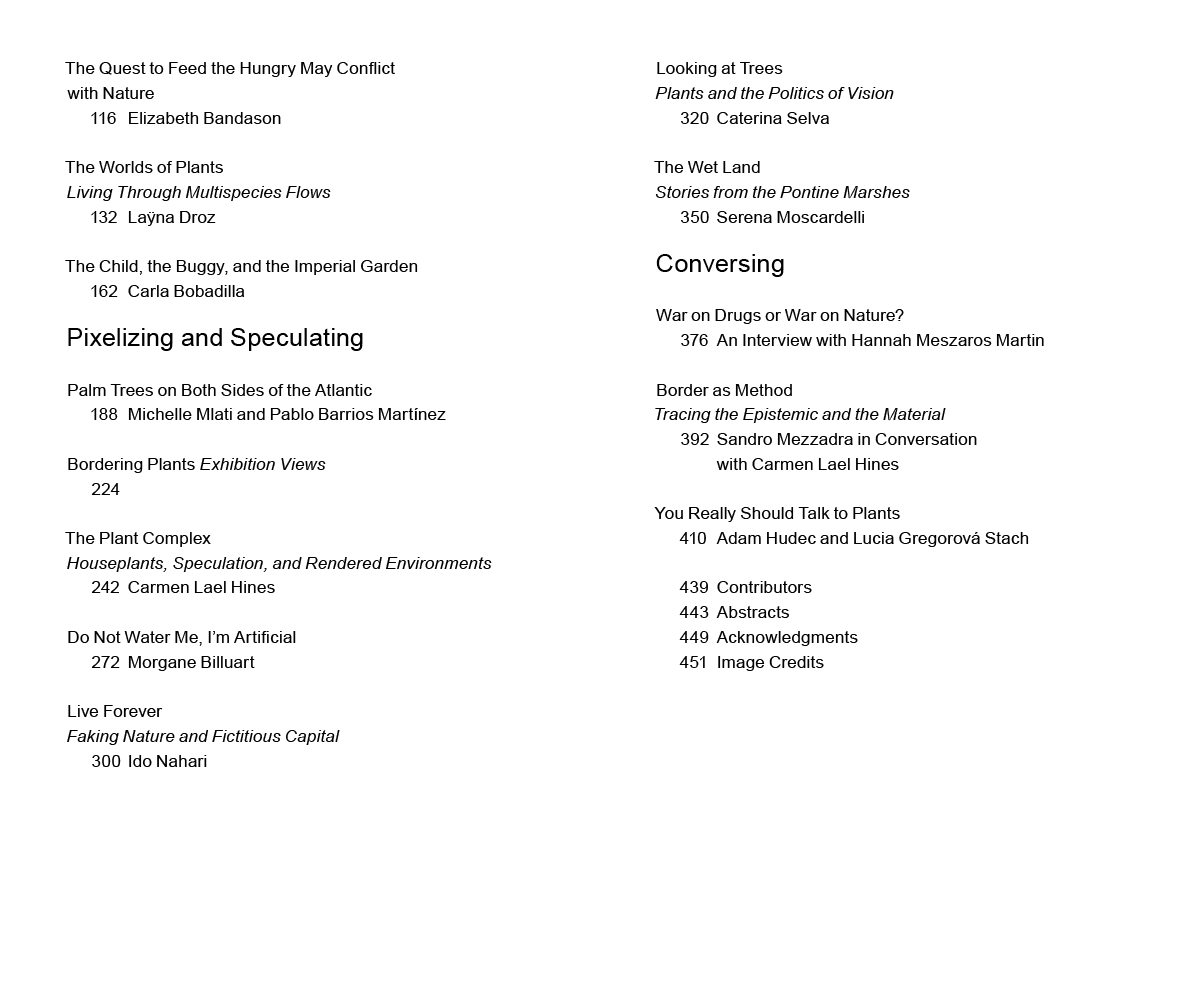
Contributions de Elizabeth Bandason, Morgane Billuart, Carla Bobadilla, Laÿna Droz, Carmen Lael Hines, Michelle Howard, Adam Hudec, Roberto Majano, Hannah Meszaros Martin, Michelle Mlati & Pablo Barrios Martínez, Sandro Mezzadra, Serena Moscardelli, Ido Nahari, Akil Scafe-Smith, Caterina Selva & Lucia Stach, Lucia Gregorová Stach, Gabriel Alonso / Institute for Postnatural Studies.