Edited from archival lectures, AH!MERICA captures Allen Ginsberg's profound exploration of William Blake as a guide for modern perception and social consciousness. It offers a "poetics of attention," teaching readers to find beauty in overlooked details and use poetry as a tool for resilience against political and personal despair.
In 1974, Allen Ginsberg co-founded the Jack Kerouac School of Disembodied Poetics at the Naropa Institute. For the next two decades, until his death, he taught there, delivering legendary, rambling, and incisive lectures on the life and work of William Blake. Now, for the first time, these lectures have been edited from the original audio archives into a single volume.
Taking its title from Blake's "Ah! Sunflower," AH!MERICA develops a poetics of attention: the line as breath, the "somatic rhythm" a poem can transmit, and the force of "minute particulars." Look hard at what everyone else has trained themselves not to notice. Cornices on nineteenth-century apartment buildings, rivet-heads on subway pillars, the "fat black fungus" of chewing gum on a platform: the overlooked textures of daily life become the raw material of American writing, and a way to test perception against habit.
Beyond the physical world, AH!MERICA reads Blake as a contemporary psychology of public feeling. Ginsberg identifies the eternal battles playing out in the public square and within the self: wrath versus pity, anger versus mercy, revolutionary fervor versus disillusionment.
Amid the commercial noise and political cynicism of today, Ginsberg suggests that Blake registers in our decade just as profoundly as he did in his own. There is no easy relief from these tensions, only the multivalence of poetry. Yet, ultimately, two lessons rise above the rest in this collection: generosity can outlast despair, and a life lived alertly—open to suffering as much as to beauty—remains possible
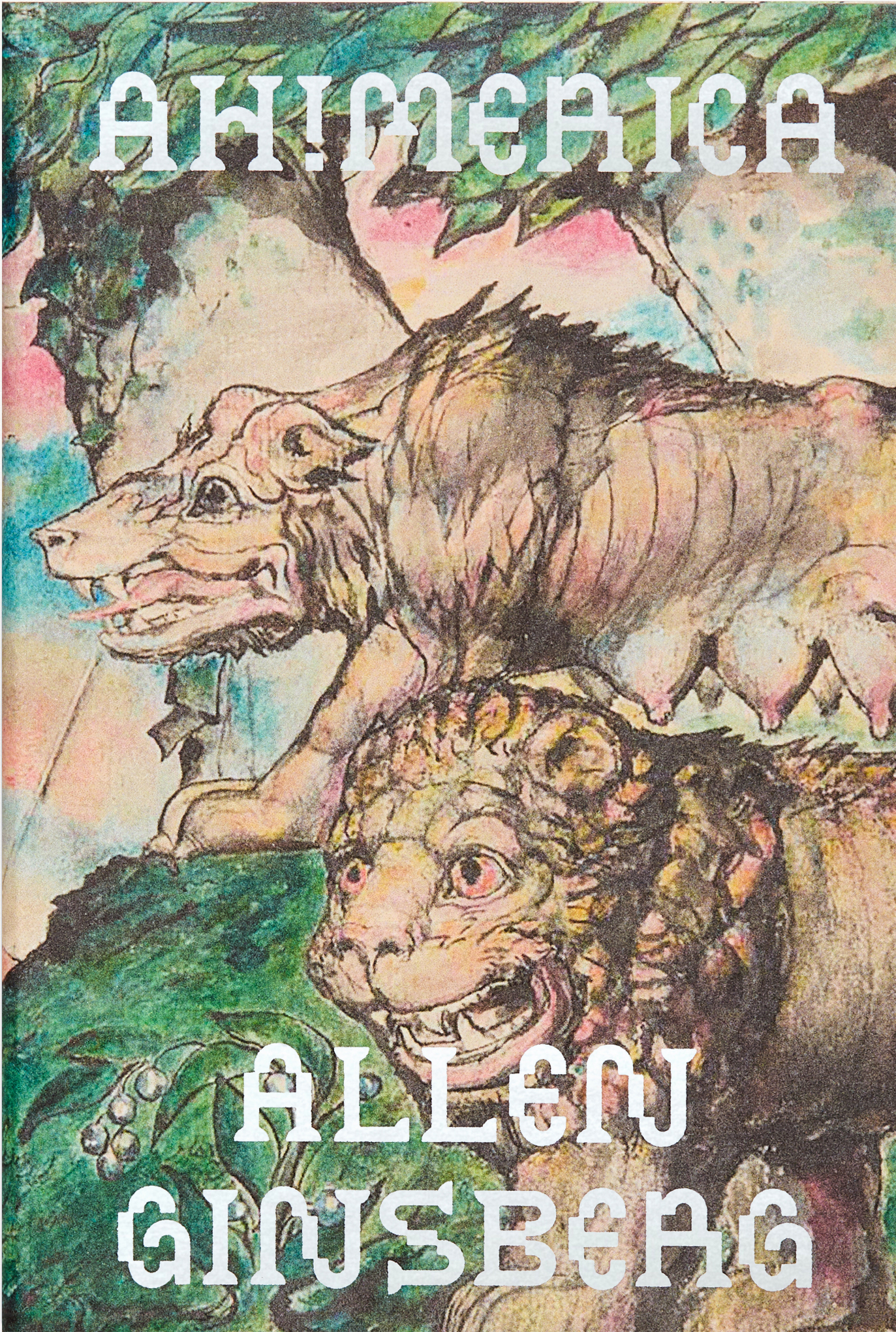
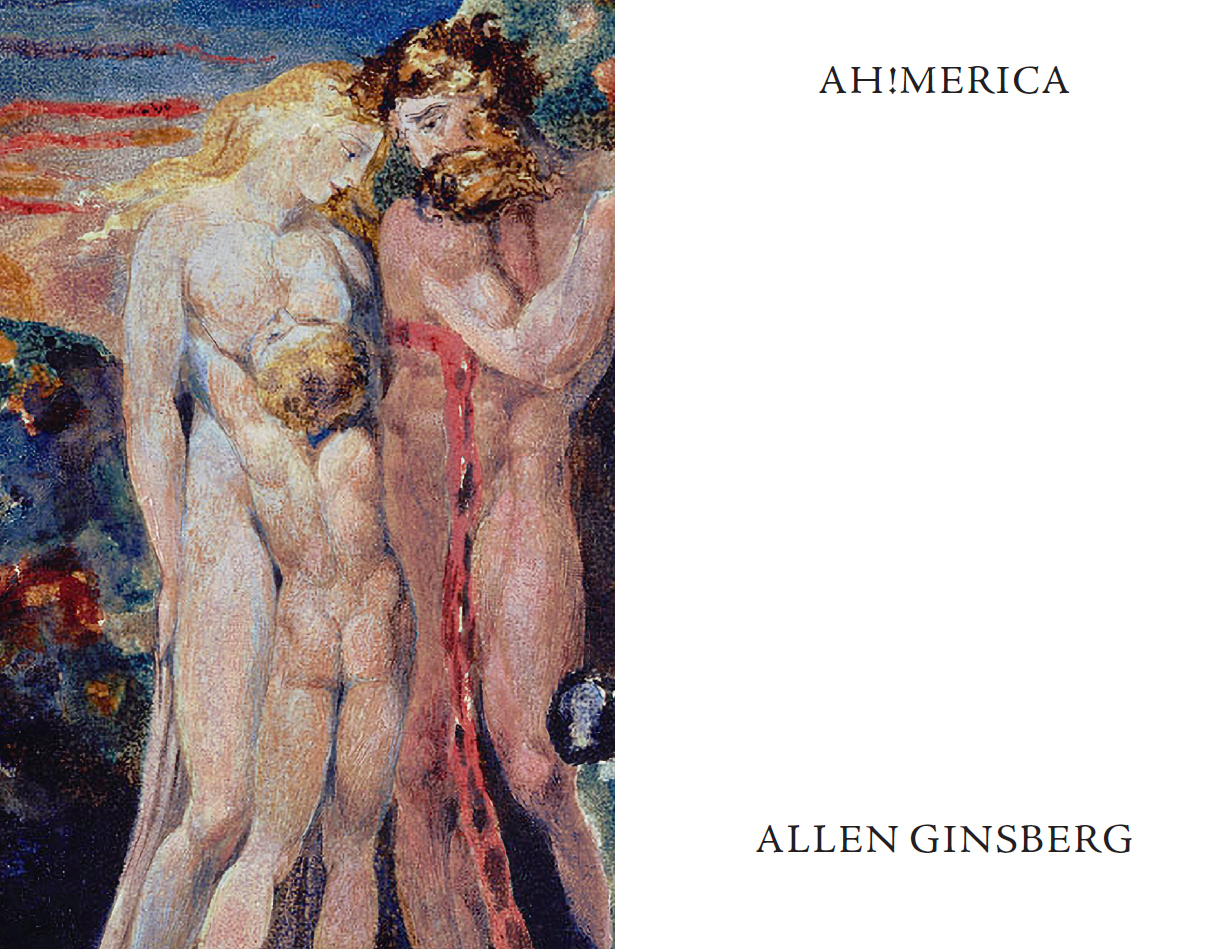
This publication comes with two different covers, randomly distributed.
Allen Ginsberg (1926-1997) was an American poet, teacher, and activist, founding member of the
Beat Generation, and key figure in American counterculture. His poem "Howl" (1956) became the subject of an obscenity trial and later one of the most widely read poems in modern literature. Over the following decades he travelled extensively, became a dedicated student of Buddhism, and kept granular records of his life and surroundings. He died in 1997 in his East Village apartment. Across his work—sprawling, prophetic, comic, tender—one quality remains central: honesty. "You don't have to be right," he said. "All you have to do is be candid."