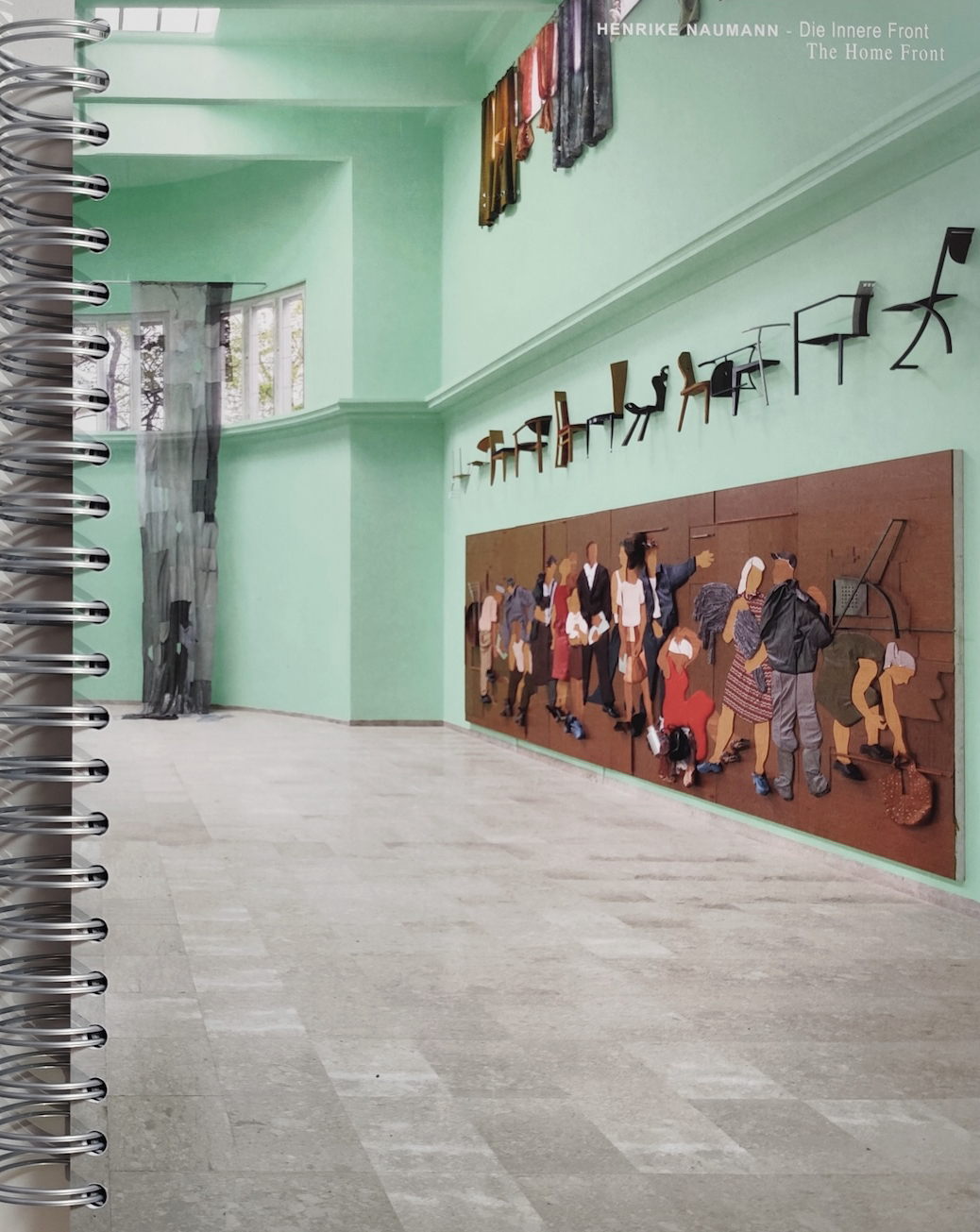
A comprehensive overview of the artistic and conceptual work of Henrike Naumann, one of the most influential voices of her generation, who died at the age of 41 shortly before the opening of her project for the German Pavilion at the 61st Venice Biennale.
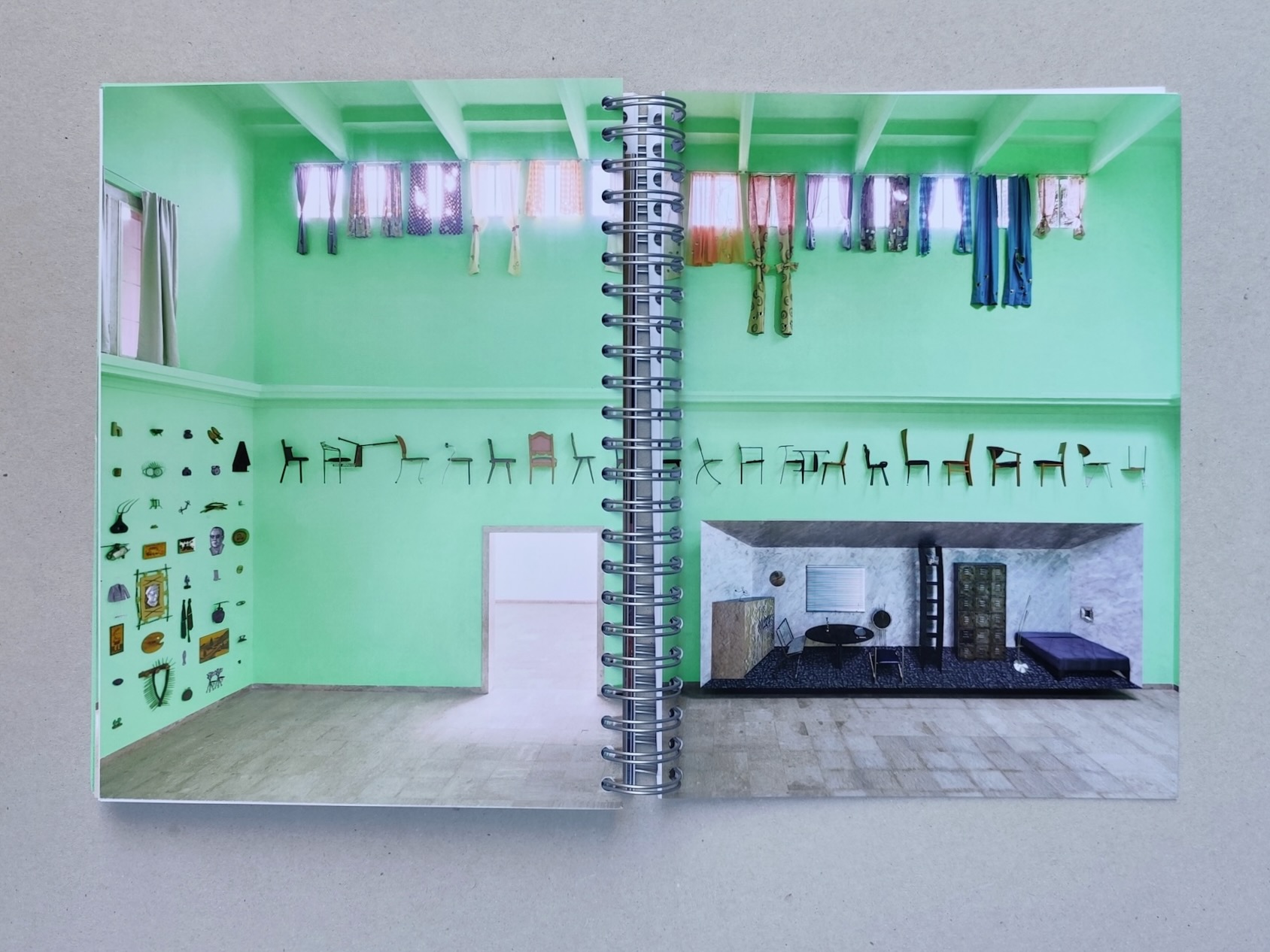
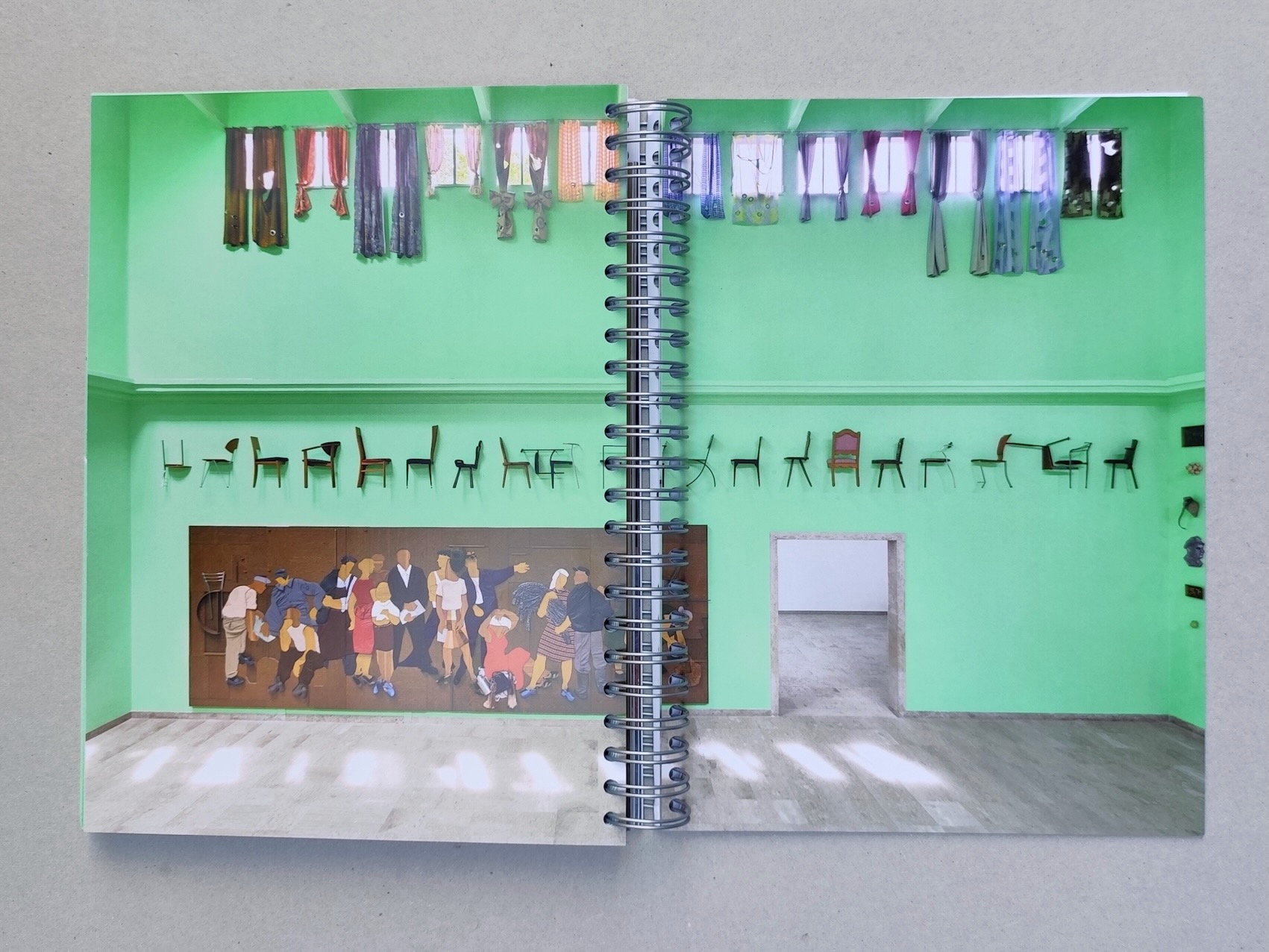
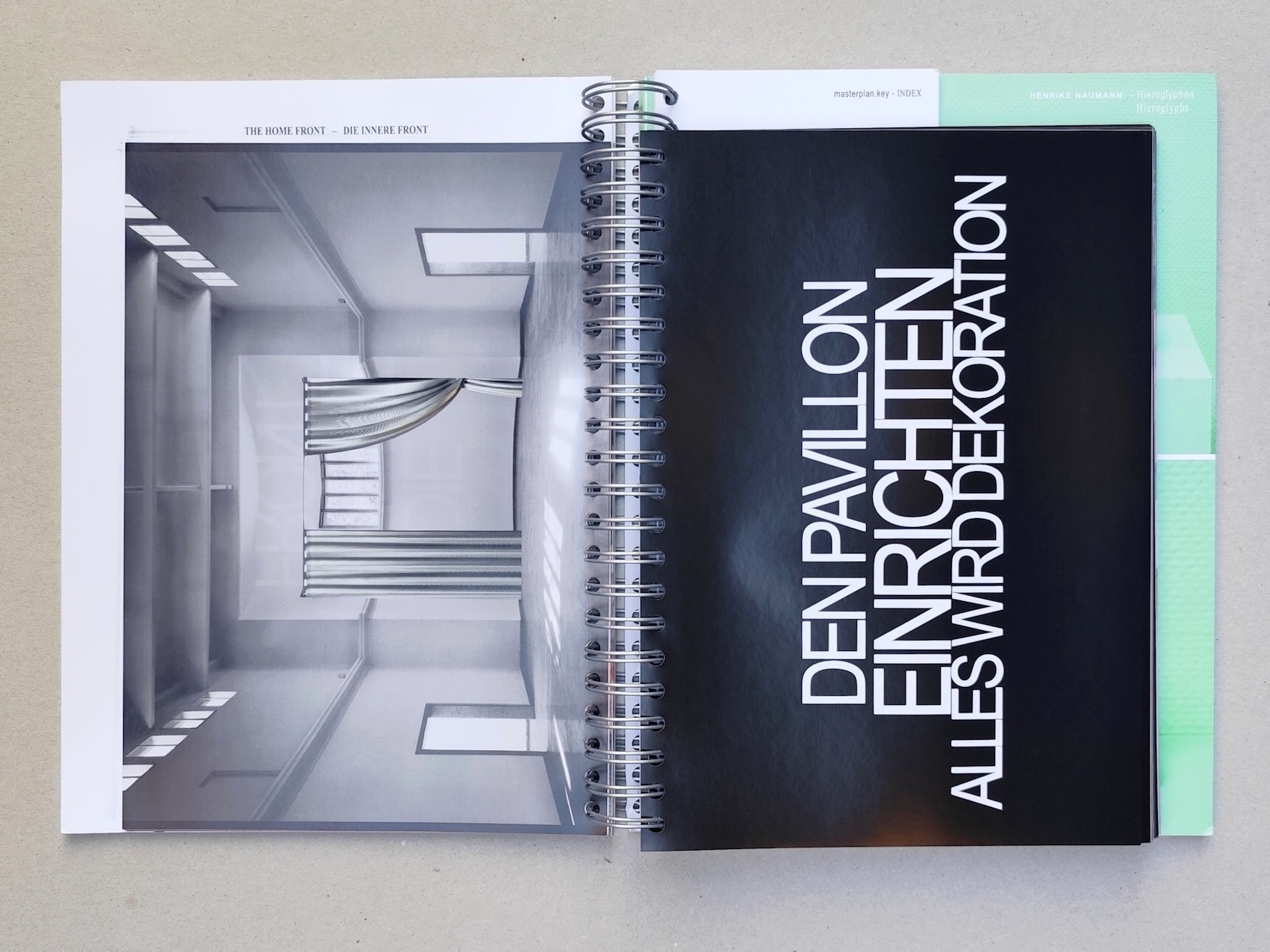
This publication is an independently released collection of materials relating to Henrike Naumann's contribution to the exhibition RUIN in the German Pavilion at this year's Venice Biennale (curator: Kathleen Reinhardt; artists: Henrike Naumann, Sung Tieu).
It has no clear beginning or end. As one 'forever' turns the pages along the spiral binding, new connections emerge, fragments and meanings shift, and what has been seen appears different in repetitions. Clear interpretations elude the reader. The compiled material is both contextualizing and bewildering at the same time. It is 'uncomfortable', much as Henrike Naumann described her work in the pavilion. What emerges is a dense artistic practice that could not be consciously brought to a close, but is instead defined by an abrupt ending.
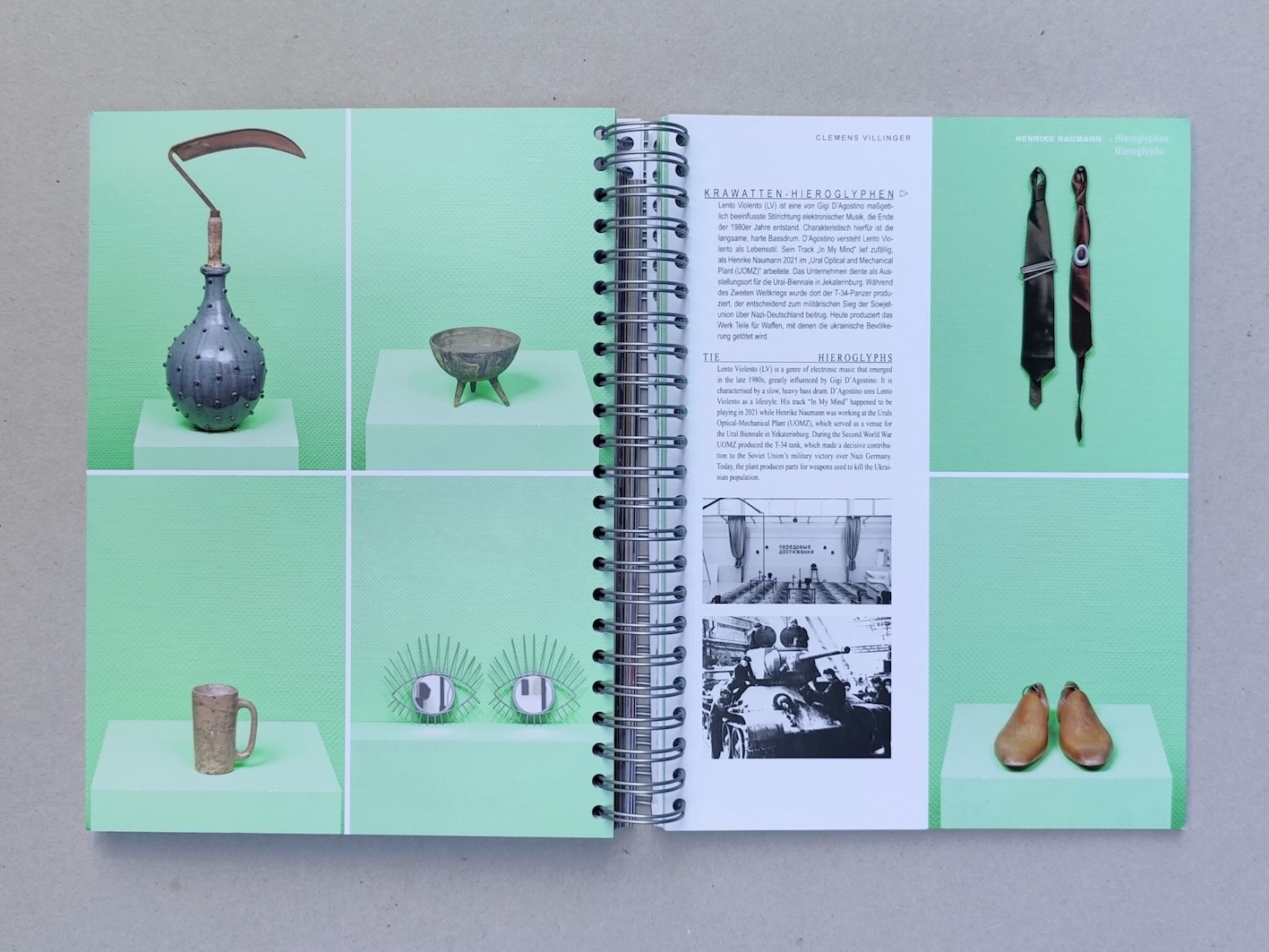
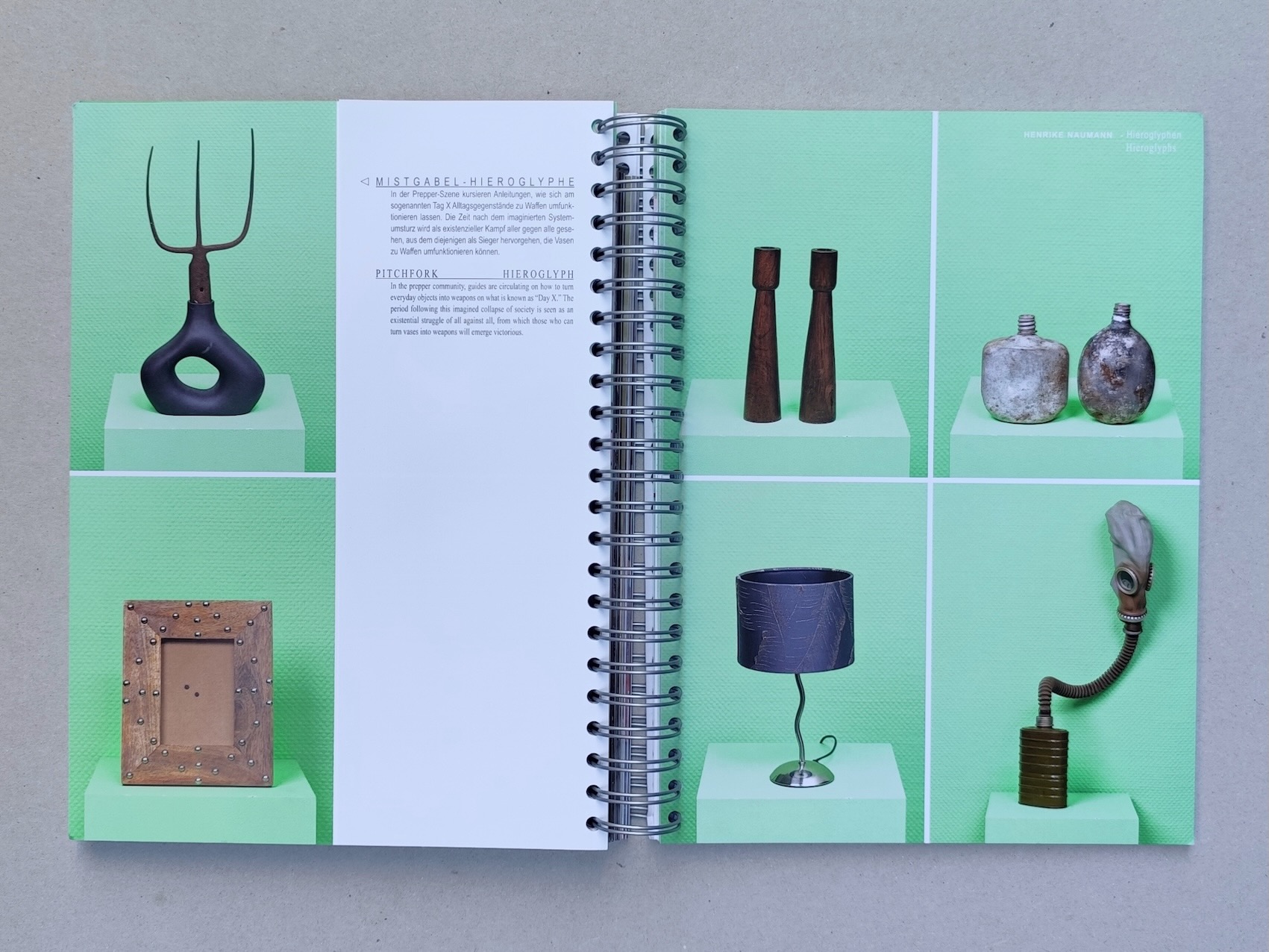
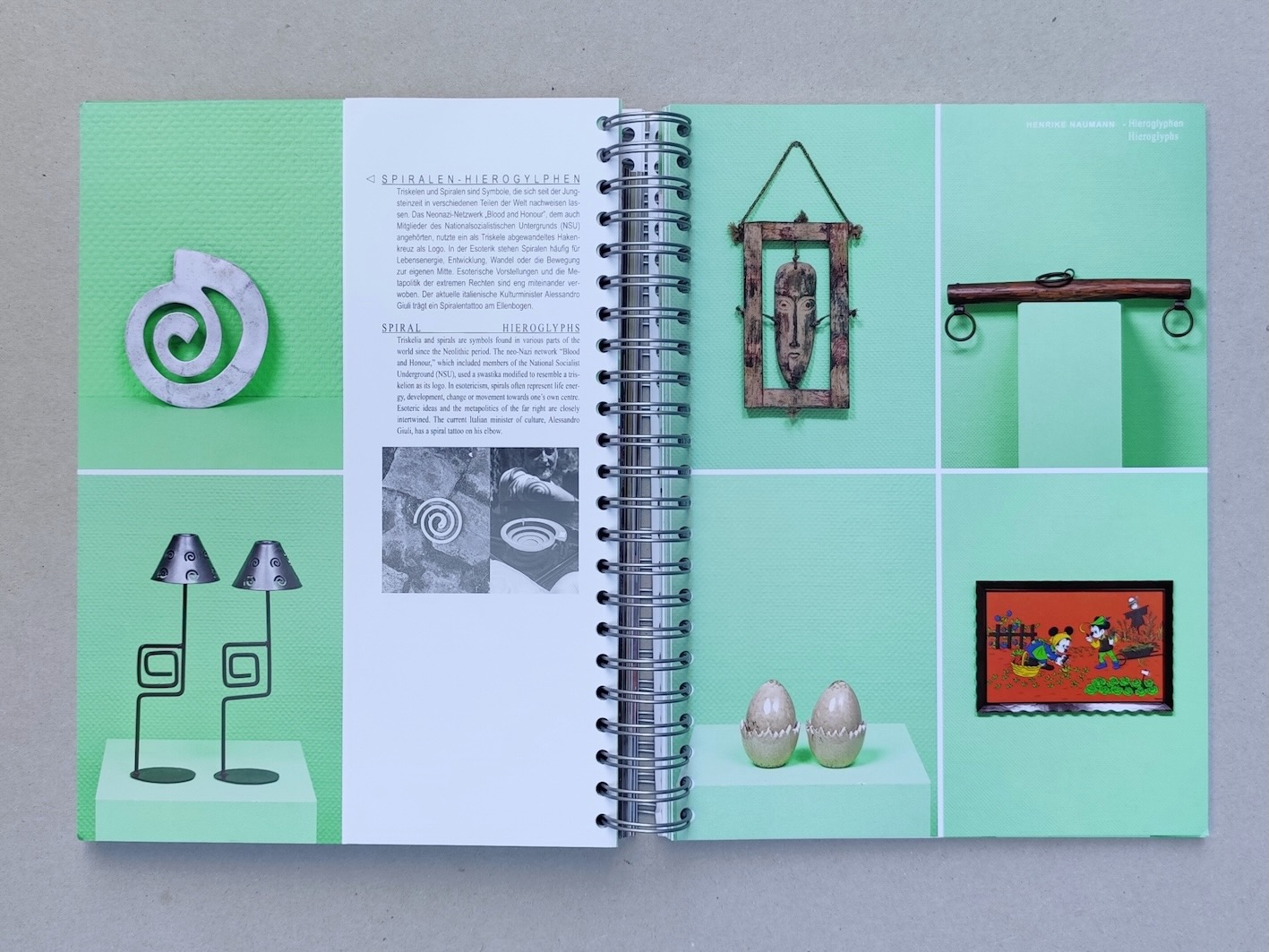
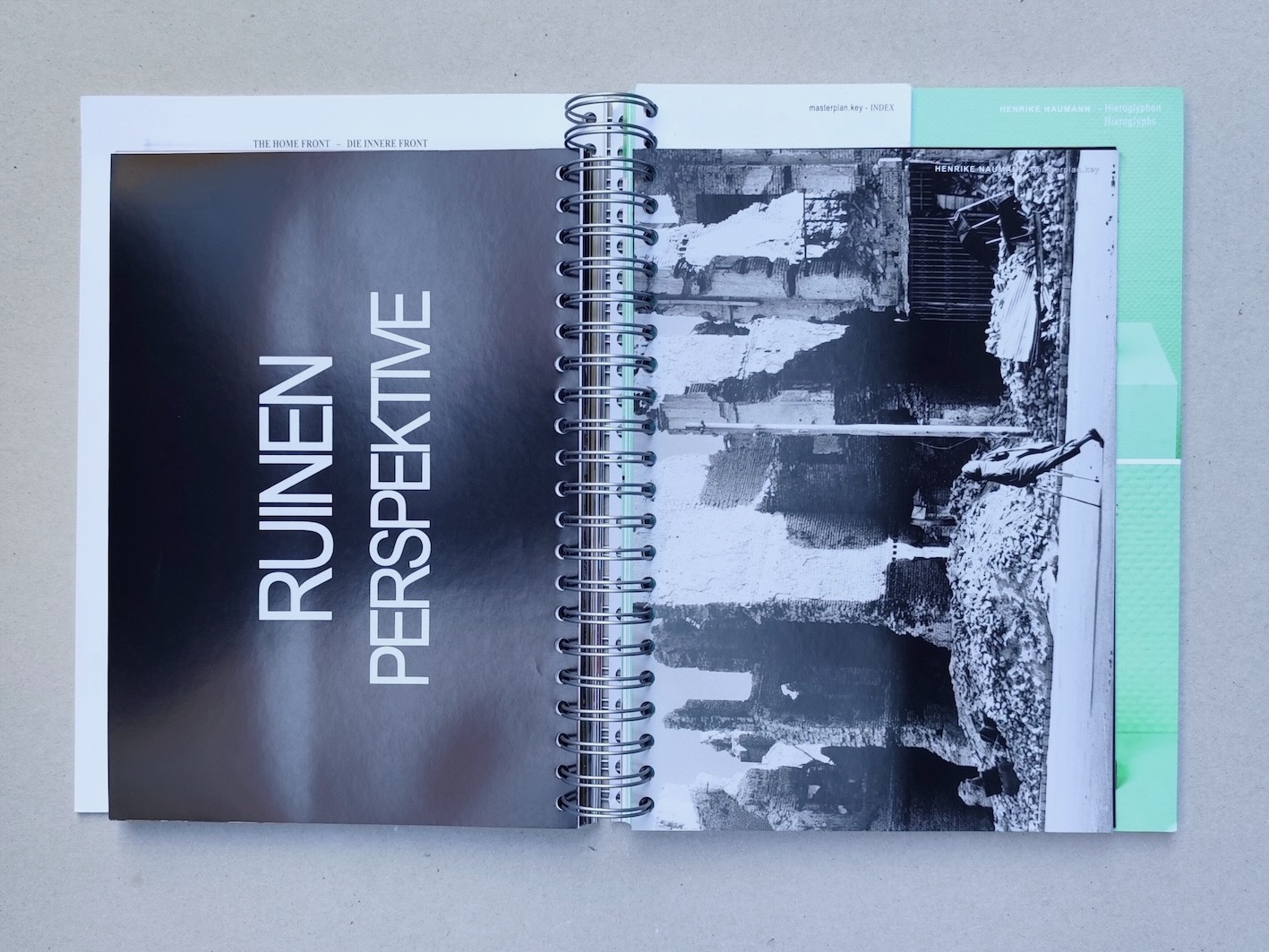
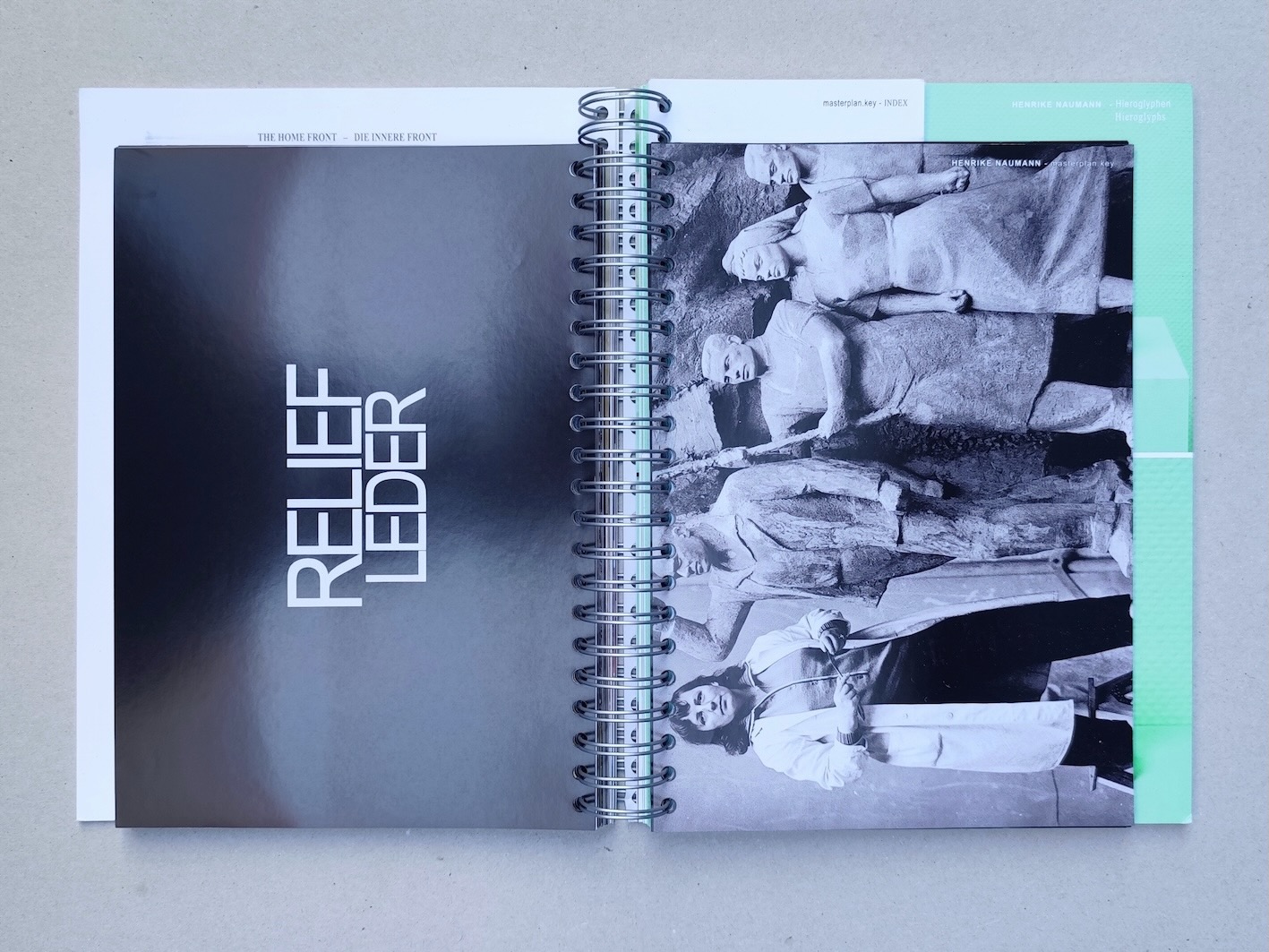
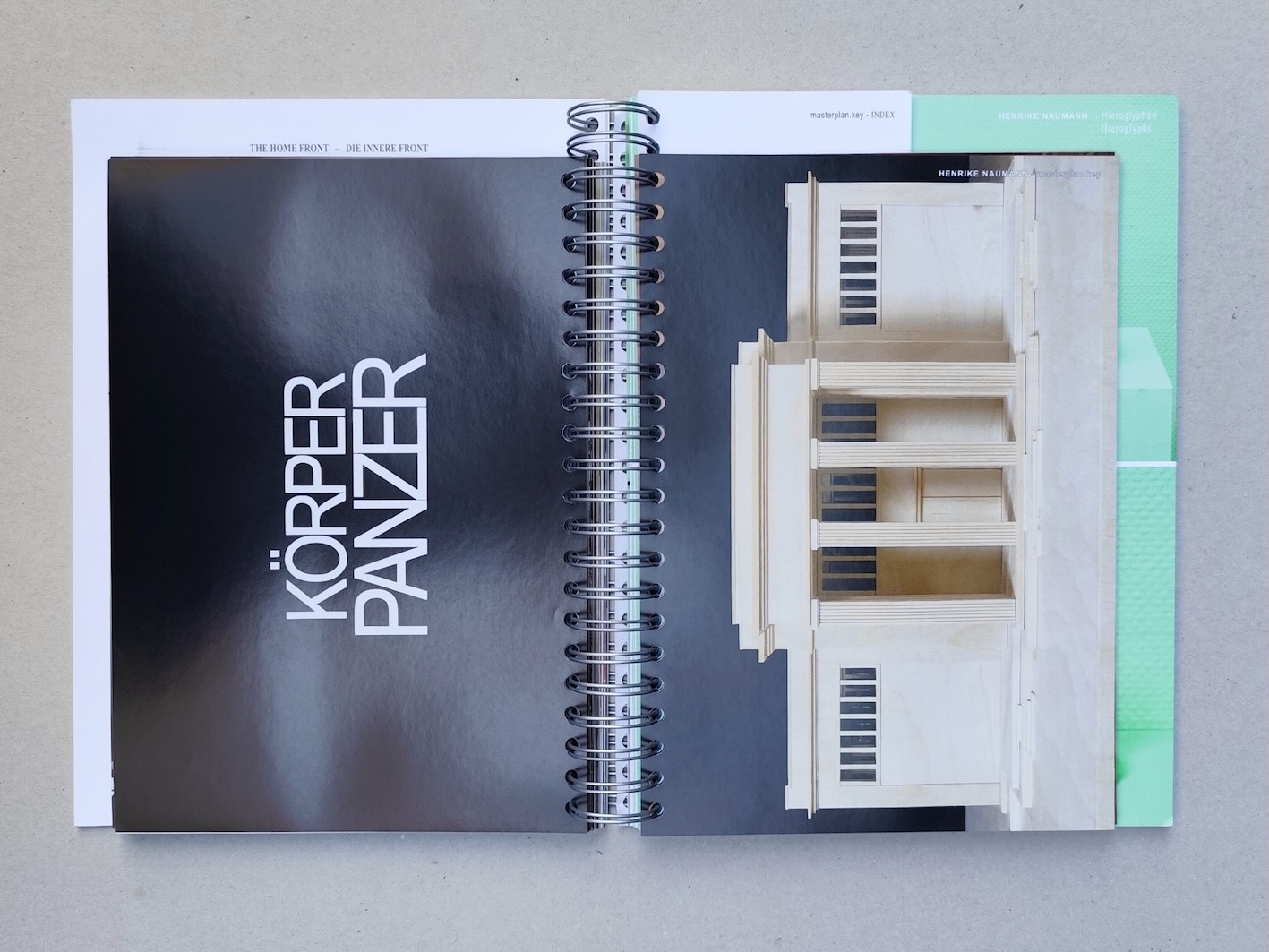
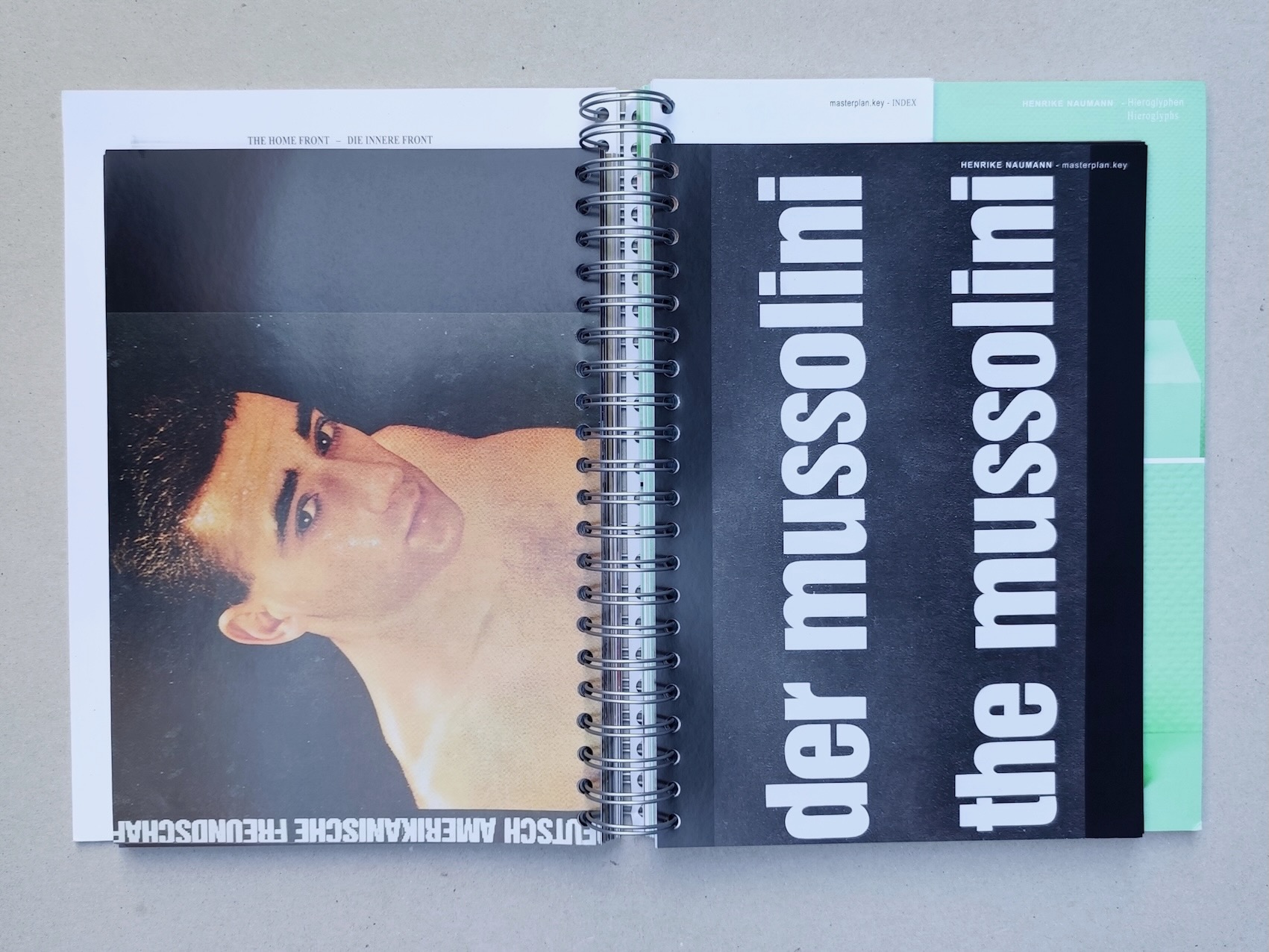
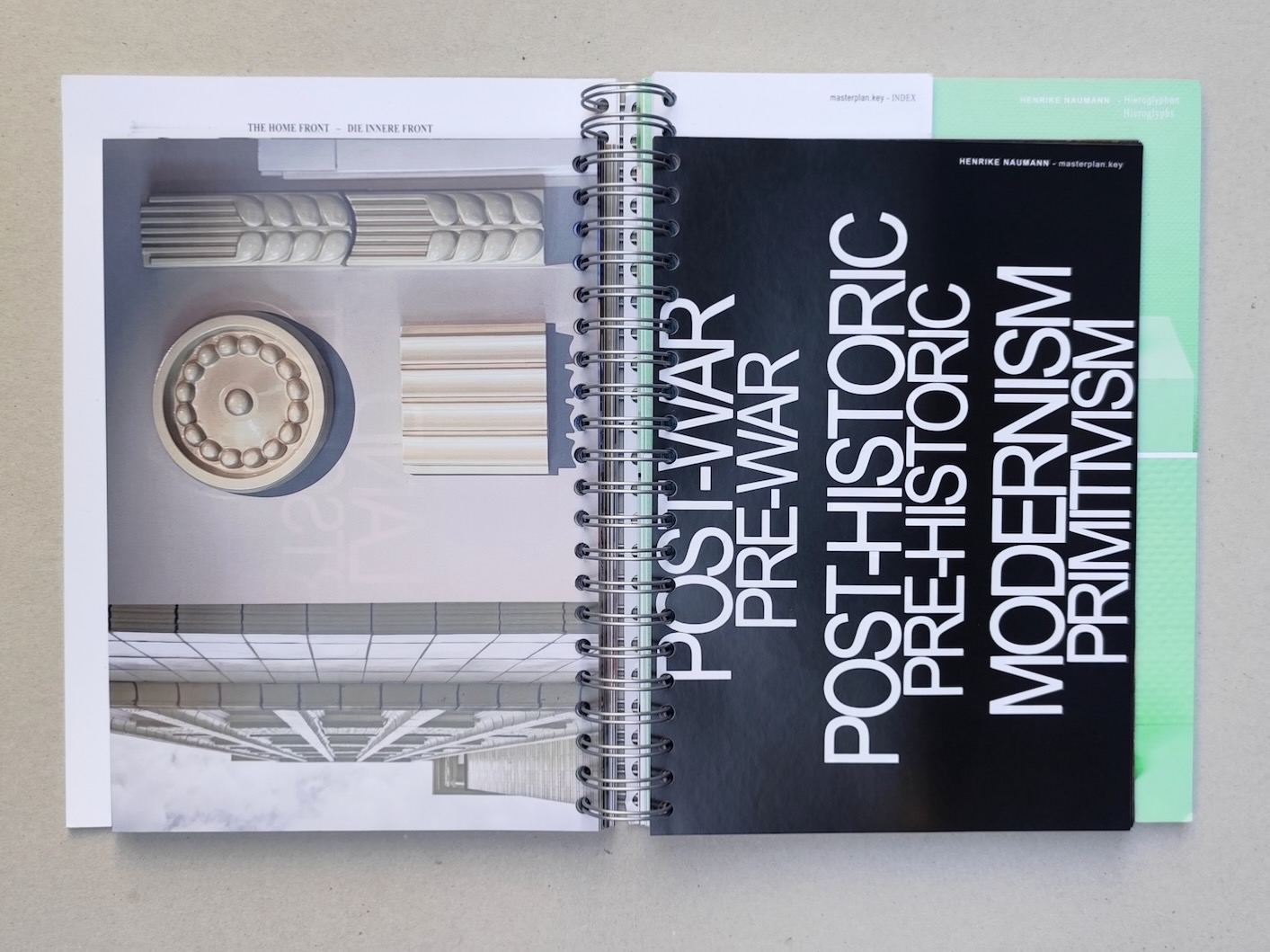
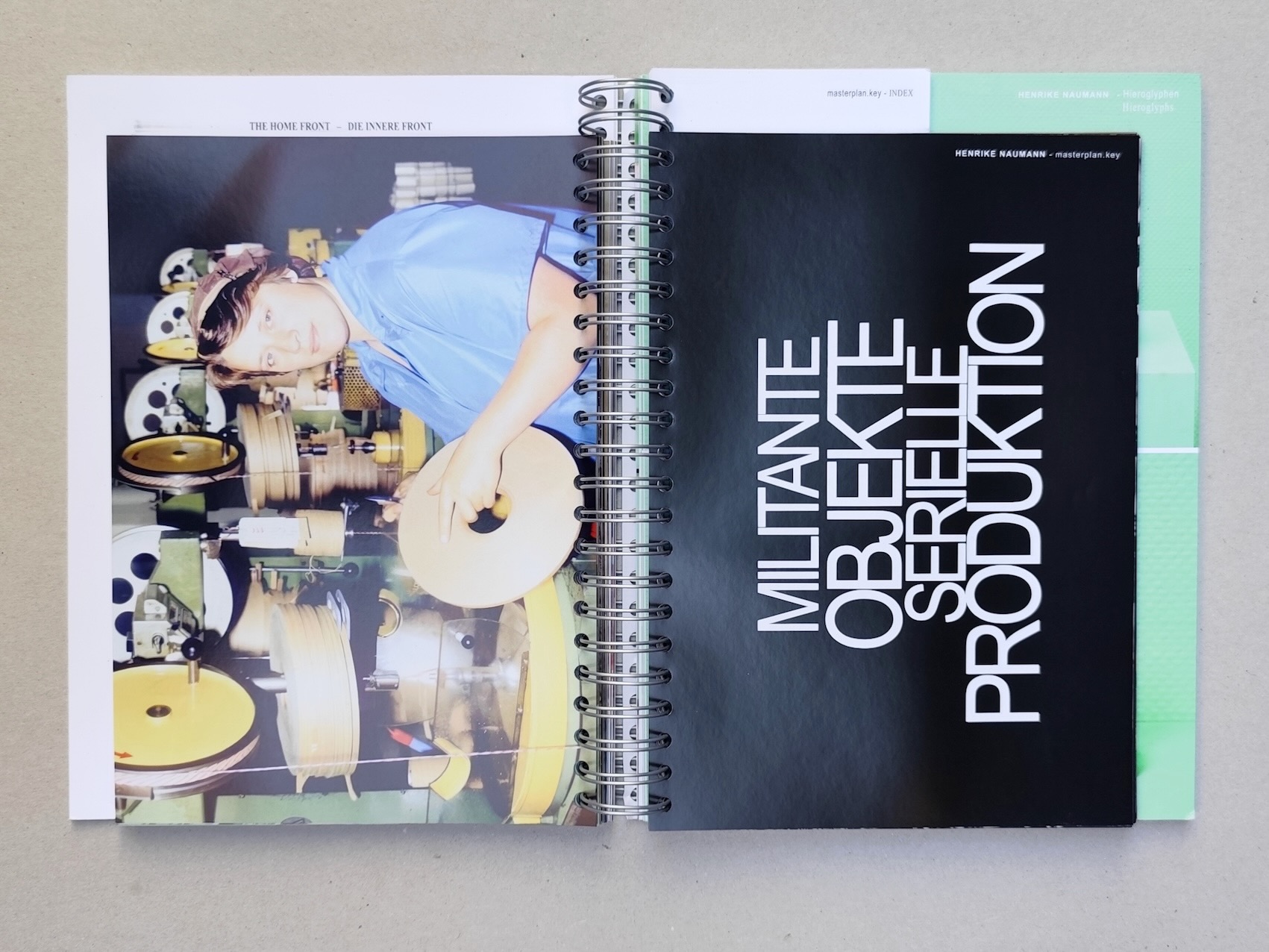
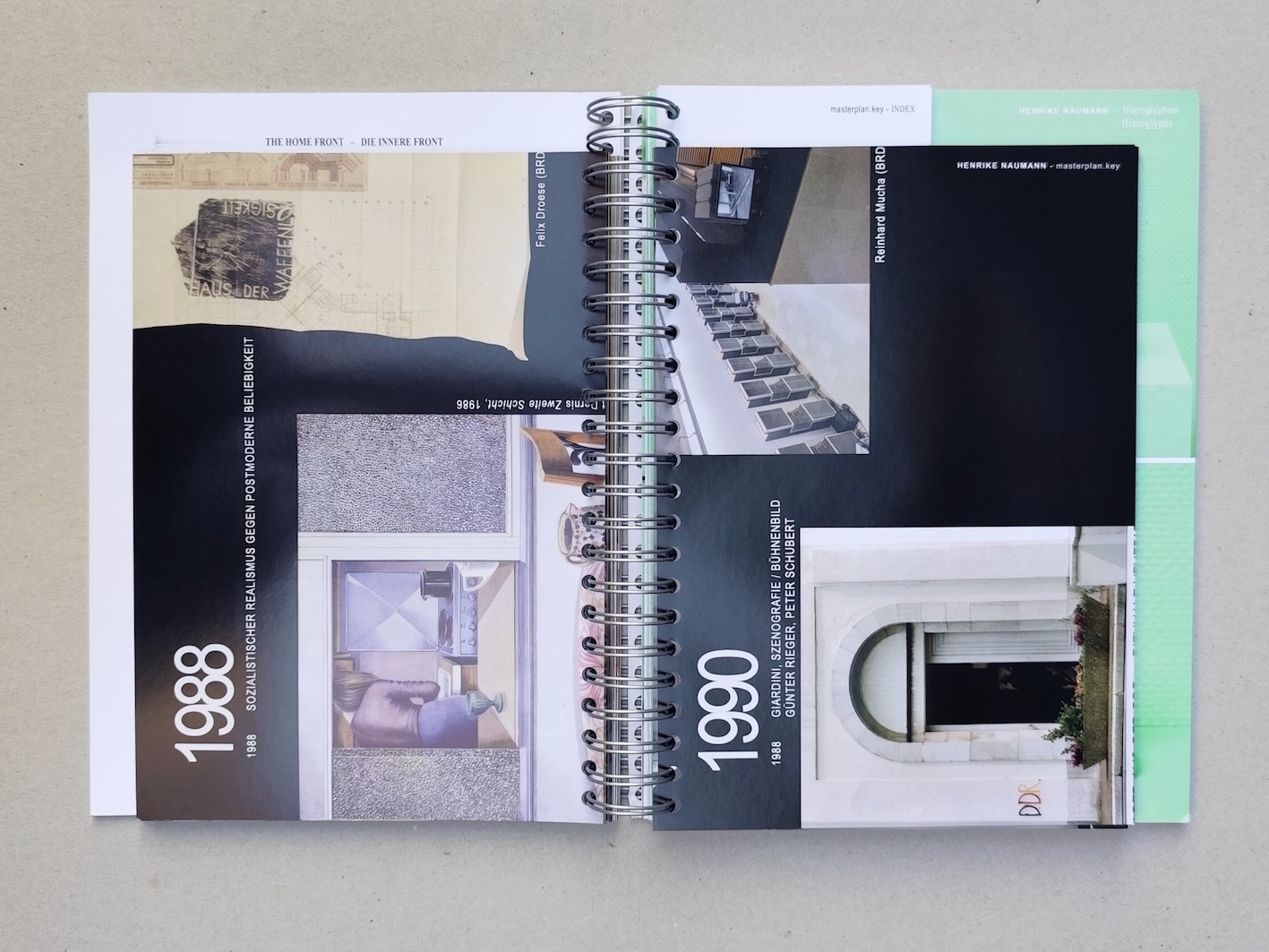
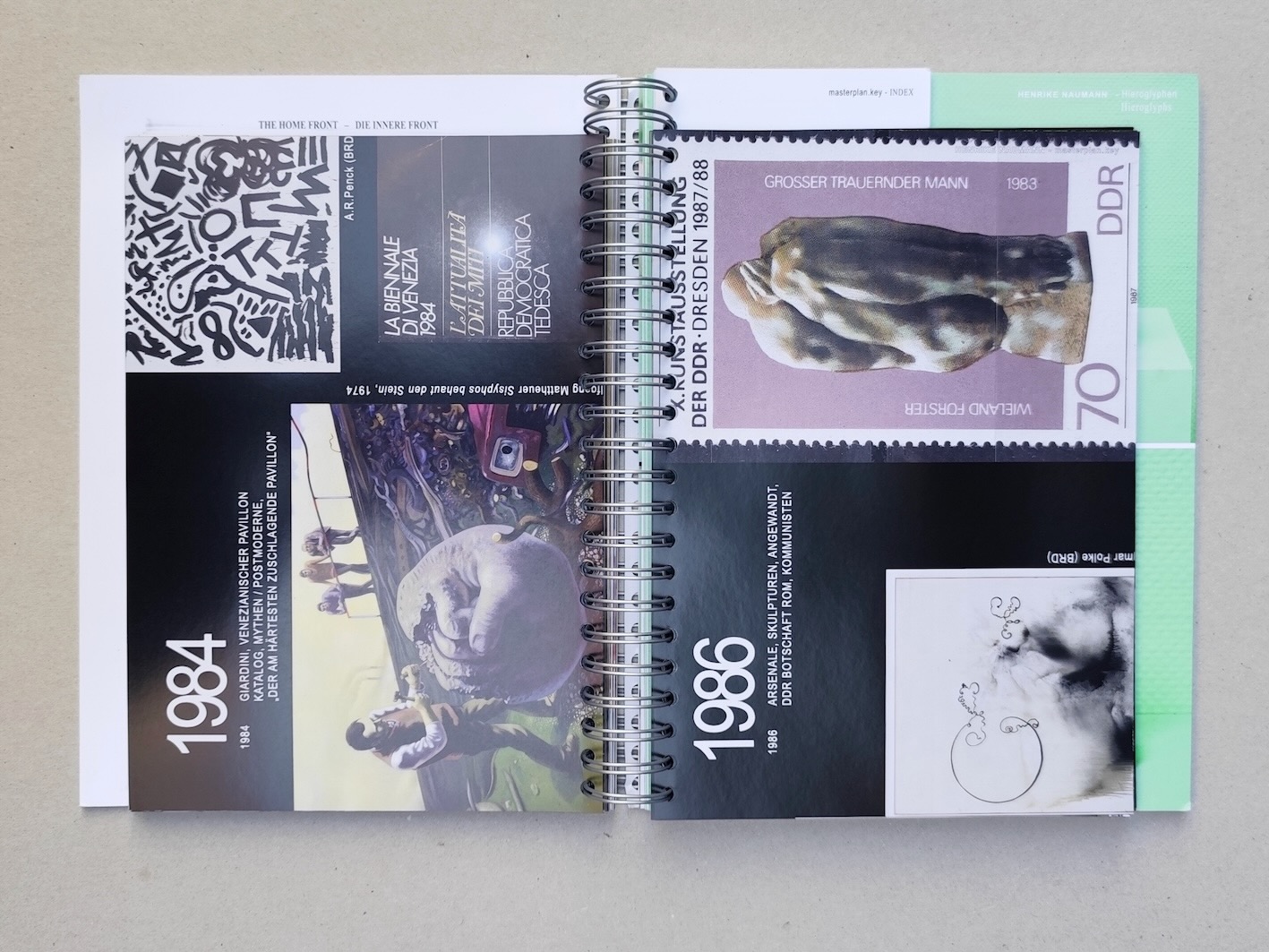
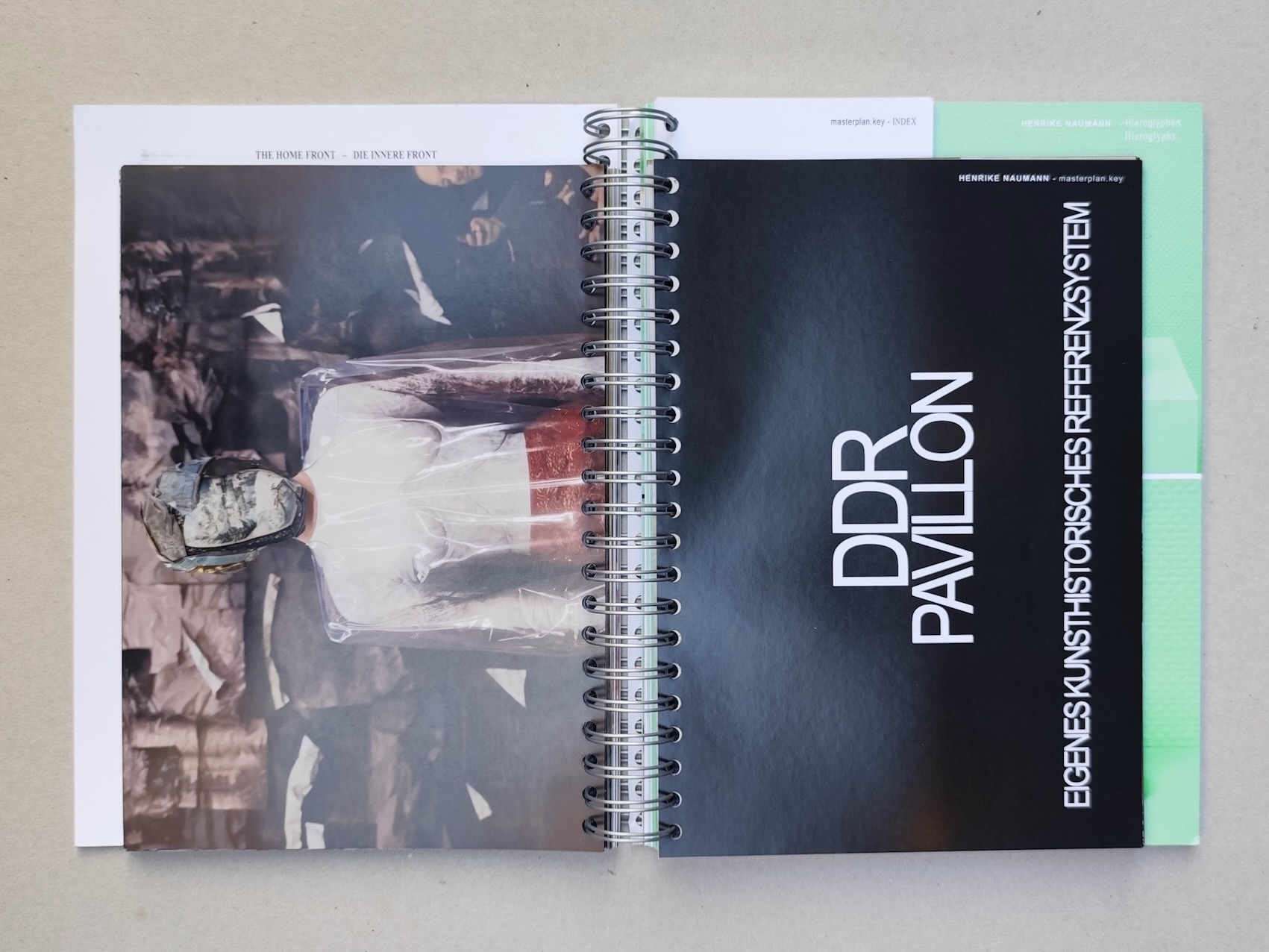
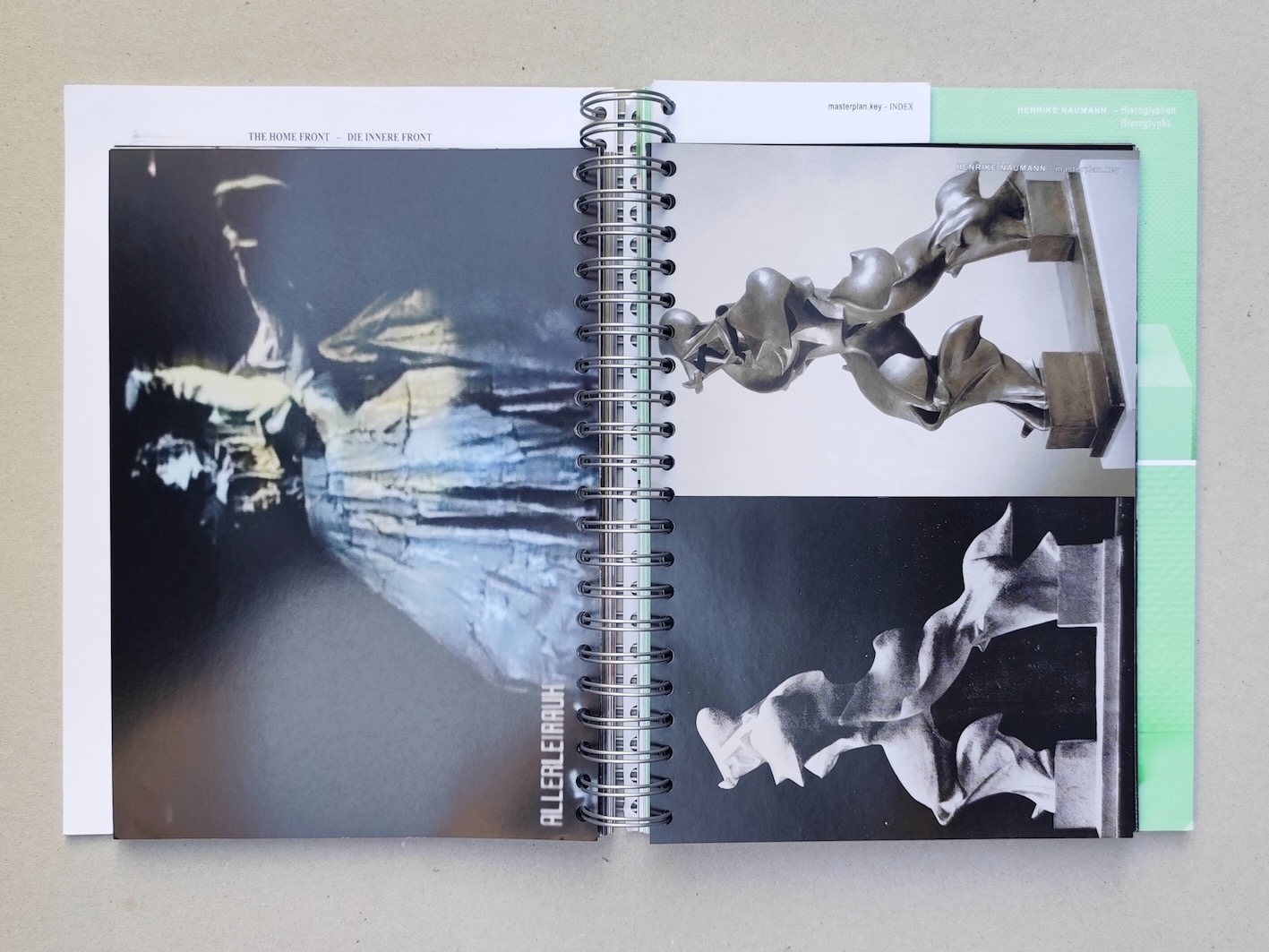
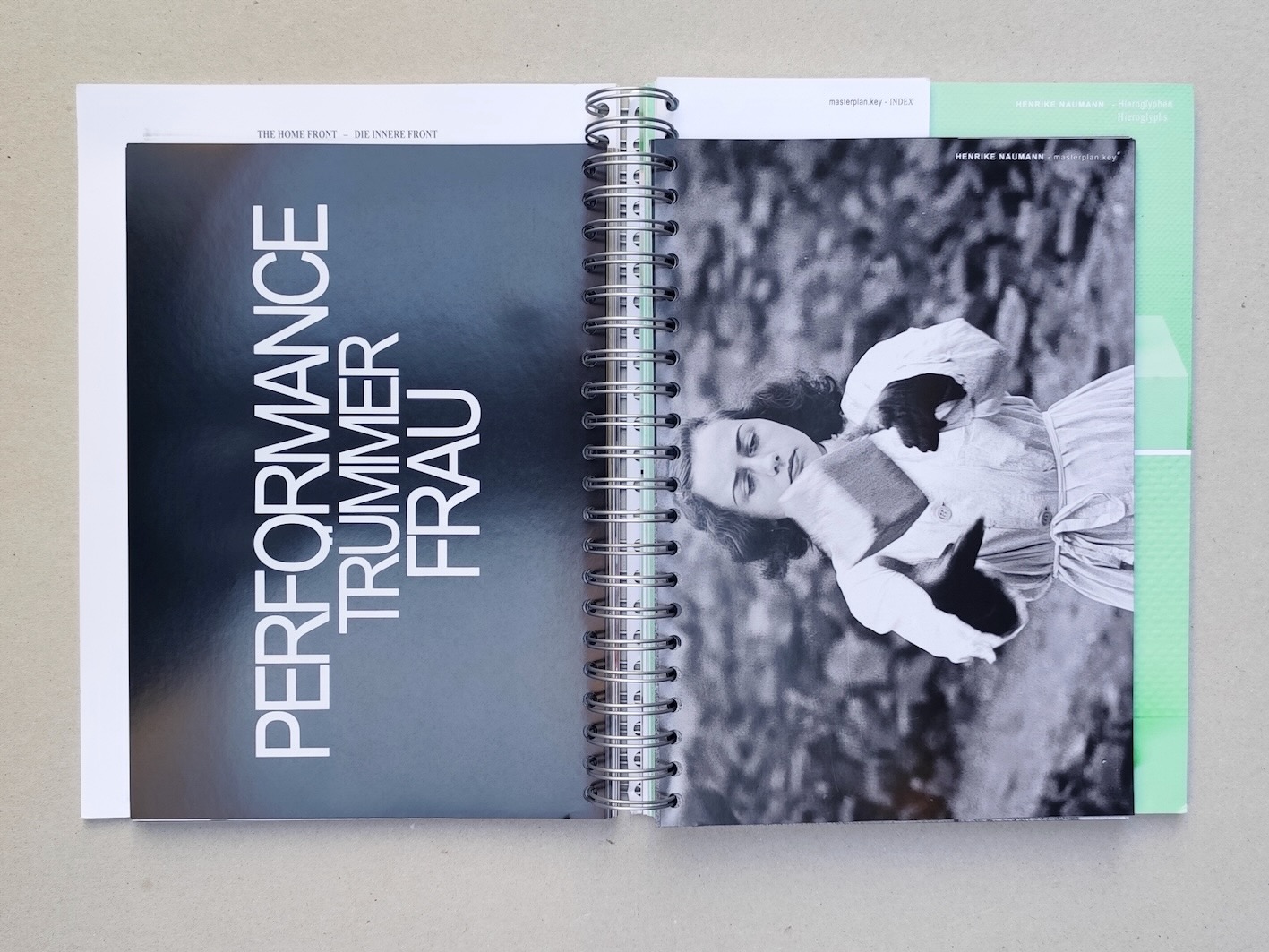
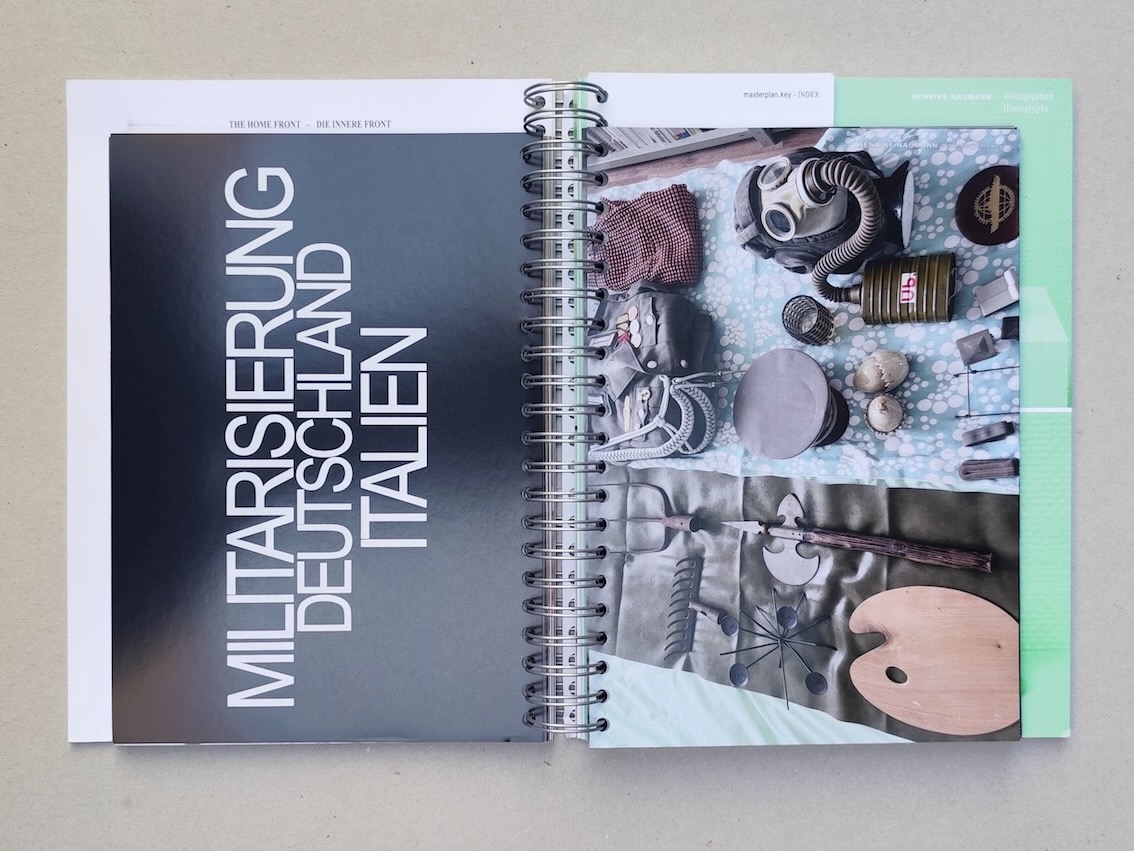
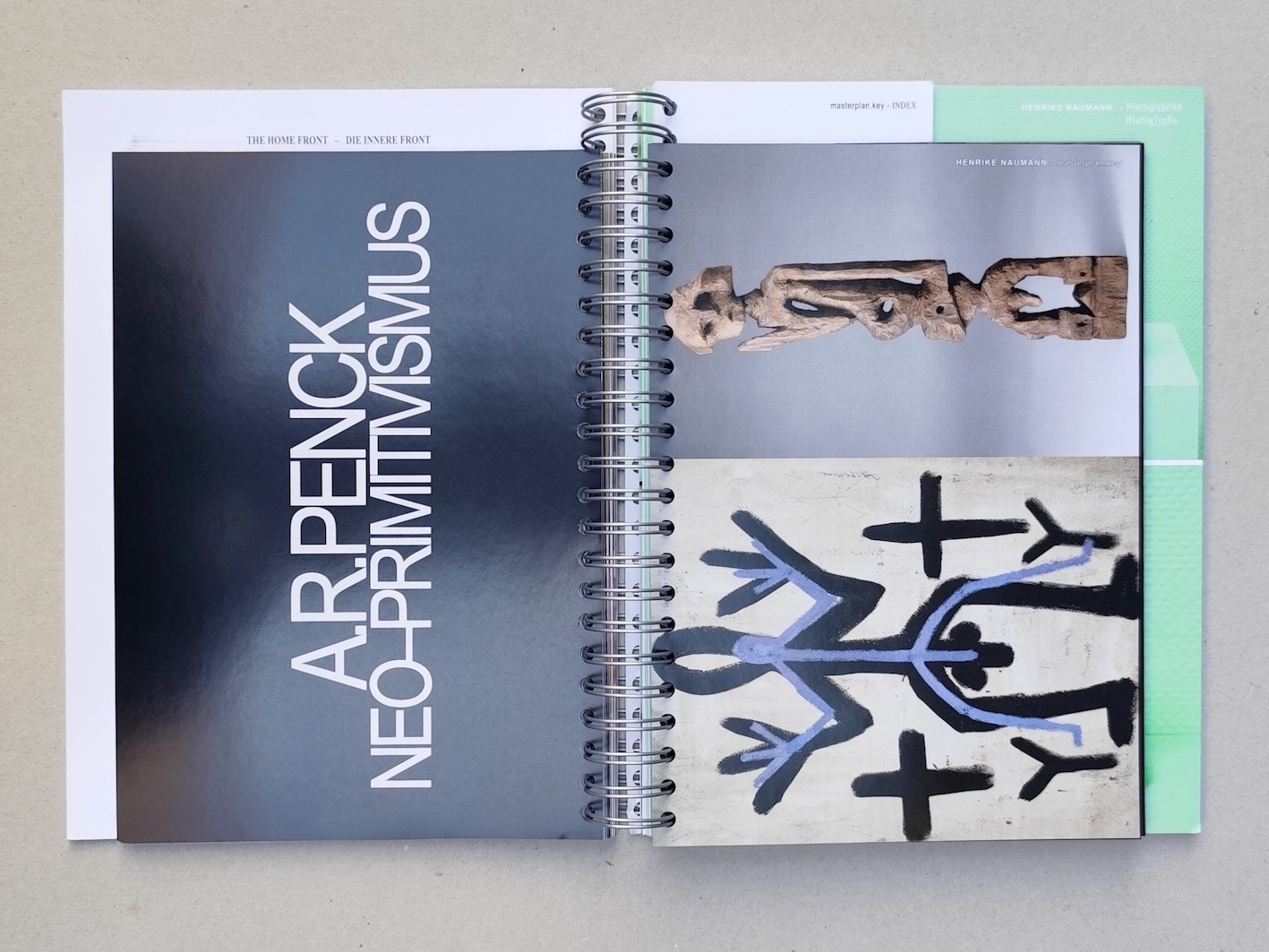
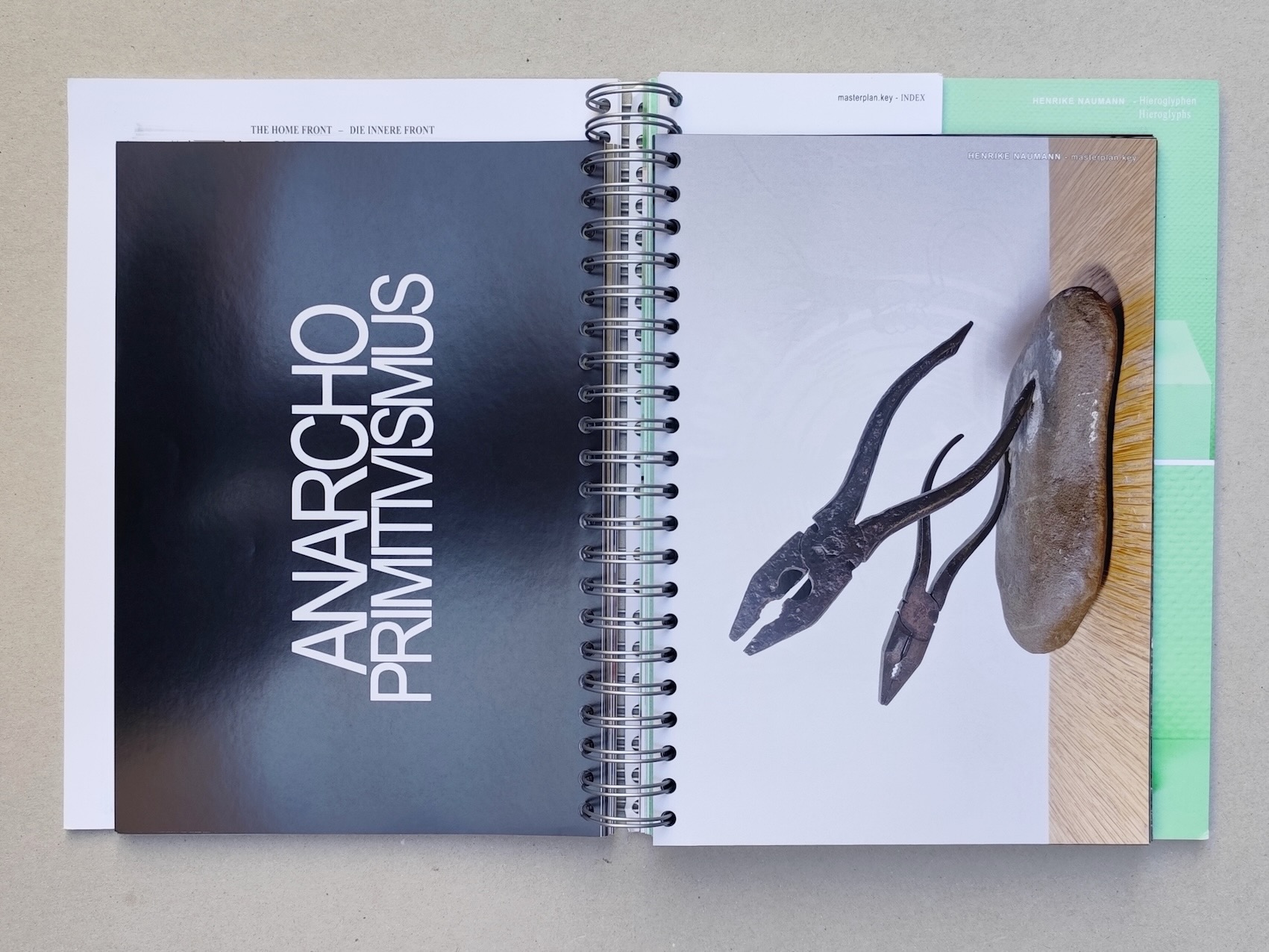
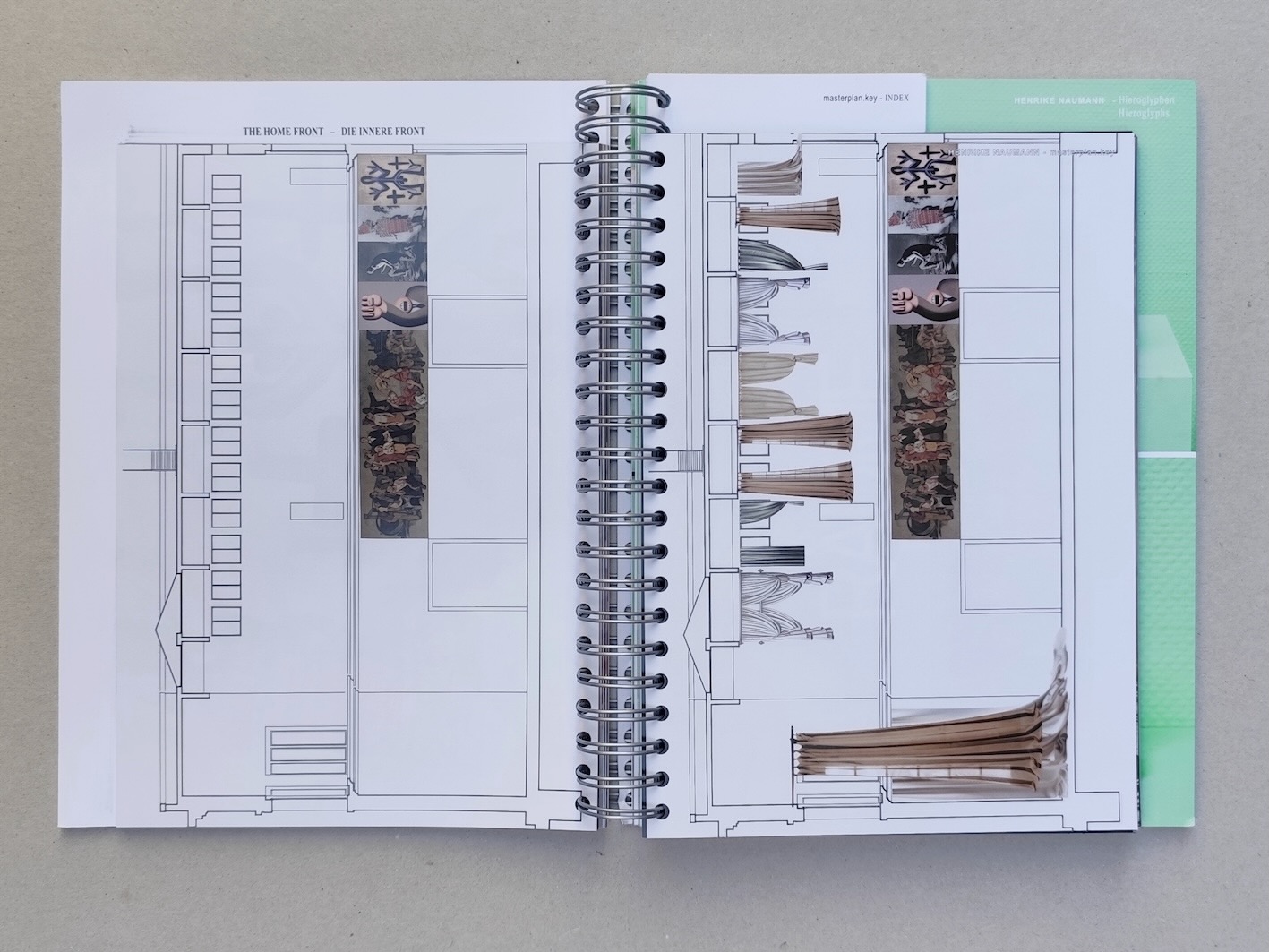
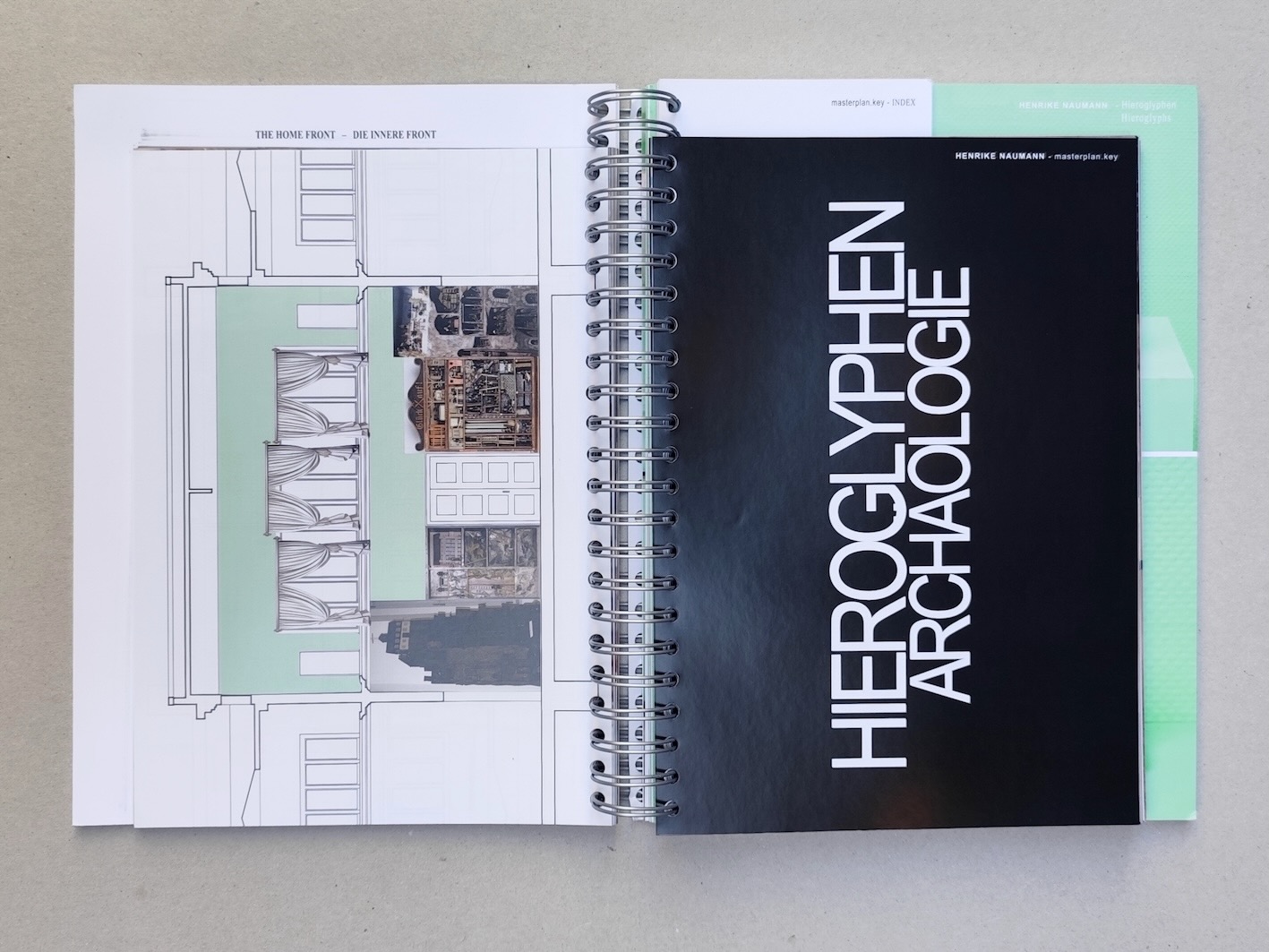
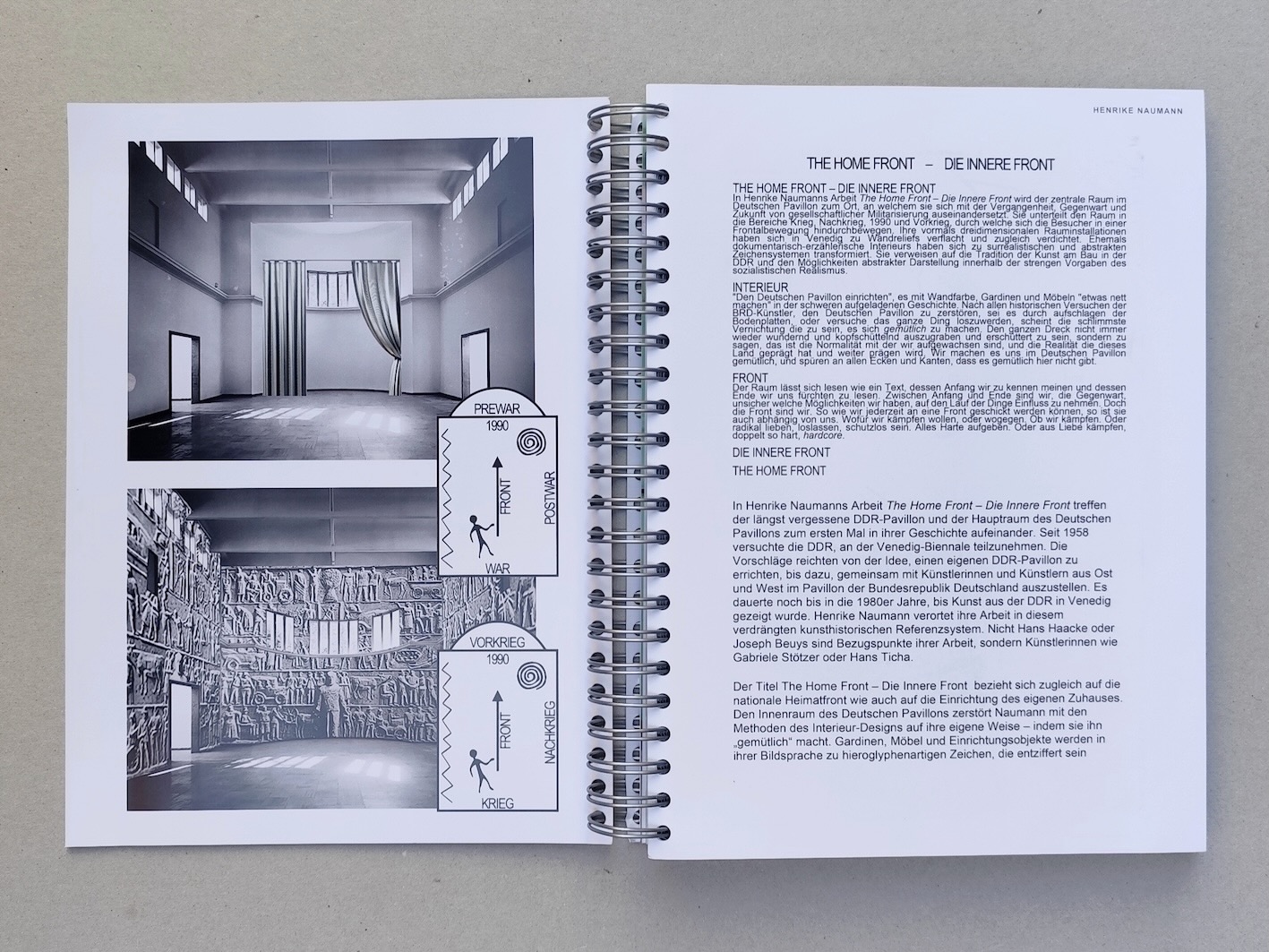
As a collection of material, various elements and approaches from the entire working process are brought together. Firstly, the hieroglyphs, which Henrike Naumann described as a glossary and a sign system in her own right, partly accompanied by texts by Clemens Villinger. Added to this is the extensive 'masterplan.key', a document that she constantly updated, and began working on over a year ago to collect ideas and connections. It helped her to develop conceptual approaches and disruptions, as well as to visualise her notes and thought processes drawn from the sketches and her intensive research. Among these is the first conceptual draft from the application procedure.
Much like her practice of 'concept papers', Henrike used 'masterplan.key' as an internal conceptual document in which she developed collages and manipulations to bring the material and the overlapping contexts 'under control'. The page size of the document is based on the laptop screen in front of which one sat with her whilst she clicked through one of her Keynote presentations to explain the artistic process in a project.
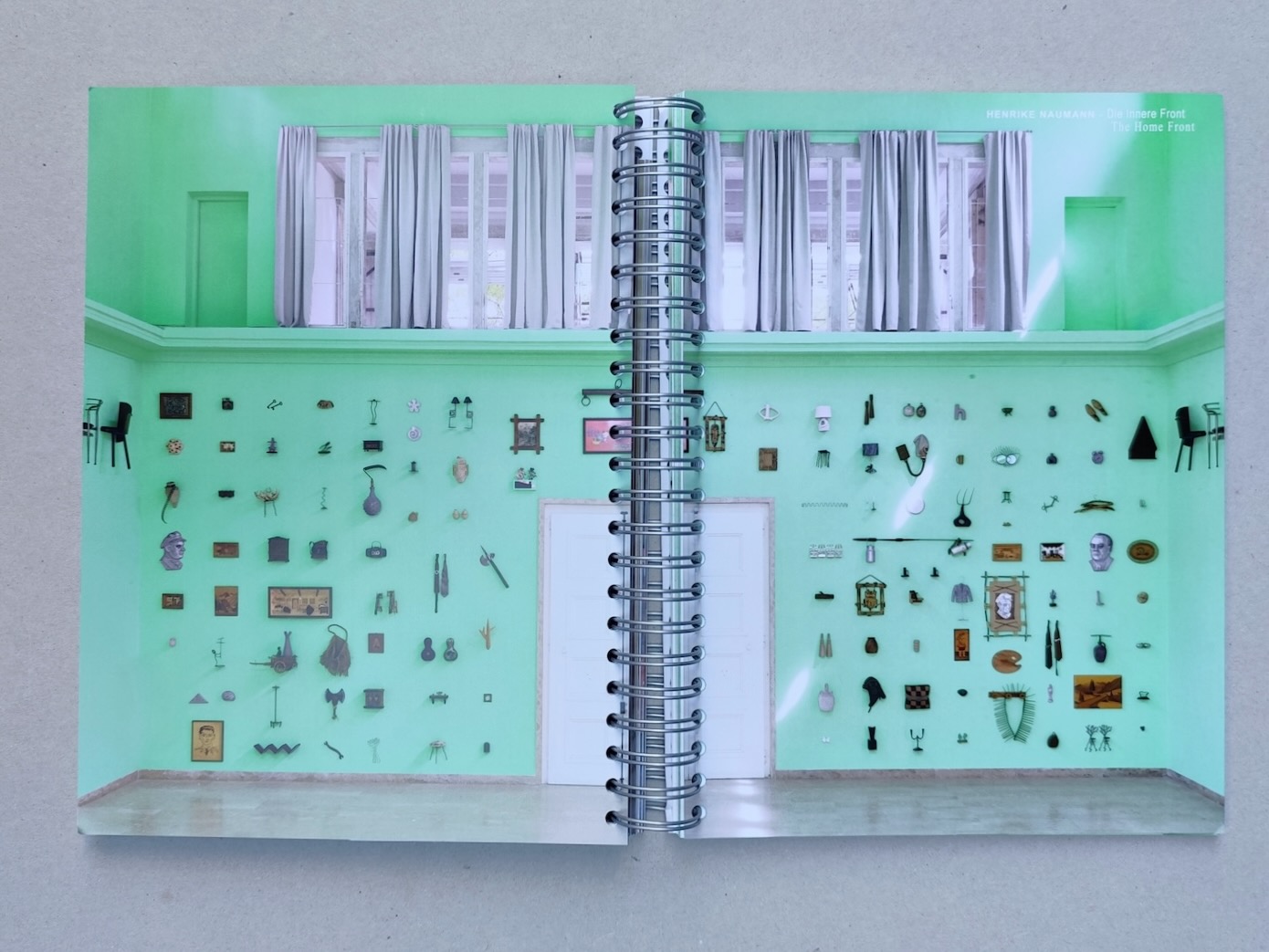
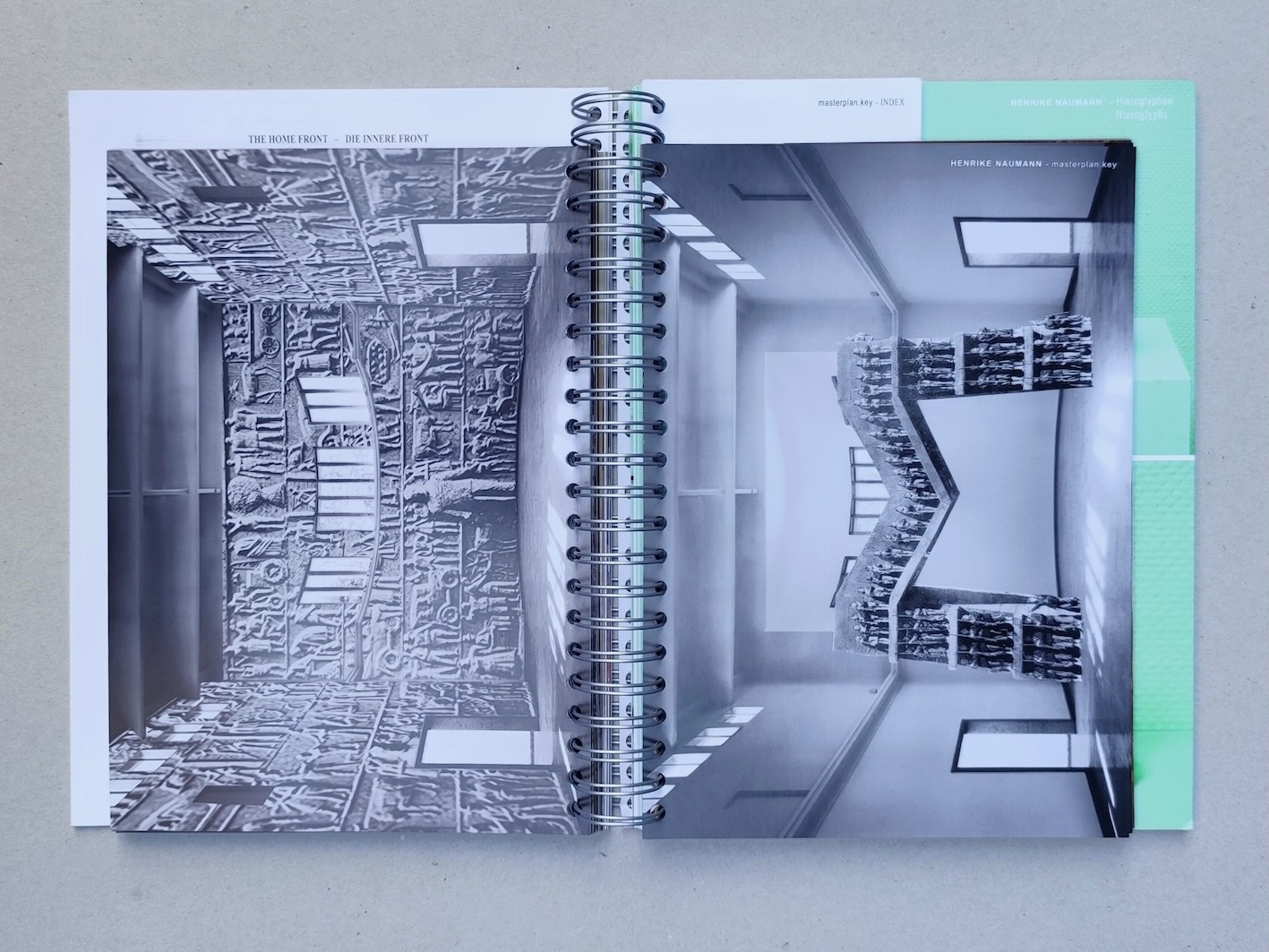
The collection also includes Naumann's conceptual text sketches and a text by Kerstin Stakemeier. In addition, there are individual photographs of the hieroglyphs, taken whilst they were still in Naumann's studio, as well as exhibition views from Venice. The artist Johannes Büttner developed the conceptual and graphic design of the publication.
The collection of materials had not originally been planned by Henrike Naumann. The editors decided to publish it shortly before the opening in order to build on the approach she had adopted – that of bringing ideas, approaches and research to light – which she had embarked upon with the metal folder CONCEPTS. Communicating and mediating the work widely has always been particularly important to her; the disclosure of her lines of research and thoughts relating to her pavilion contribution seeks to support this motivation as effectively as possible.
The result is an open document that provides insight, but above all challenges the reader and provokes to further continue these approaches.
Henrike Naumann (1984–2026) was a German artist whose work reflects on socio-political problems on the level of design and interiors and explores the friction between opposing political opinions in dealing with taste and personal everyday aesthetics. In her immersive installations, she arranged furniture and objects creating scenographic spaces into which she integrated video and sound works. Her practice reflected the mechanisms of radicalization and their connection to personal experience. Her artistic practice was accompanied by a wide range of lectures and interdisciplinary collaborations reflecting on the questions immanent in her work.
She has been awarded numerous prizes, including the Karl Schmidt-Rottluff Scholarship, the Max Pechstein Prize of the City of Zwickau, the Leipziger Volkszeitung Art Prize and the Scholarship of Villa Aurora / Thomas Mann House, Los Angeles. Important exhibitions of her works have been held at the SculptureCenter in New York, the Busch-Reisinger Museum at Harvard, the MoMA Warsaw, the Wall Memorial of the German Bundestag as well as the Ghetto Biennale in Haiti and the Kyiv Biennale in Ukraine.