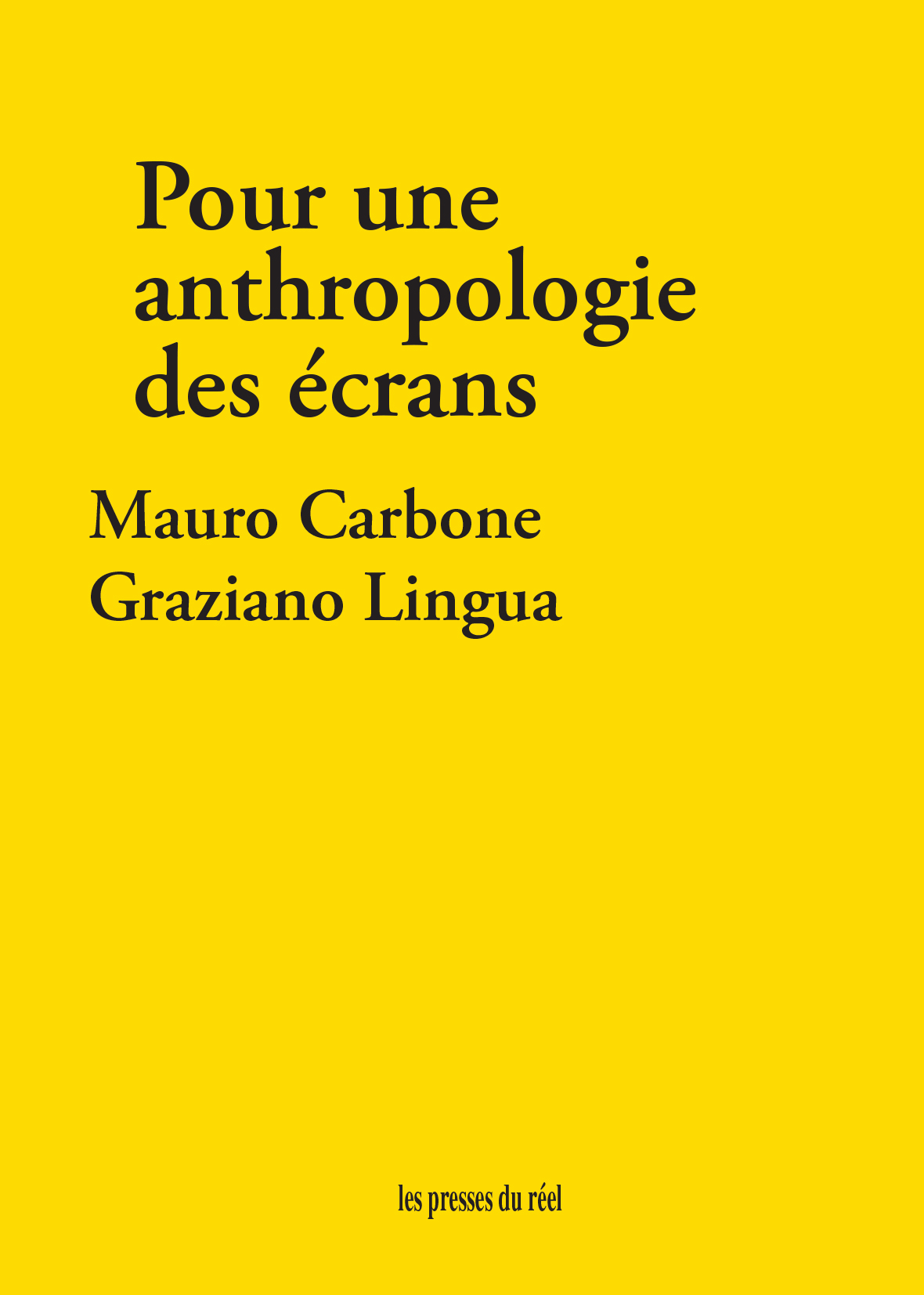
A seminal exploration into screens' crucial functions and profound impact on human culture.
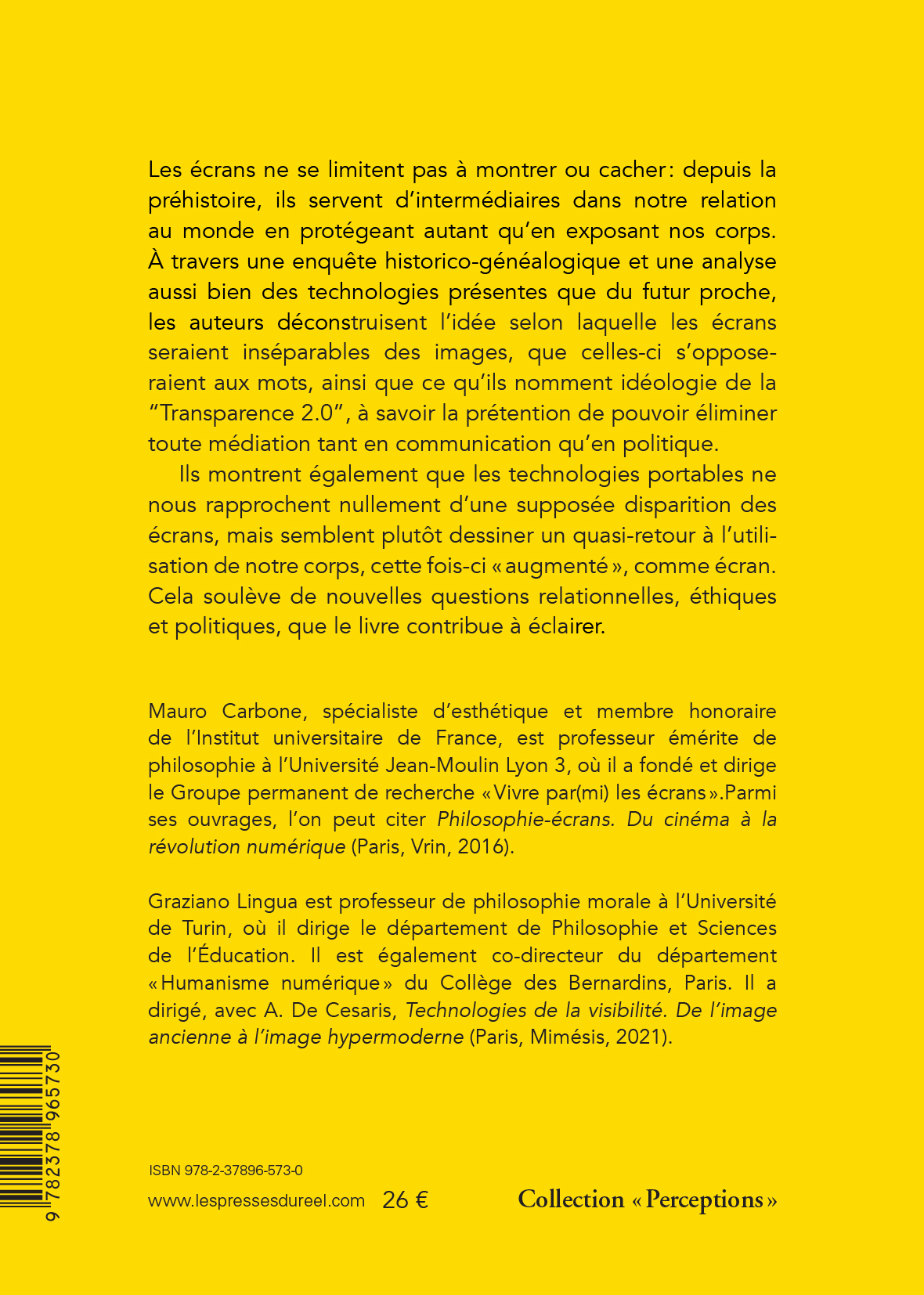
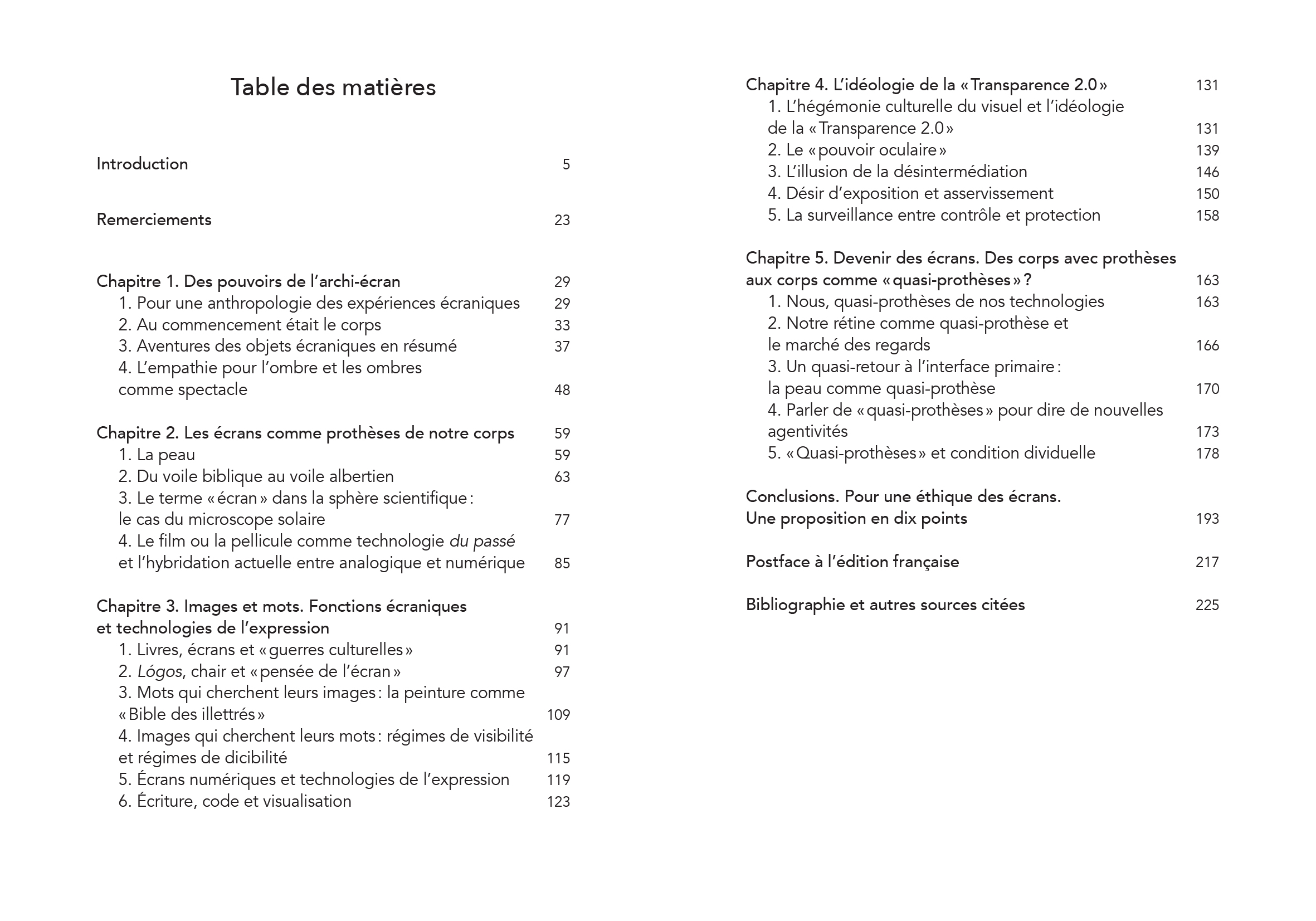
This book shows that screens don't just distribute the visible and the invisible, but have always mediated our body's relationships with the physical and anthropological-cultural environment. By combining a series of historical-genealogical reconstructions going back to prehistoric times with the analysis of present and near-future technologies, the authors show that screens have always incorporated not only the hiding/showing functions but also the protecting/exposing ones, as the Covid-19 pandemic retaught us. The intertwining of these functions allows the authors to criticize the mainstream ideas of images as inseparable from screens, of words as opposed to images, and of what they call "Transparency 2.0" ideology, which currently dominates our socio-political life. Moreover, they show how wearable technologies don't approximate us to a presumed disappearance of screens but seem to draw a circular pathway back to using our bodies as screens. This raises new relational, ethical, and political questions, which this book helps to illuminate.
Mauro Carbone, an aesthetics specialist and honorary member of the Institut universitaire de France, is professor emeritus of philosophy at Jean Moulin University Lyon 3, where he founded and directs the permanent research group "
Vivre par(mi) les écrans."
Graziano Lingua is Professor of Moral Philosophy at the University of Turin, where he heads the Department of Philosophy and Educational Sciences. He is also co-director of the "Digital Humanism" department at the Collège des Bernardins in Paris.