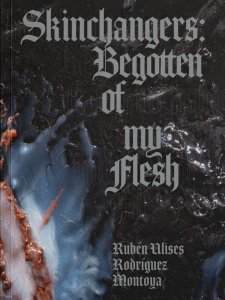
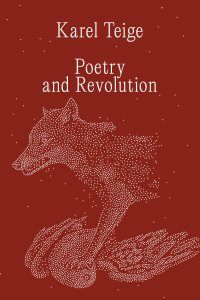
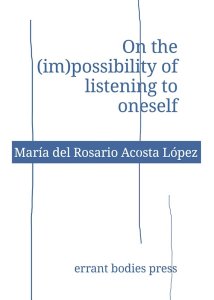
This book brings together poetic and theoretical texts about Callisto (a woman with a bear's head, a writer and a mythical figure), using metaphors as a form of anti-capitalist resistance.
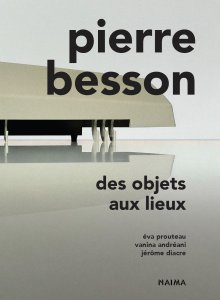
Paolo Monti's photographs capture the affirmation of modernist aesthetics and the dawn of the golden age of Milanese architecture in the postwar period.
An intimate journey through the Lettrist movement via the collection and library of Hans Naumann (born in 1933 in Germany), one of Maurice Lemaître's most trusted collectors and one of the most important Lettrist bibliophiles, who has assembled a vast collection of rare or unique works and books related to this avant-garde movement founded in 1946 by Isidore Isou and still largely overlooked.
This multidisciplinary anthology explores the connections, uses, and tensions between music and what European modernity has grouped under the multifaceted category of "savage."
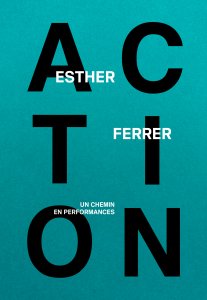
A poetic, gestural, visual, and semantic exploration that extends the Canadian multidisciplinary artist's work on language and the body into the pages of the book.
The debut novel by Lisandre St-Cyr Lamothe, a shepherdess in the Swiss Alps after leaving behind her artistic life in Montreal and before becoming a flower farmer in the Mauritian countryside.
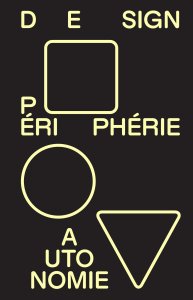
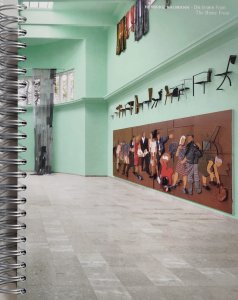
A true odyssey of design, featuring pieces from a dozen French heritage institutions, and a narrative structured as a play of mirrors between forms, words, and gestures.

A hybrid project combining research, archival work, and creation, dedicated to Brazilian Candomblé—a possession cult that arrived in the country with the slave trade and reflects the beliefs and rituals of West Africa.
The outcome of Caroline Mazel's long-term research on the "critical regionalist architecture" developed by Jean-Raphaël Hébrard (1927–2006) in the Basque Country, which bridges modernist architecture and local building traditions.
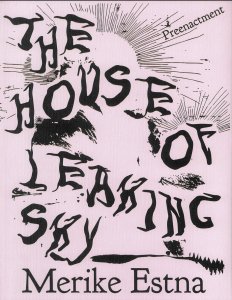
Leïla Grace Voight’s debut novel: the story of two parallel confinements, told in forty-three scenes by twenty-one women and twenty-two men—all visual artists—accompanied by an emerging AI, an anti-COVID superheroine.
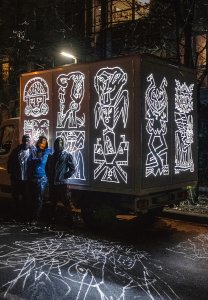
The story of Tony the Donkey! A children's book illustrated by Artur Varela (1937–2017), completed shortly before the Portuguese artist's death, adapted and published posthumously by Daisy Publishing.
Edited by Michael Corris, the expanded edition of In the Belly of the Beast: Art & Language New York Project 1972-1978 is a survey of the tumultuous years of the political Conceptualism in the mid-seventies New York.
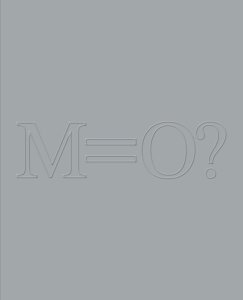
A critical and multifaceted examination of contemporary masculinities, as explored through the works of some thirty artists from different generations.
The catalog accompanying the provocative performance installation by Austrian artist and choreographer Florentina Holzinger, presented at the 61st Venice Biennale.
On the occasion of Megan Francis Sullivan's solo exhibition at Kunsthaus Glarus, this publication serves as a visual essay bringing together materials related to the project's production and reception.
Le Un ensemble orchestra, accompanied by a group of guest researchers, continues its sonic, musical, and poetic experiments as it travels downriver along the Gironde estuary.
A selection of samples, models, and furniture representative of the work produced by the design studio formed through the collaboration between Bernard Quirot's architecture agency and the designer and cabinetmaker Paul Michelon.
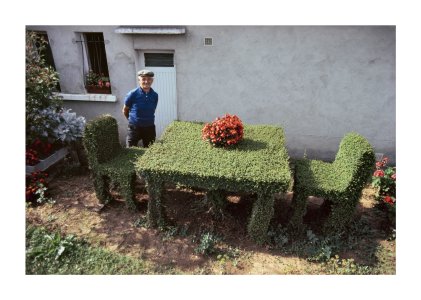
As part of a series of publications on singular architectural bodies of work, this volume highlights Pierre Lajus' pioneering hedonistic wooden constructions of the 1970s, and gives his work its rightful place in the history of architectural experimentation.
Based on the relationship between the visible and the invisible in the development of Antoni Muntadas' projects, this publication examines the five series of works that bring together significant projects reflecting Muntadas's artistic approach since 1999.
Leading contemporary artists and thinkers elaborate on how our increasingly networked societies are shaping—and shaped by—exchanges among people and machines.
Leading scholars explore the connections between democracy and justice, architecture and urban design, the growth of cities, cosmopolitanism, inclusion, and free speech.
Readers are invited into an immersive, oceanic way of seeing—where the boundaries between body, technology, and environment dissolve into continuous transformation.
The first retrospective of the work of Jean-Claude Guillaumon (1943-2022), a self-taught artist who defies categorization, associated with the French Fluxus scene, avid practitioner of happenings and other forms of ephemeral art.
Hosting Space explores how processes of hosting, such as access, support, and gathering, operate within the context of an art institution. It invites readers to reconsider how these activities are embedded in the spaces we inhabit and how they shape spatial practices.