A collective research surrounding the concept of relational freedom.
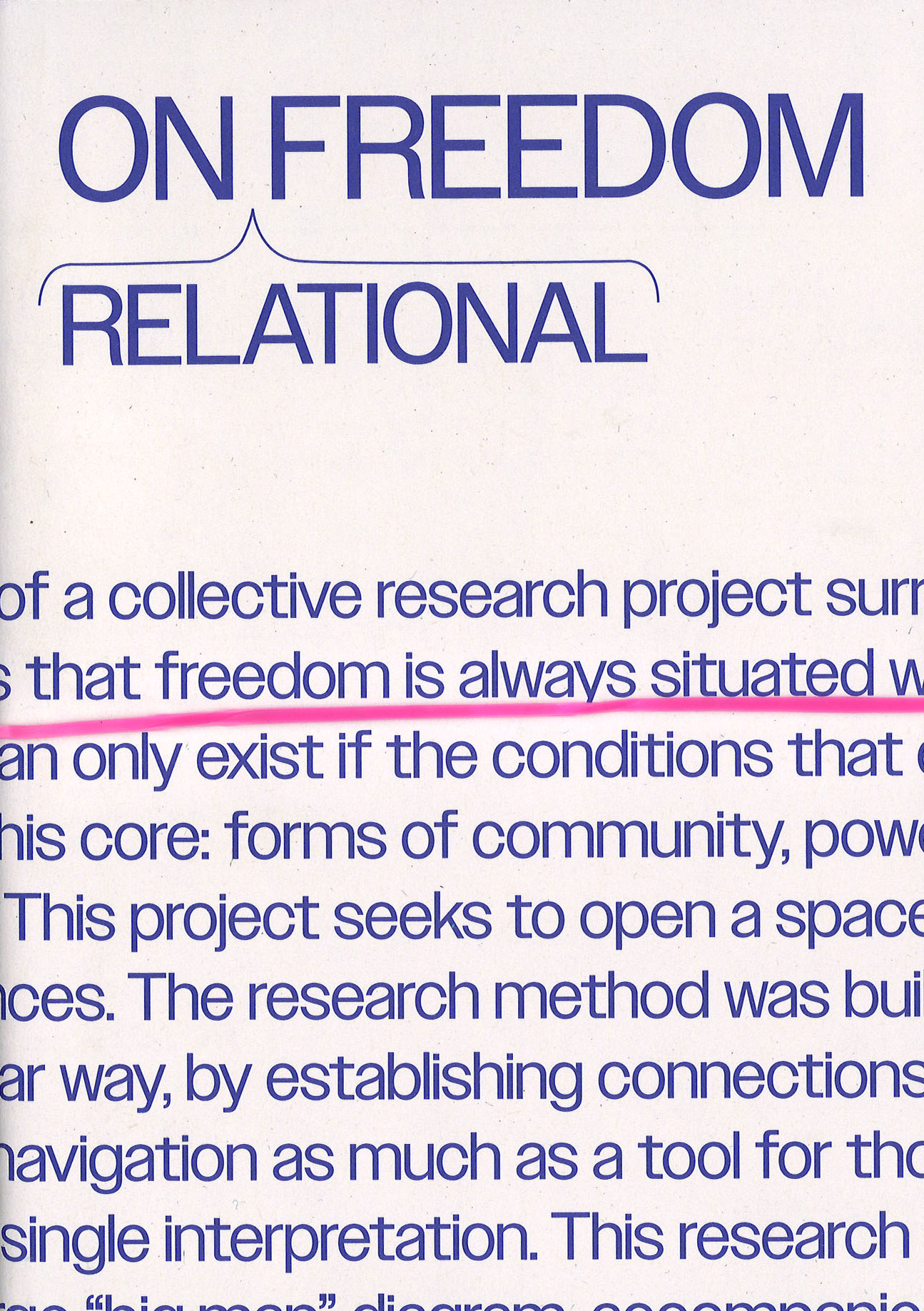
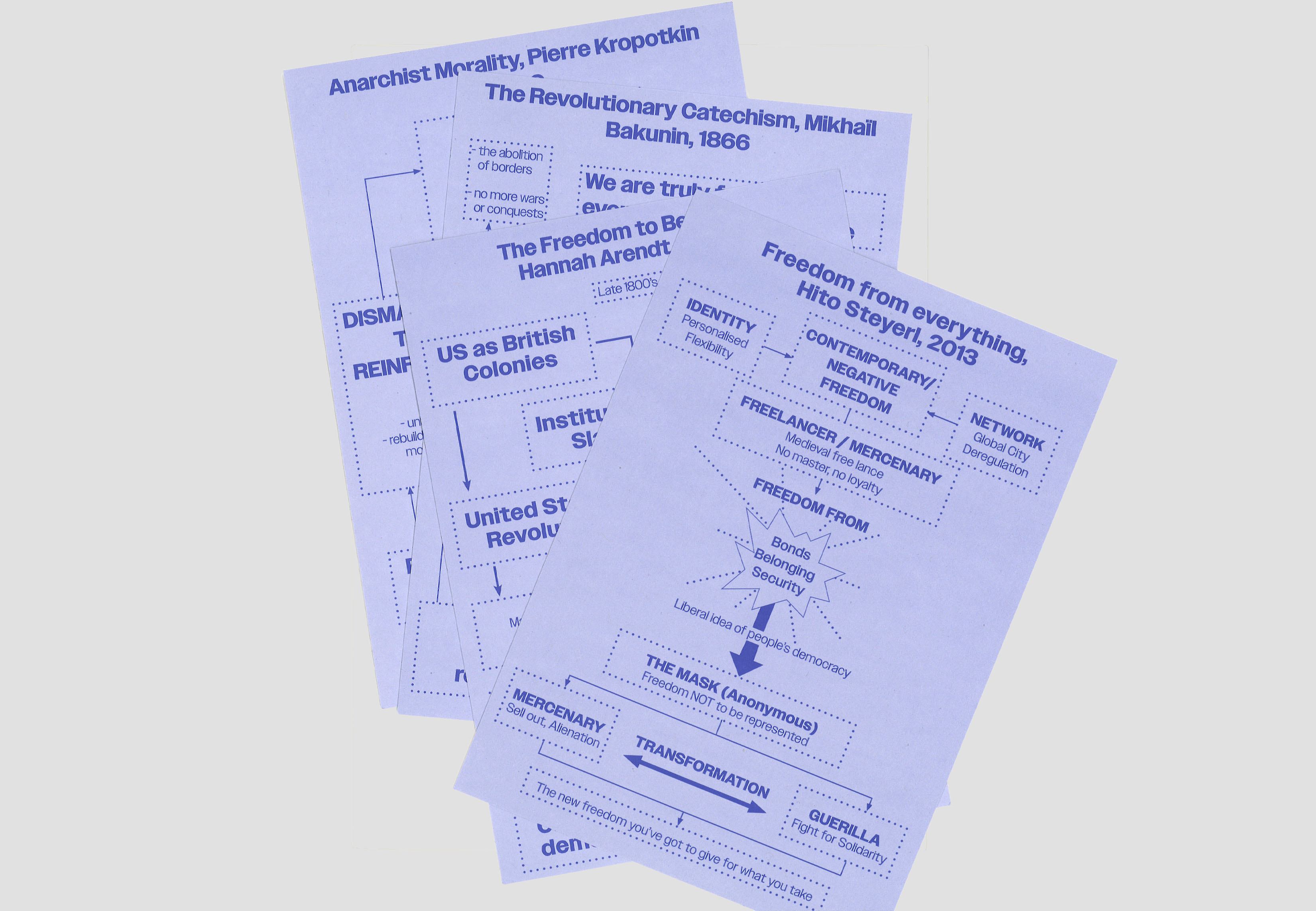
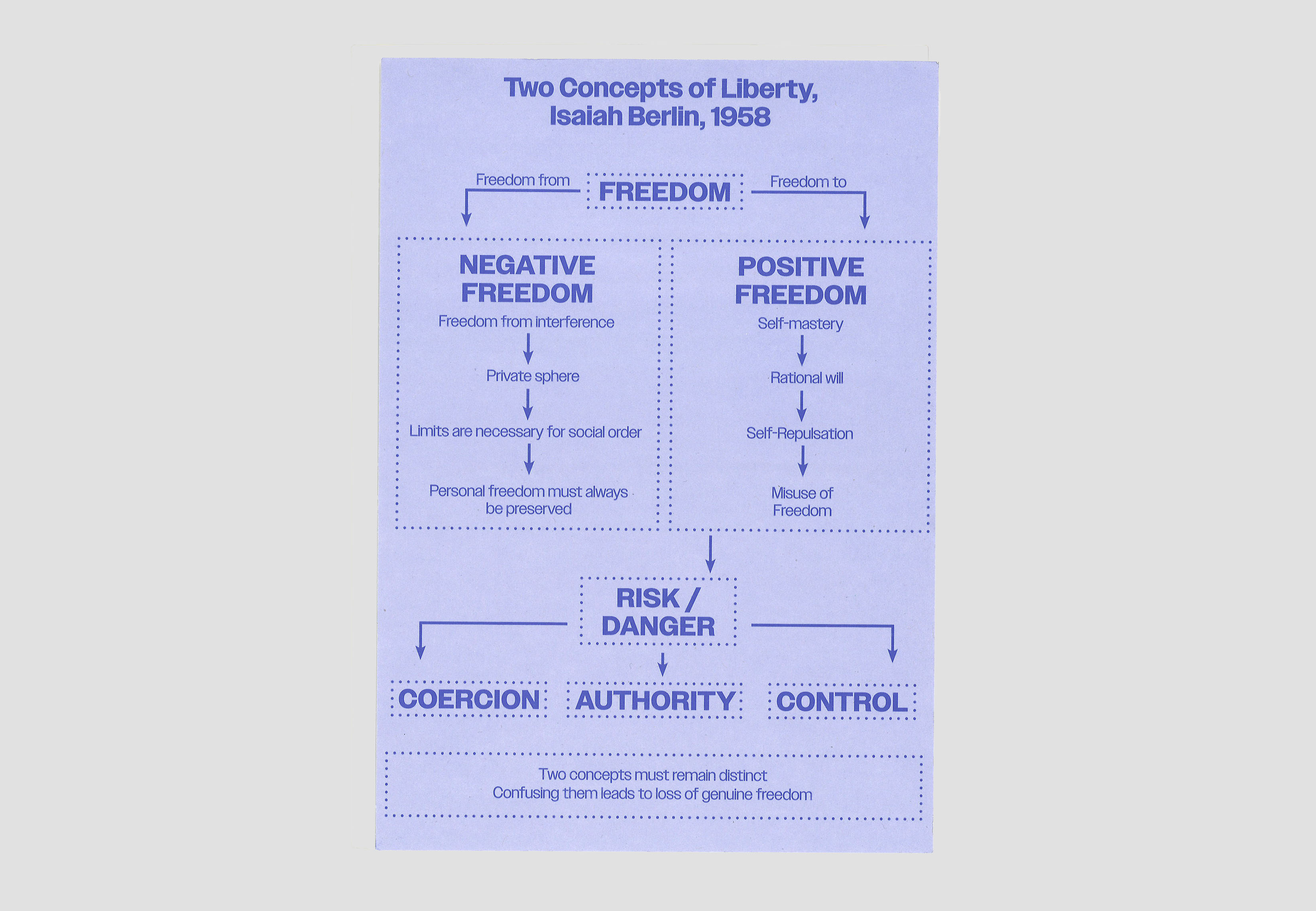
The notion of relational freedom emphasizes that freedom is always situated within a network of social, political, economic, and ecological relations. It can only exist if the conditions that enable one to act also exist for others. Multiple issues revolve around this core: forms of community, power structures, artistic practices, and alternative modes of organization. This project seeks to open a space for reflection and exchange between texts, concepts, and experiences. The research method was built around the diagram. This allowed us to think differently: in a non-linear way, by establishing connections and tensions between ideas. Here, the diagram functions as a tool for navigation as much as a tool for thought. It is a way of making relationships visible rather than imposing a single interpretation. This research extends into the very form of the publication itself, consisting of a large "big map" diagram, accompanied by a set of cards. The big map functions as a visual library, a mapping of references. The cards bring this library to life. Each one is dedicated to a specific text and offers a contextualized reading: on the front, a diagram summarizes the key concepts and issues addressed; on the back, a summary elaborates on the main themes. These cards can be manipulated, combined, and reorganized. They invite active engagement. Together, they form a hybrid system. The aim is not to provide answers, but rather to offer entry points and spark questions. It is up to you to explore, connect, rearrange, and perhaps, in turn, extend the research.
Produced by a group of students as part of the Work.Master program at
HEAD-Geneva, this publication has been made after reading a number of texts spanning a century and a half that offer different perspectives on relational freedom, as well as two texts on methodology.