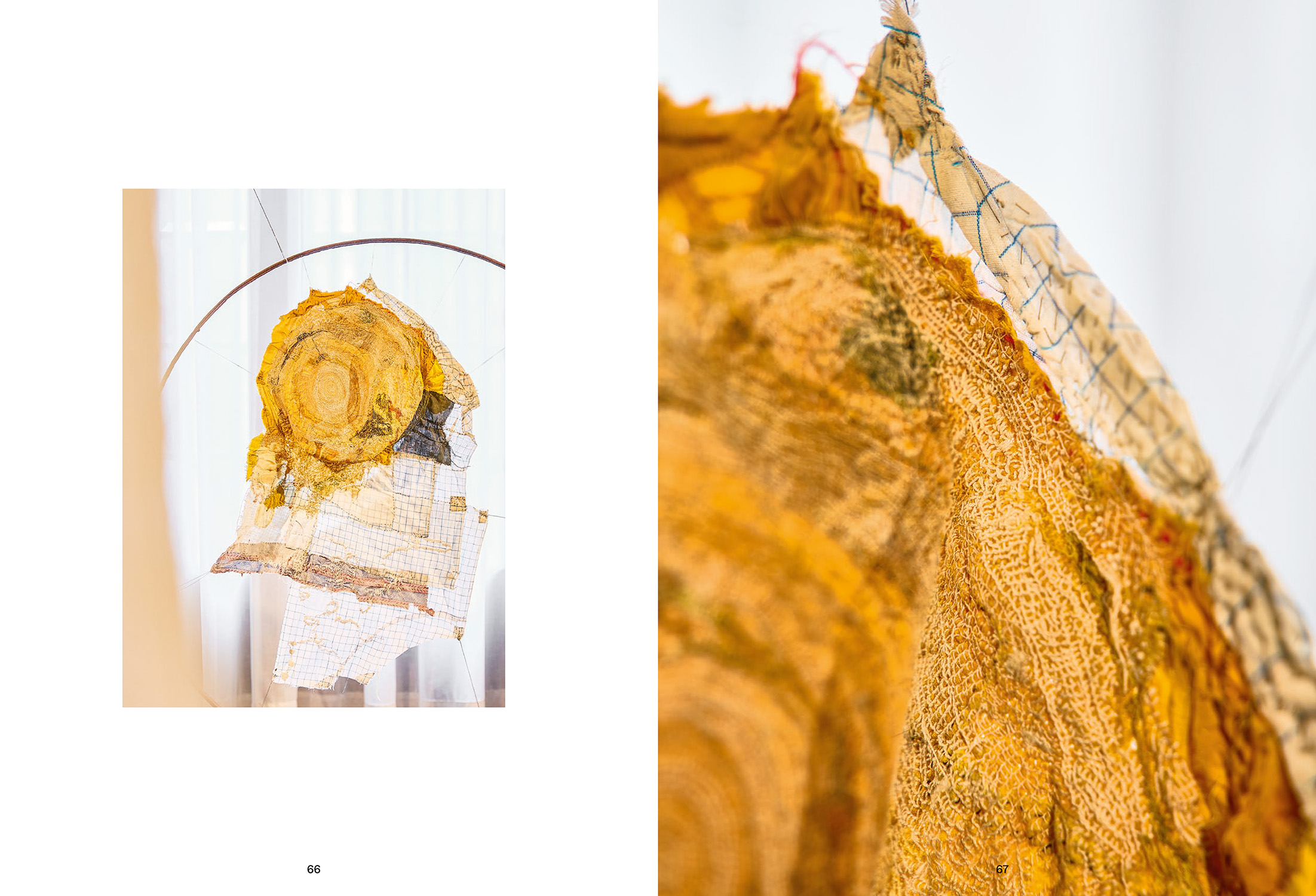
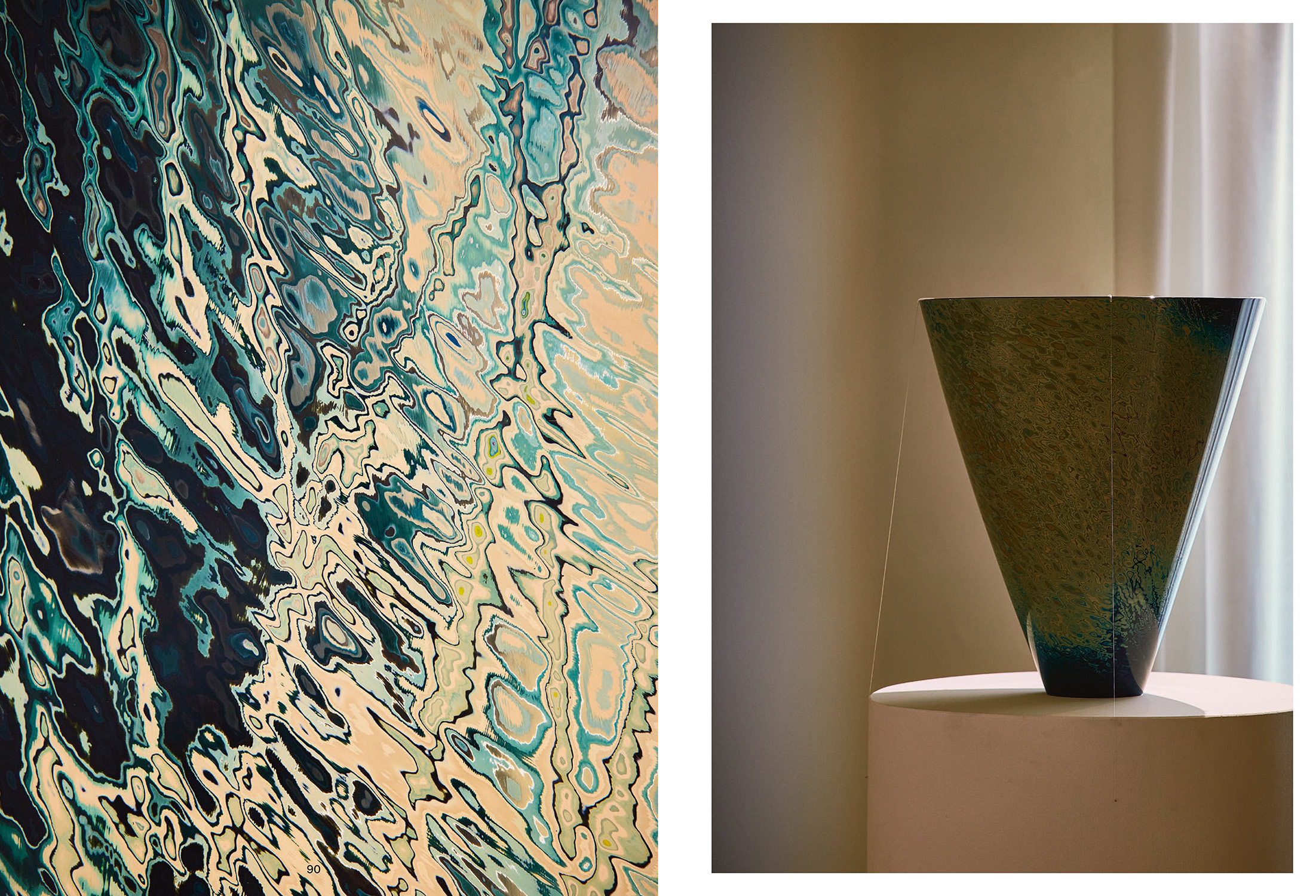
Ce catalogue explore la manière dont l'acte de « création » peut permettre de modifier le rapport au temps et à la matière, dans une société où tout s'accélère, à travers le travail de dix artistes japonais dont les démarches, axées sur les matériaux et l'artisanat, s'articulent autour de la céramique, de l'argile, des fibres, de la laque urushi, du verre et d'autres matériaux tactiles, abordés sous un angle contemporain.
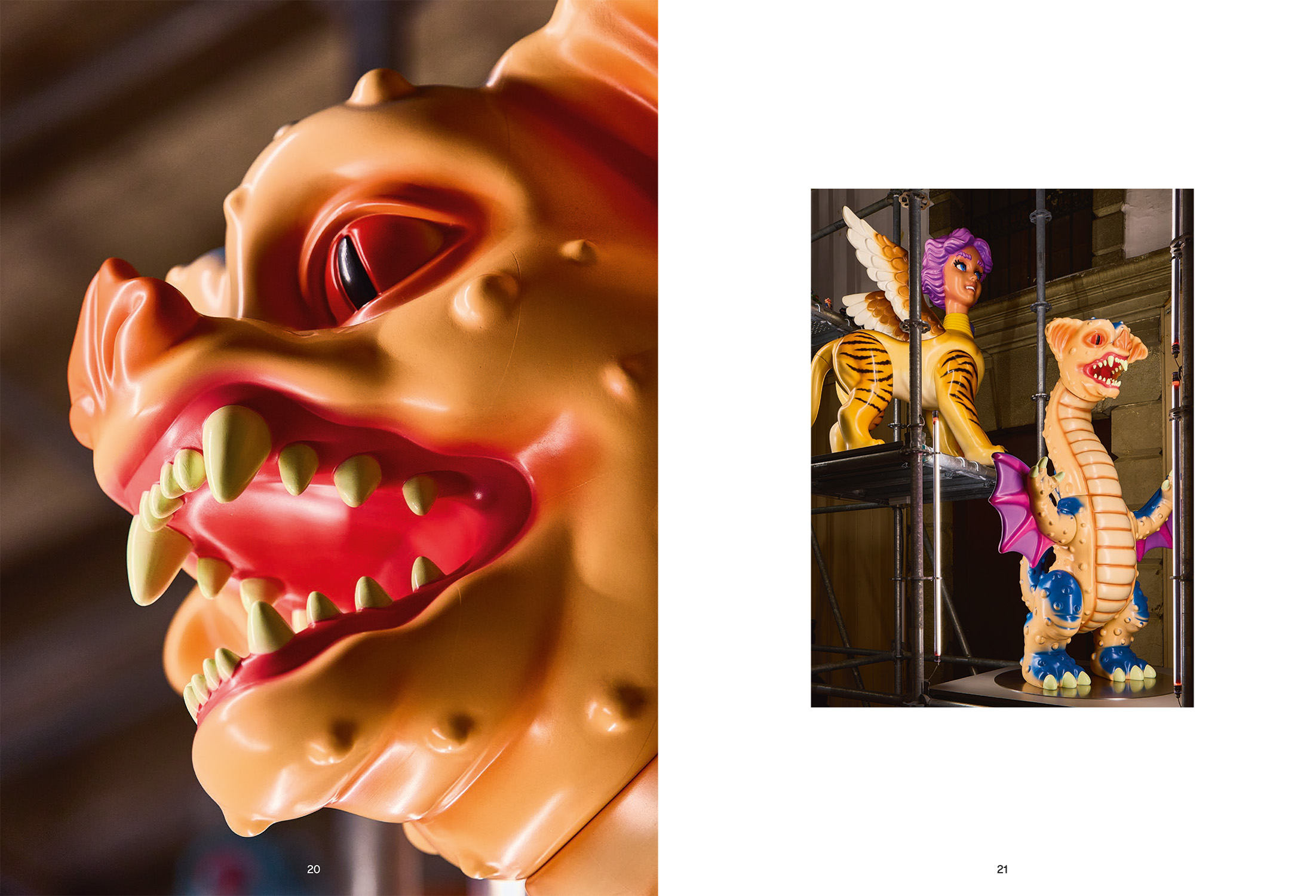
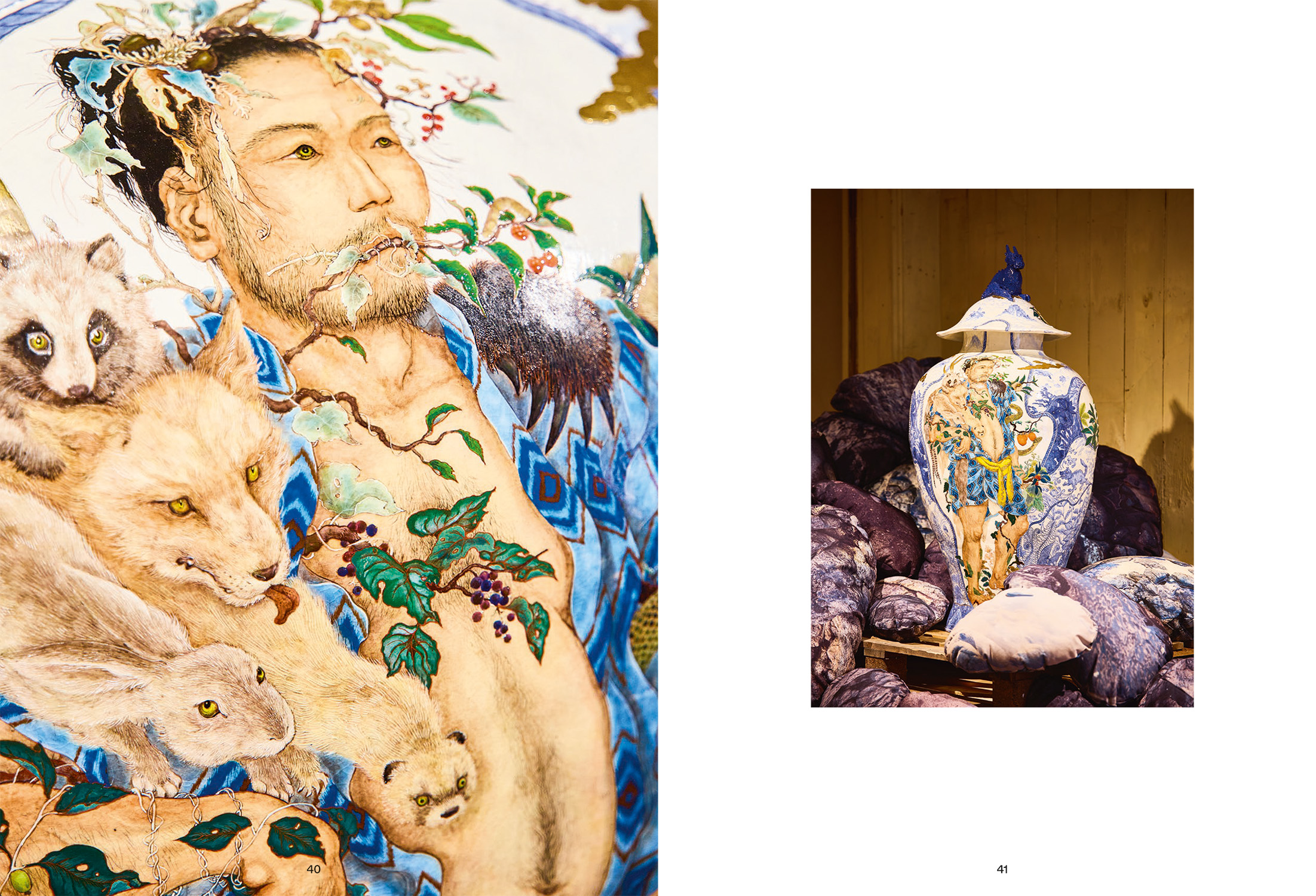
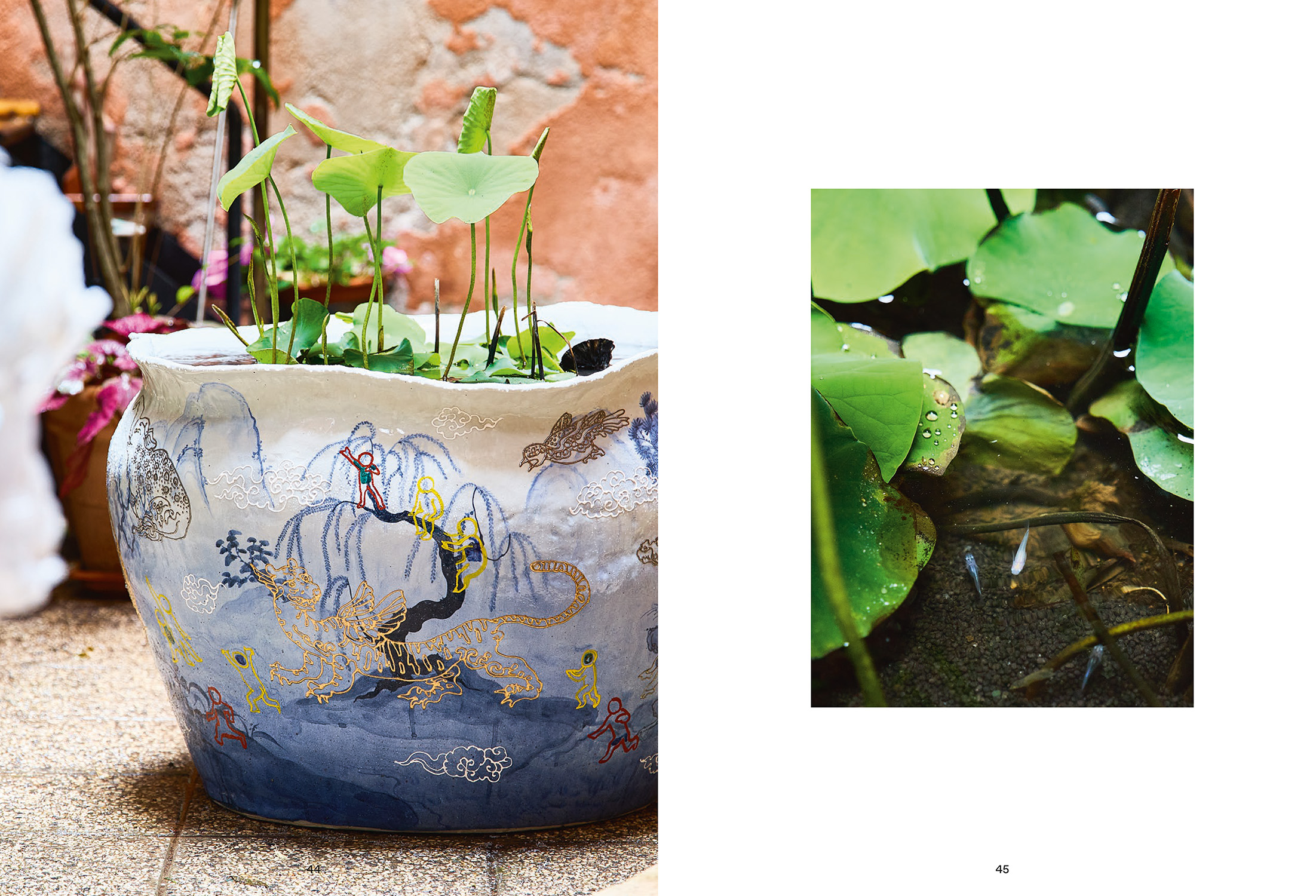
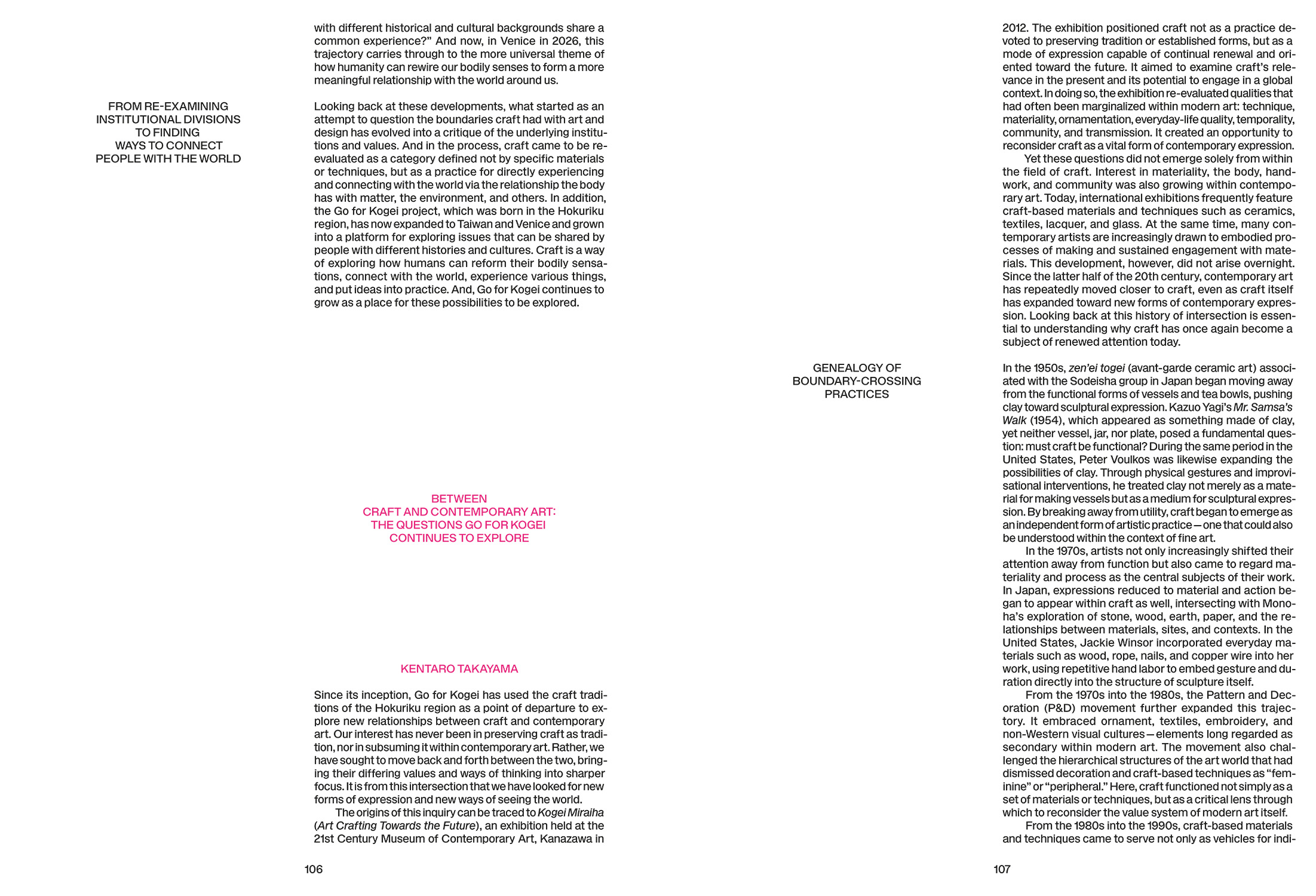
Ethnography of the Body and Material – Slowness and Depth in an Accelerated Society is the catalogue accompanying the group exhibition of the same name held at Palazzo Pisani Santa Marina in Venice, curated by Yuji Akimoto, art critic, professor emeritus at Tokyo University of the Arts, and artistic director of Go for Kogei, a project dedicated to exploring and promoting new perspectives on craft in Hokuriku, a region with a long and distinctive history of craftsmanship. Akimoto's vision is reflected in the practices of the artists presented in the exhibition, who engage with ceramics, clay, fiber, urushi (lacquer), glass, and other tactile materials from a contemporary perspective. The exhibition understands both the artists' processes of creation and the viewers' processes of appreciation as forms of quiet resistance to an accelerated society. In this context, the term "ethnography" describes an approach to interpreting artistic practices within their broader cultural and social contexts. Across 144 pages, the catalogue documents the exhibition through installation views, critical texts, and photographic documentation of the making of the exhibition. It opens with a four-page curatorial introduction and includes 12 pages of texts by Yuji Akimoto, Hiroshi Usui, Kentaro Takayama, and Yasumitsu Takai, as well as 20 pages dedicated to the artists and 8 pages documenting the realization of the exhibition.