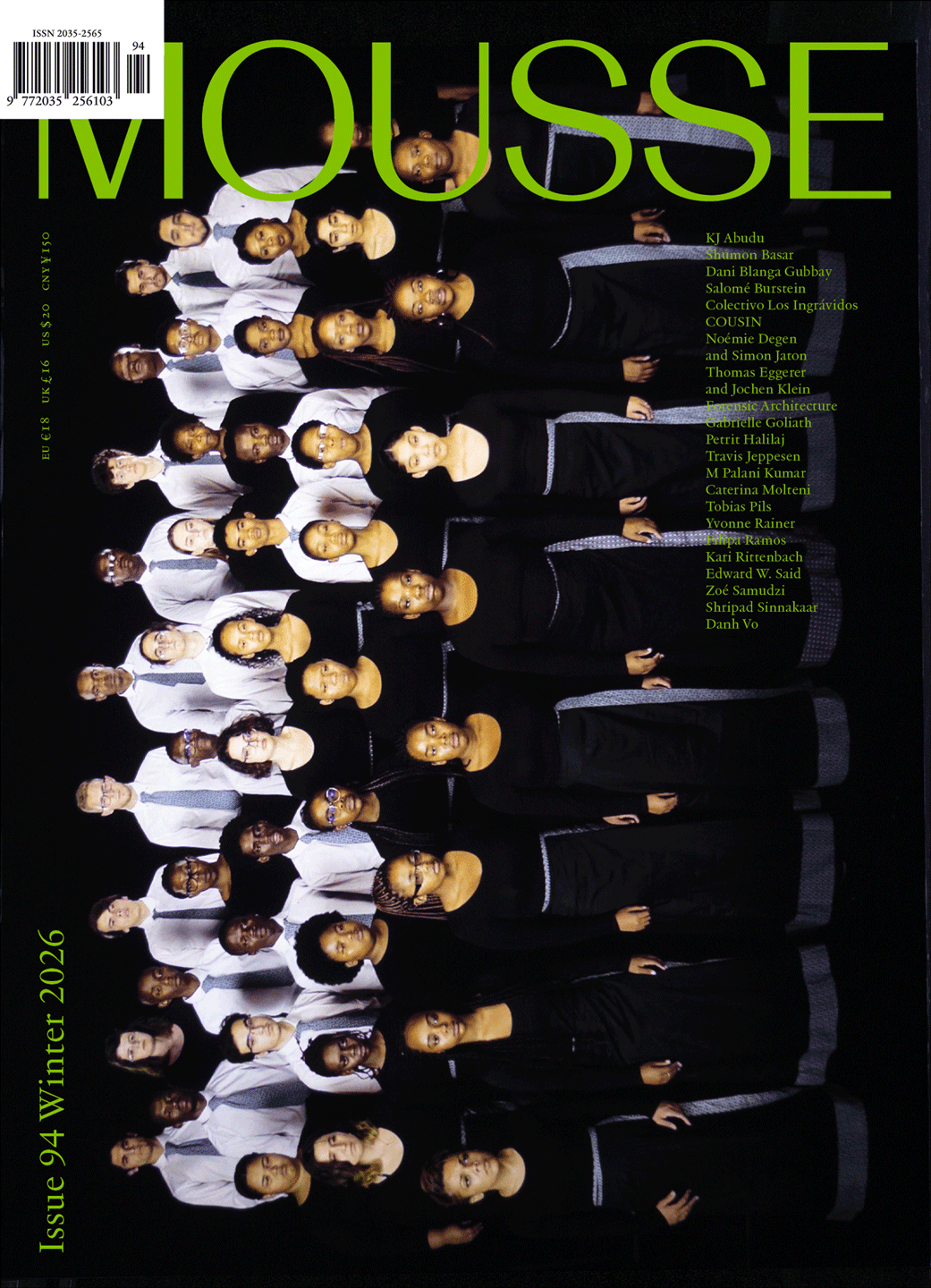
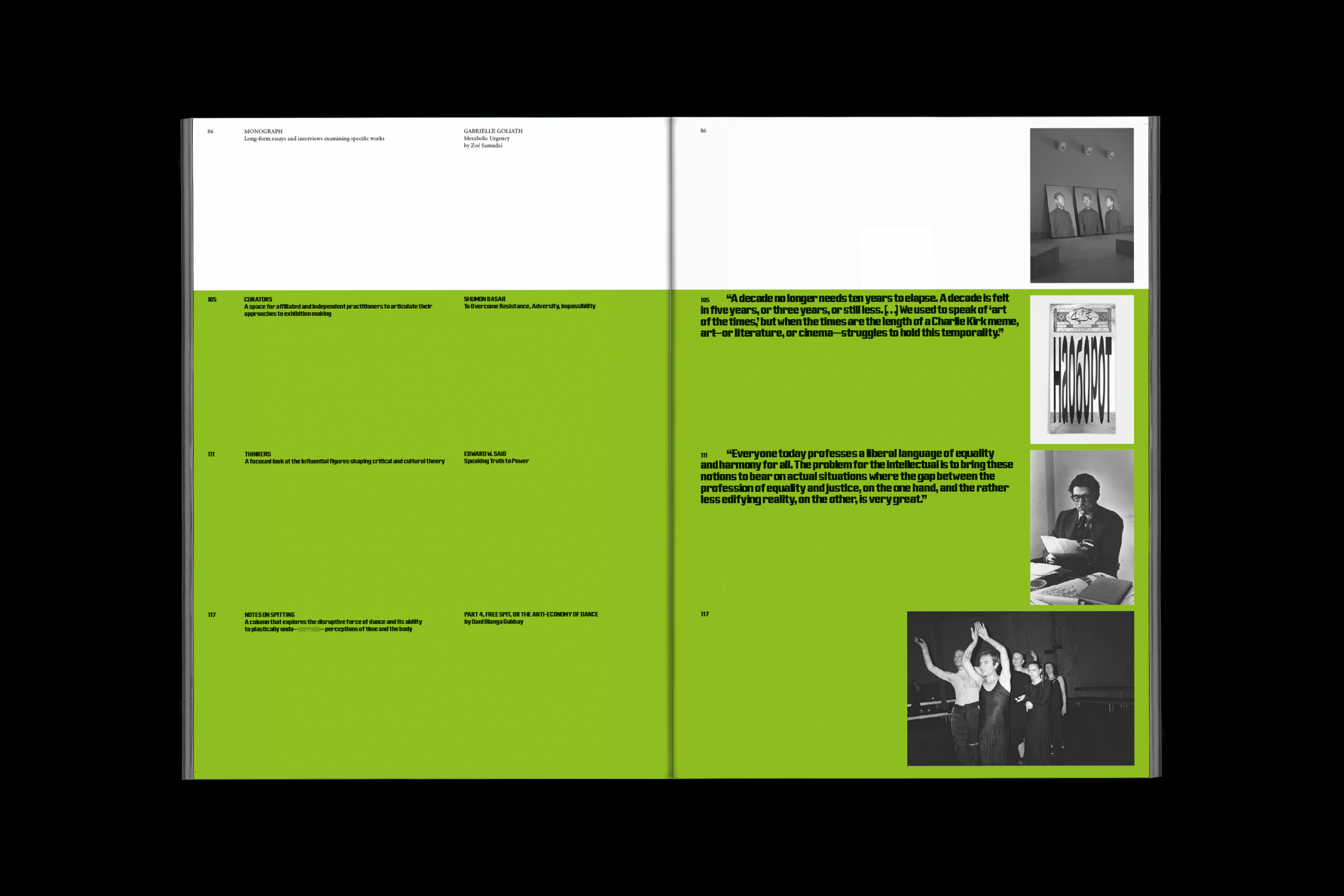
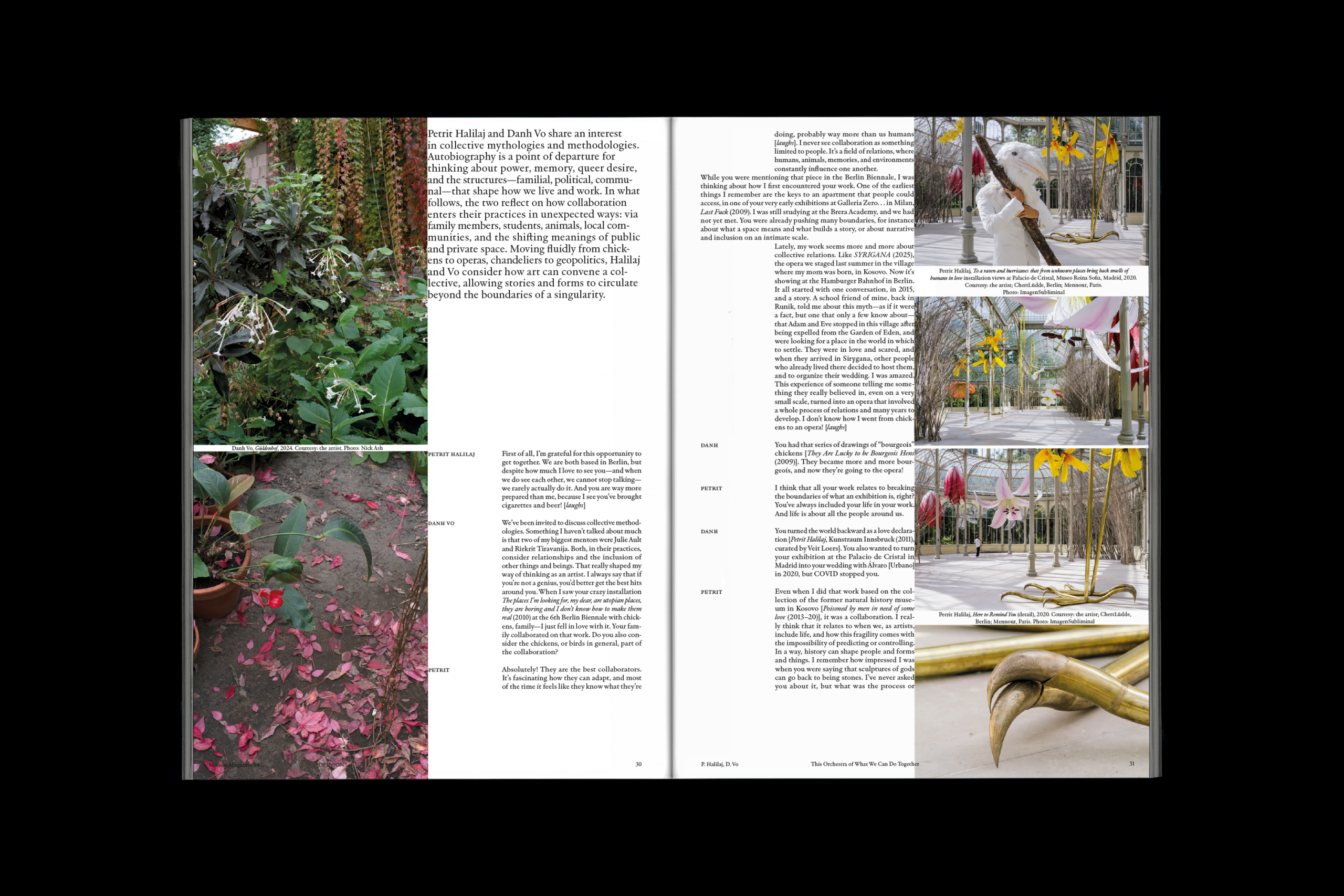
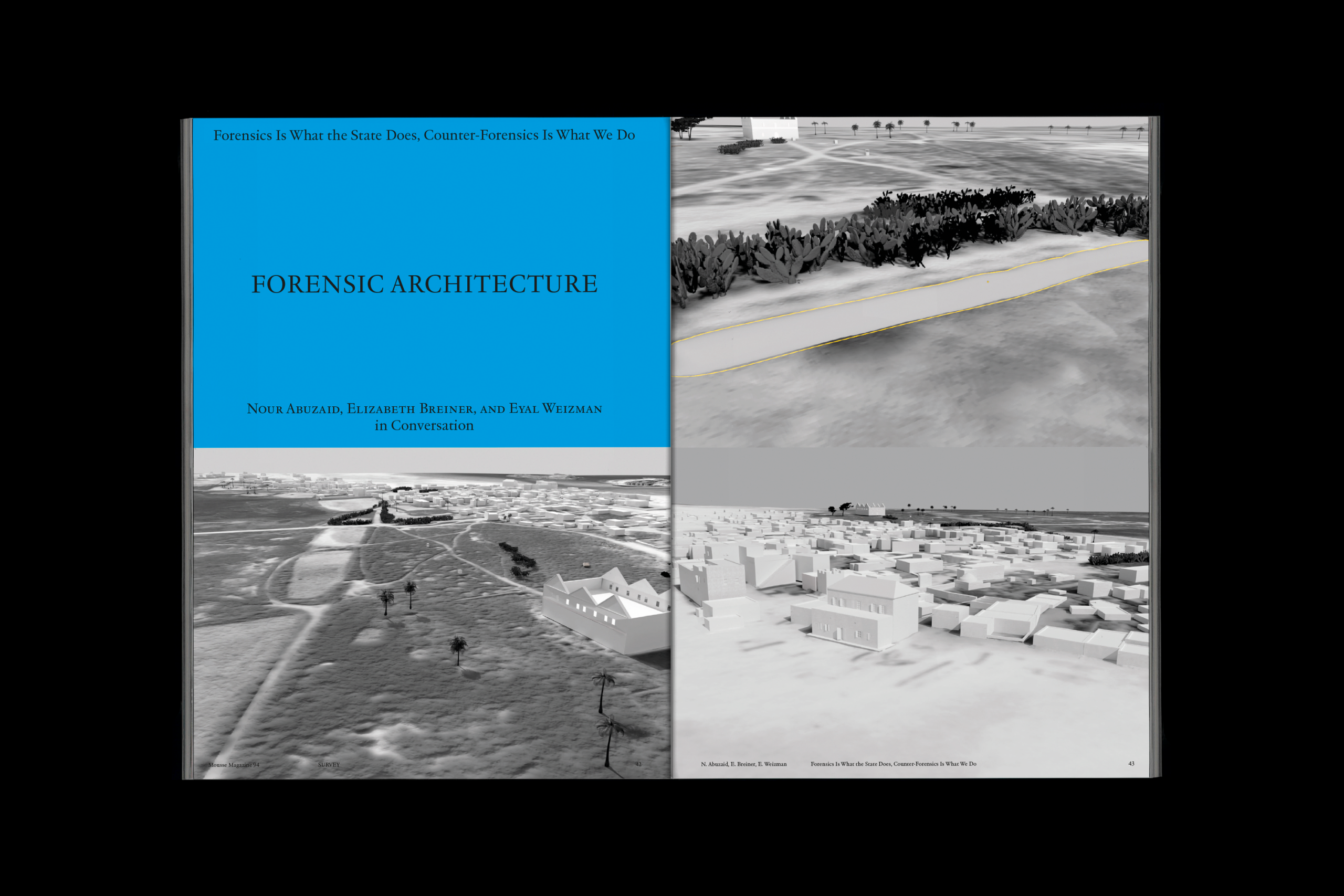
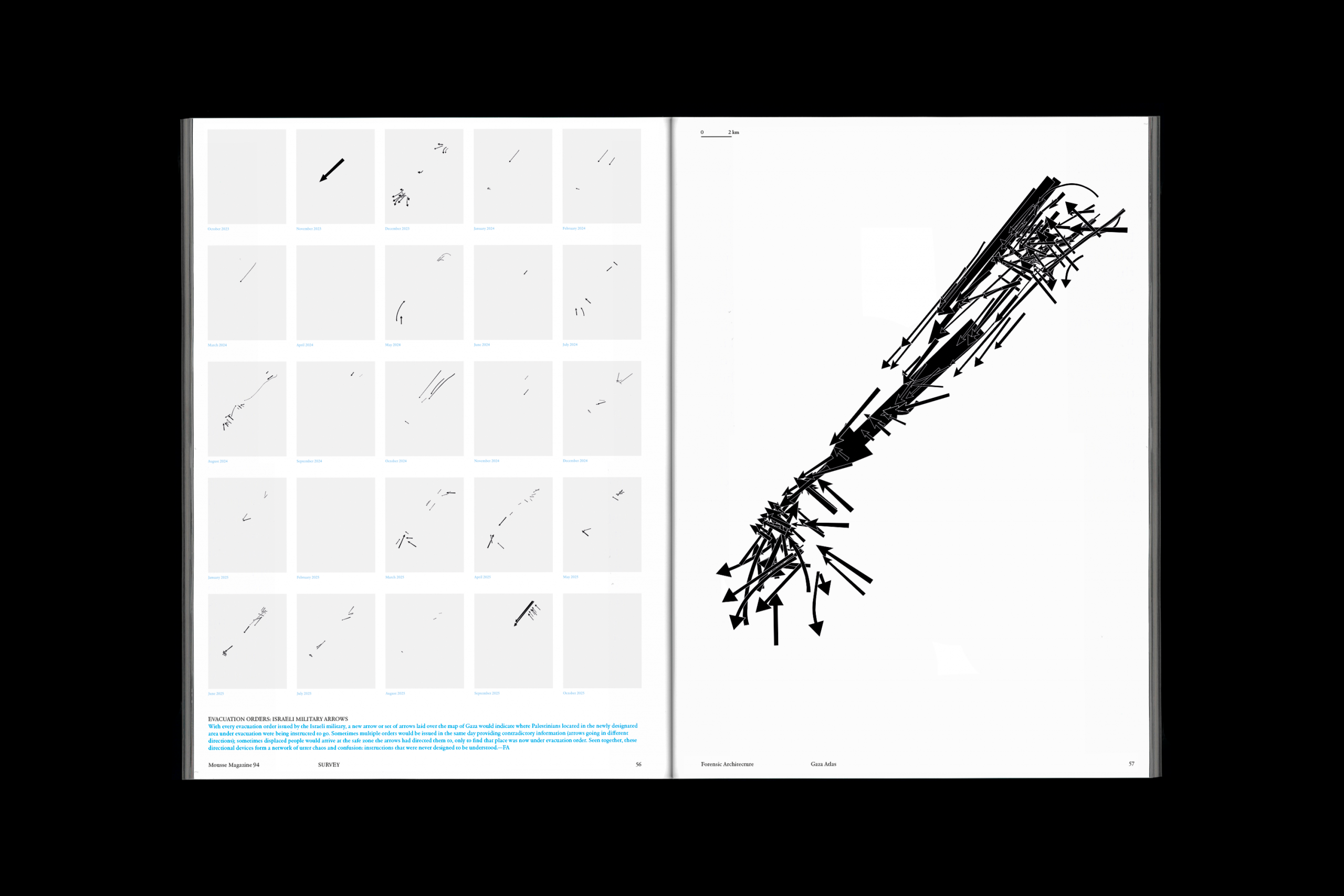
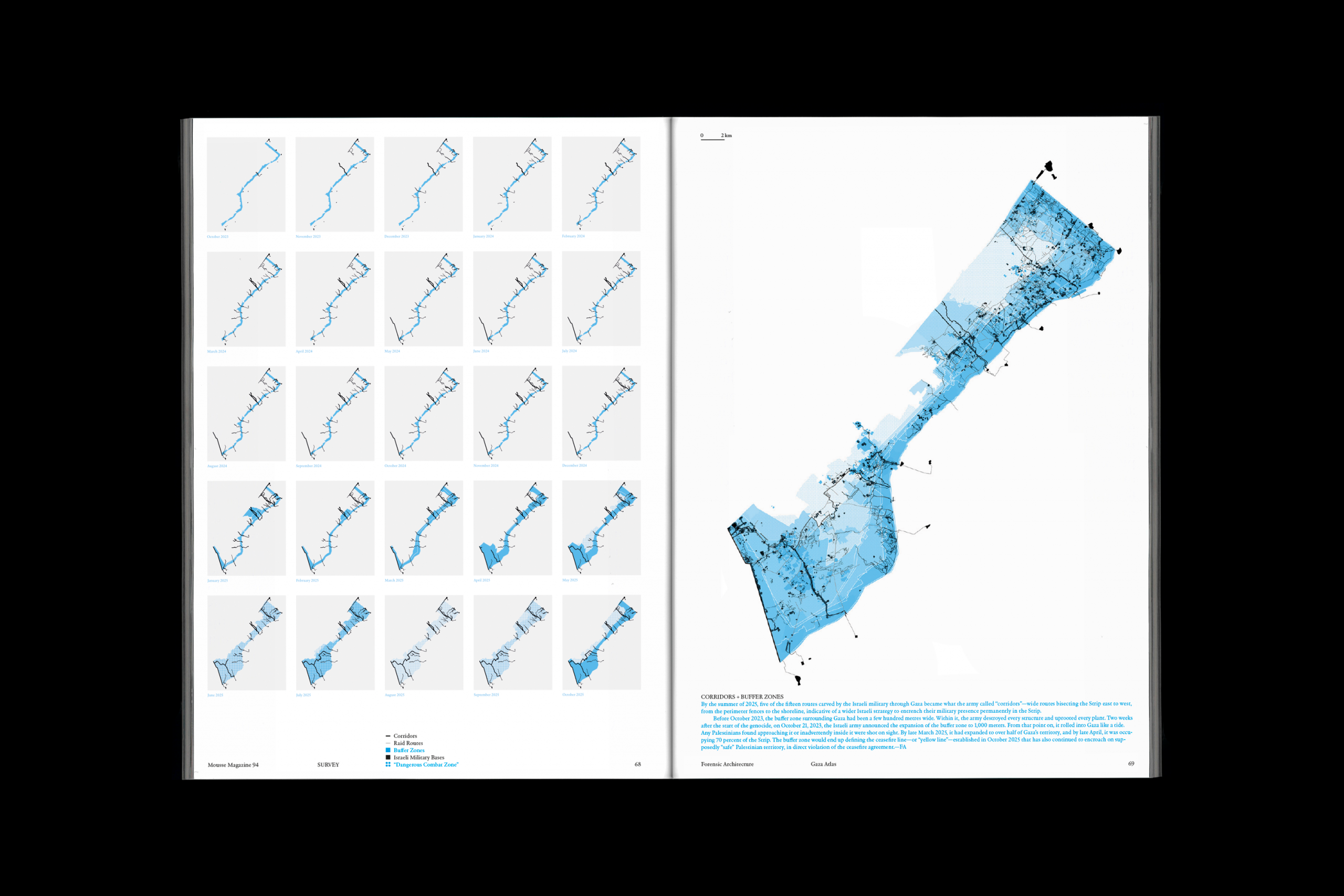
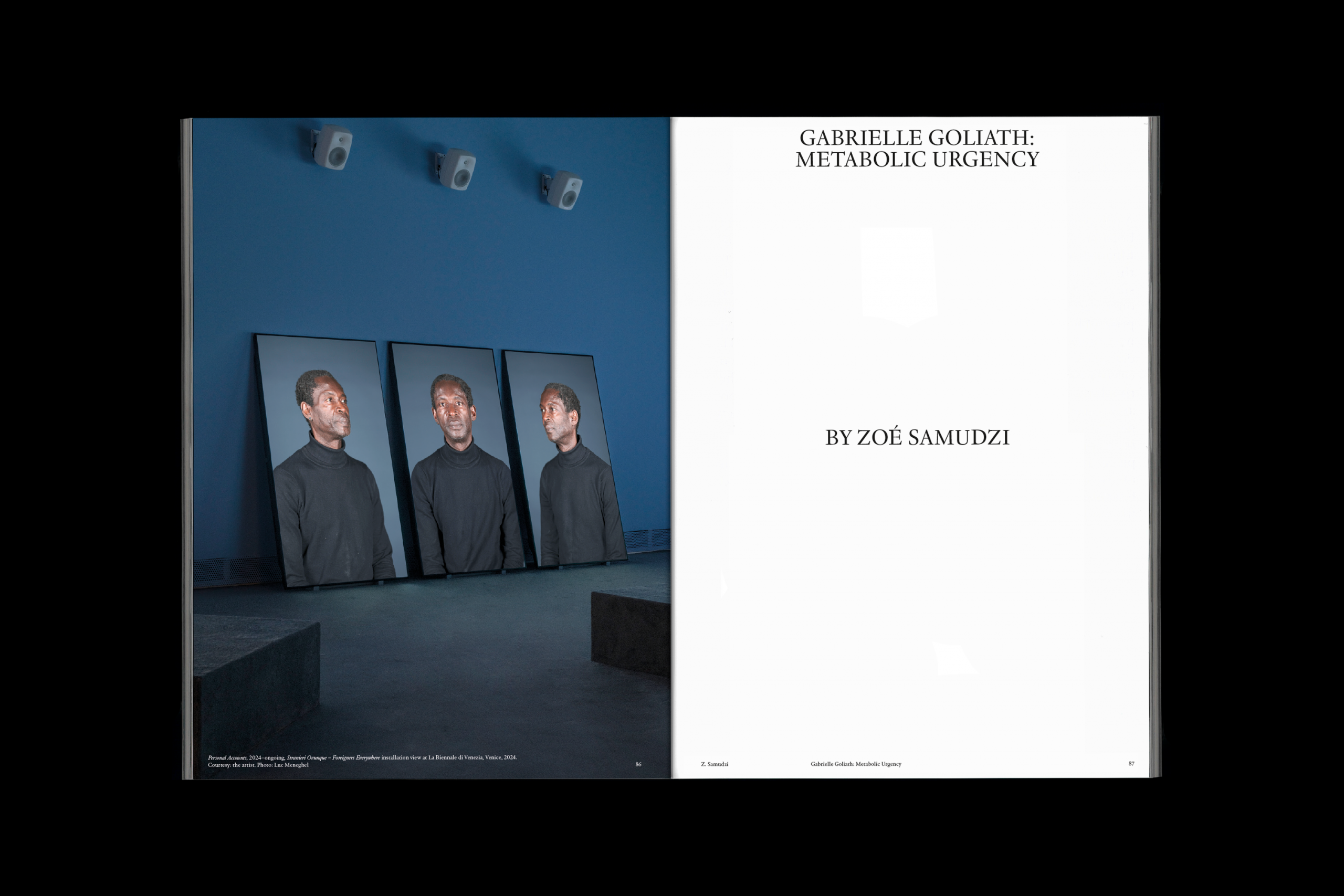
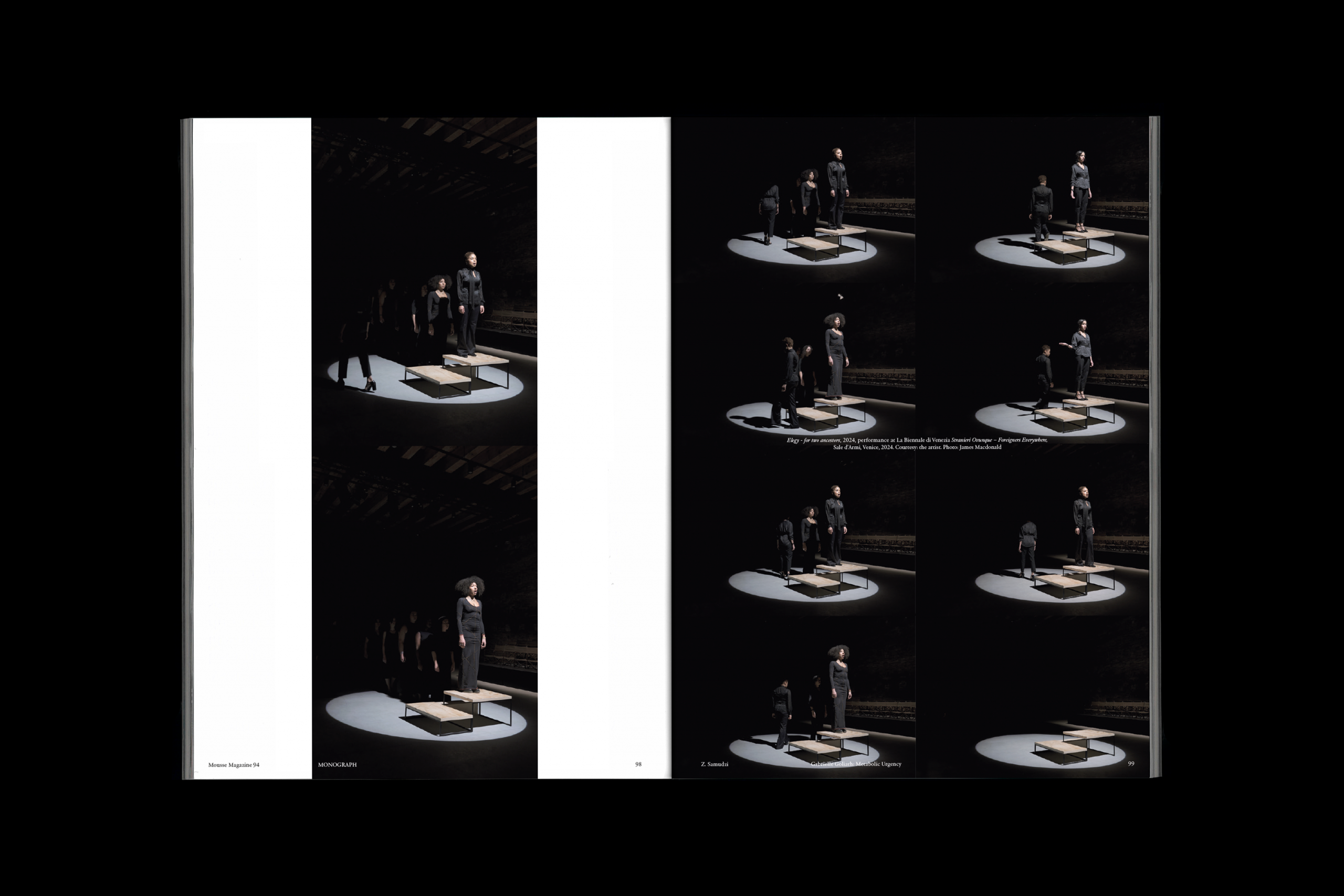
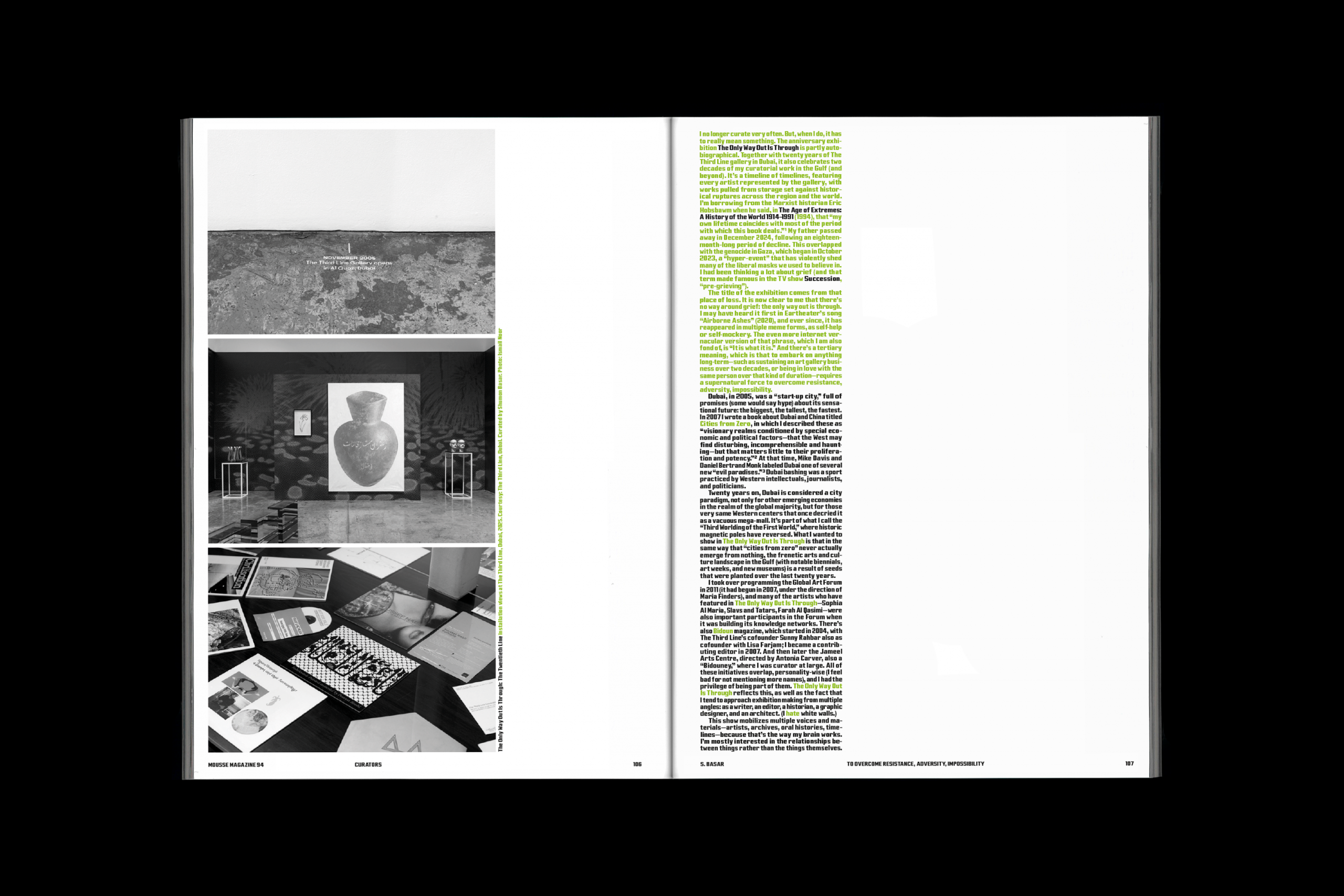
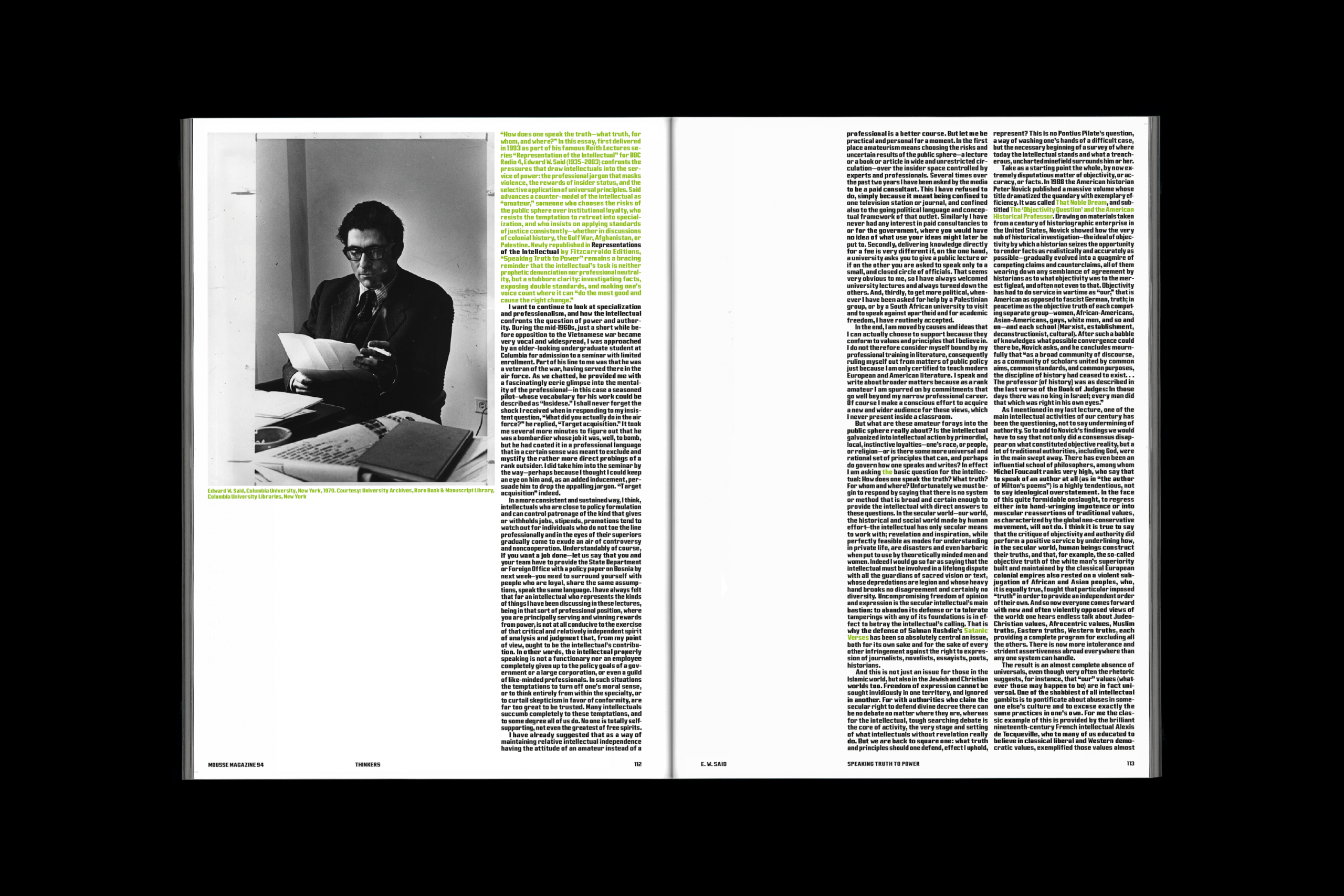
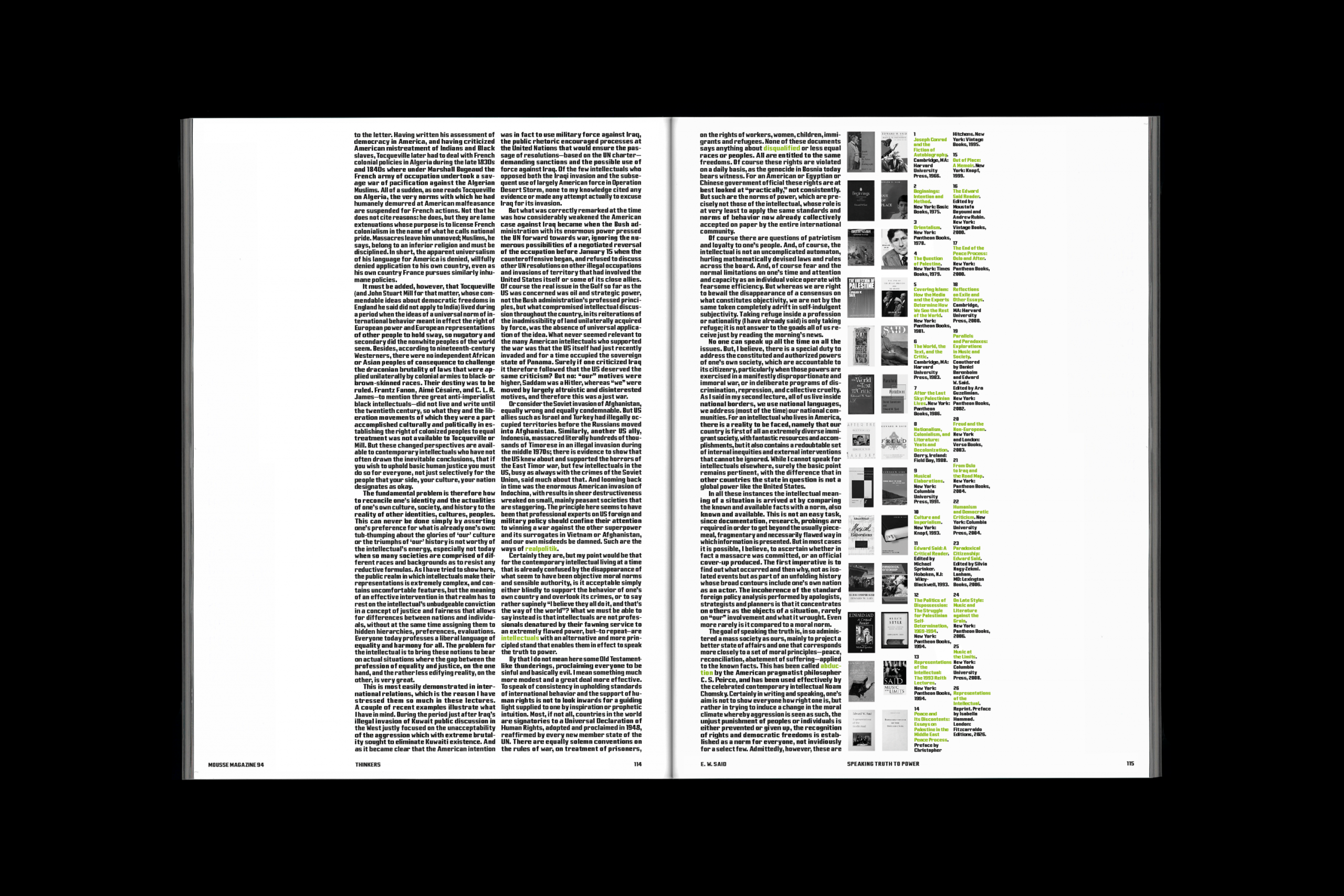
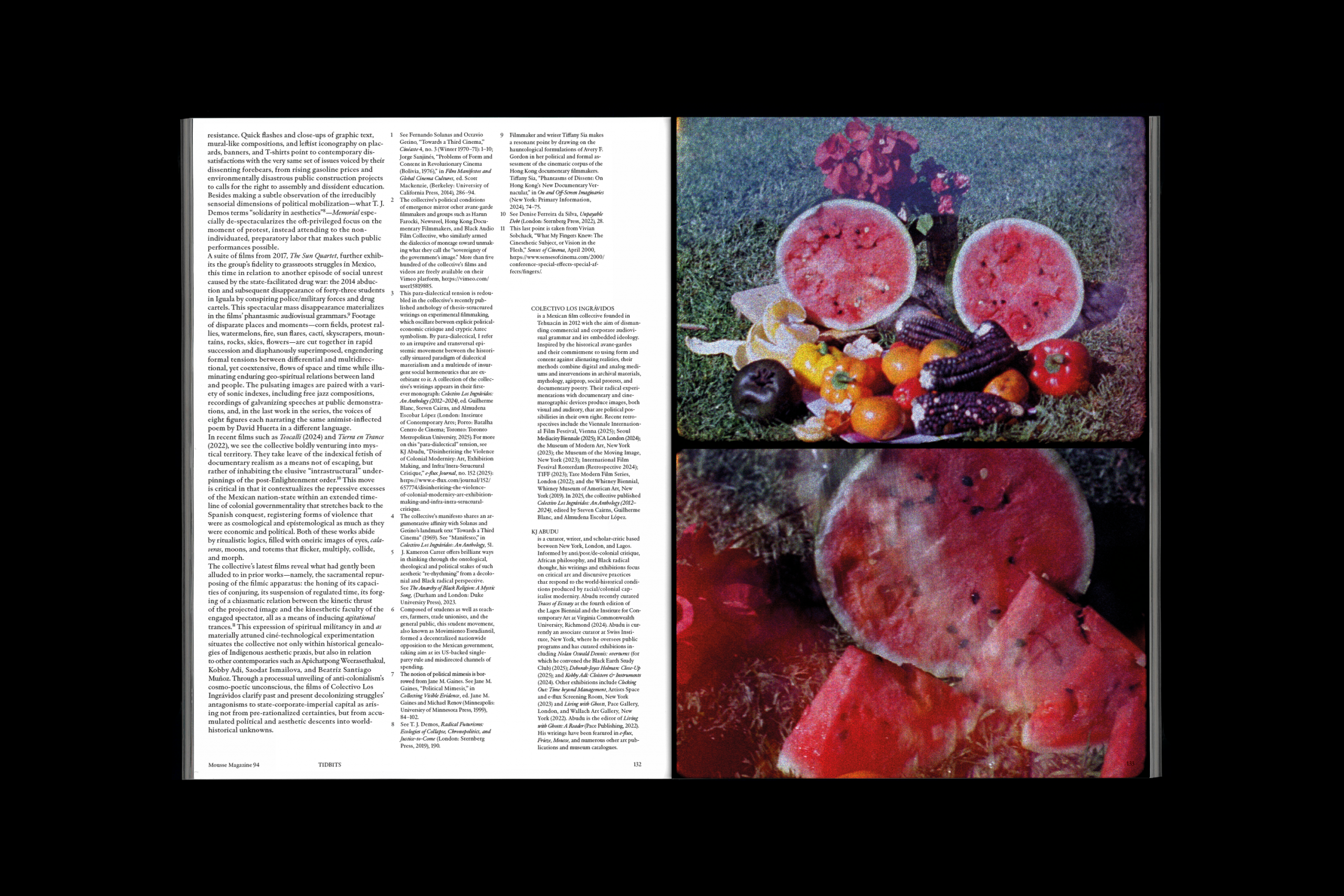
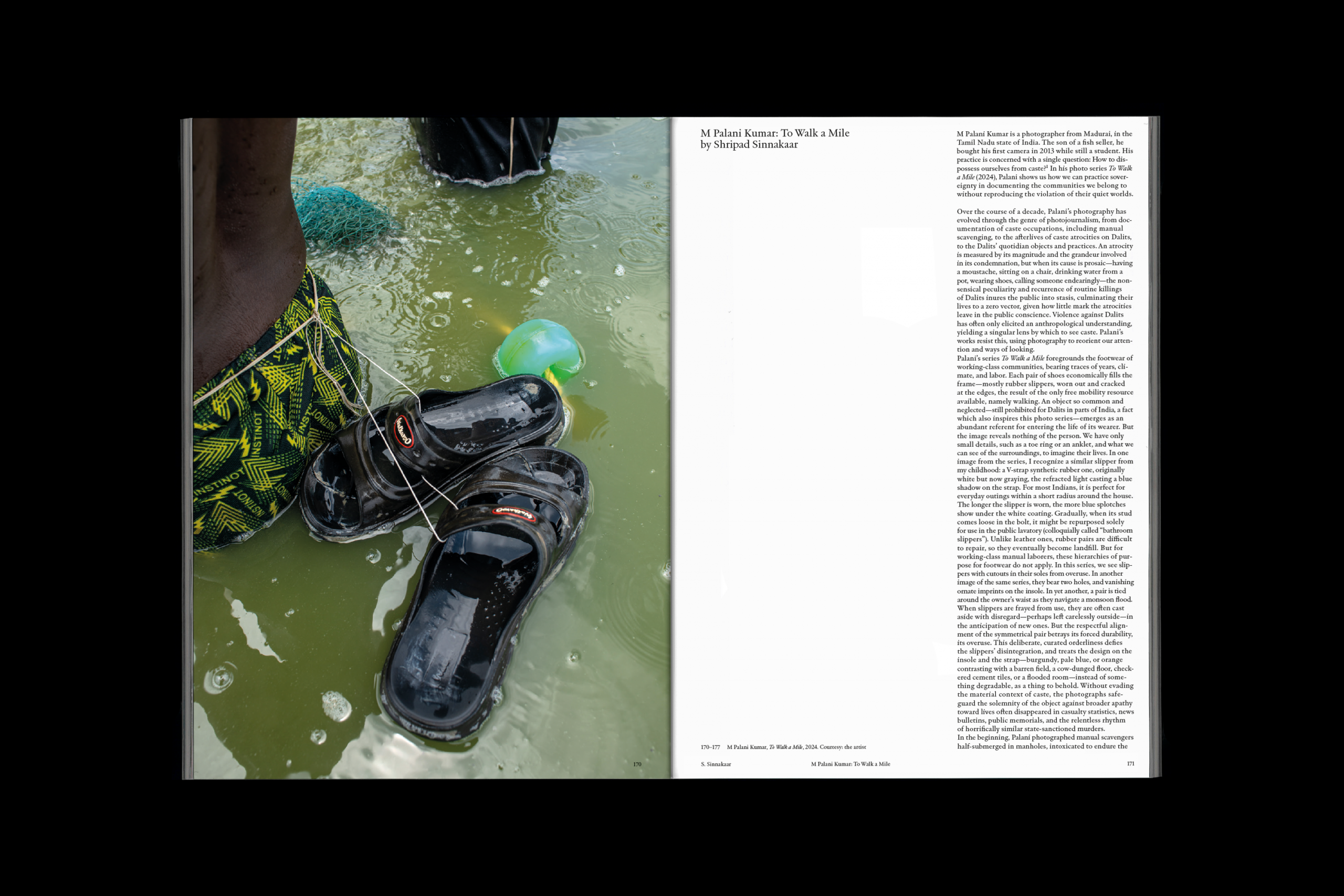
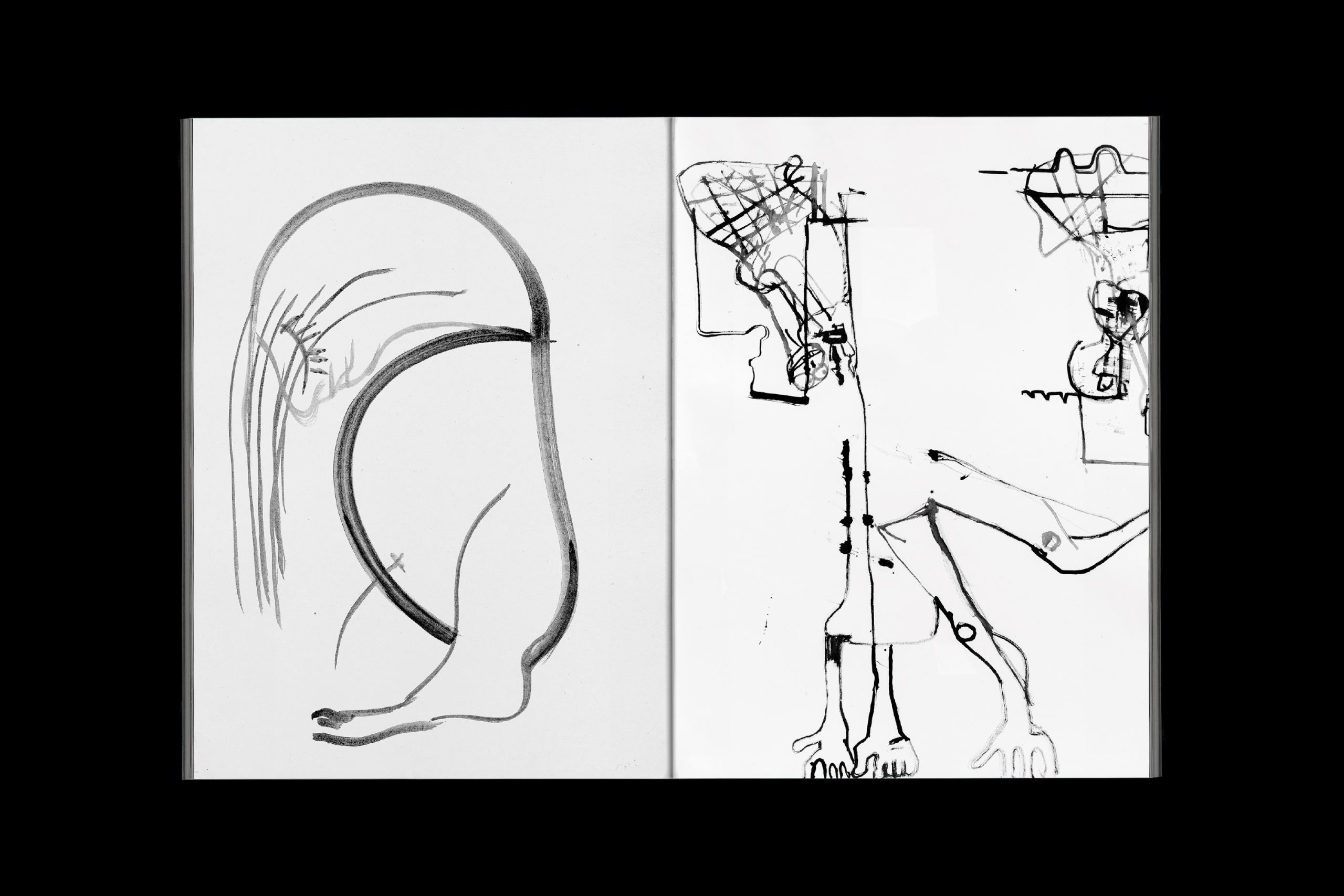
Collective intelligence (along with its wildly popular counterpart, brain rot) is a recurring subject of late. This issue is woven together through reflections on methodologies of the collective, larger-than-ourselves dynamics and "what goes unuttered (of, perhaps, what is painfully unutterable)," as Zoé Samudzi writes about Gabrielle Goliath—whose project for the South African pavilion at the upcoming Venice Biennale has been cancelled by the Arts and Culture Minister of her country for being "divisive." We stand in solidarity with the artist. Forensic Architecture's Eyal Weizman speaks of new ways of detecting "hyper-relations" as strategies to confront systemic violence. Edward W. Said, in his crucial 1993 essay "Speaking Truth to Power" (reprinted here), argues that "the intellectual's voice is lonely, but it has resonance because it associates itself freely with [. . .] the common pursuit of a shared ideal." And in our Curators section, Shumon Basar memetically reaffirms that now more than ever, "Comment is king."
Let's not shy away from commenting.
Ce numéro paraît sous plusieurs couvertures différentes, distribuées aléatoirement.
Magazine international bilingue (anglais / italien) de quelque 300 pages au format tabloïd, Mousse rassemble tous les deux mois, depuis 2006, des interviews, des conversations, des articles et des essais avec et autour des principaux acteurs de la scène artistique et de la culture contemporaines (critiques, artistes, curateurs), fédérant des contributeurs basés dans les plus grandes capitales artistiques du monde.
Mousse (Mousse Publishing) est également une plate-forme éditoriale qui publie de nombreux catalogues, monographies et livres d'artistes
(voir la rubrique correspondante dans la section éditeurs).