An exploration of the role of fashion and clothing in the creation of idealized images of the Other in colonial and postcolonial contexts.
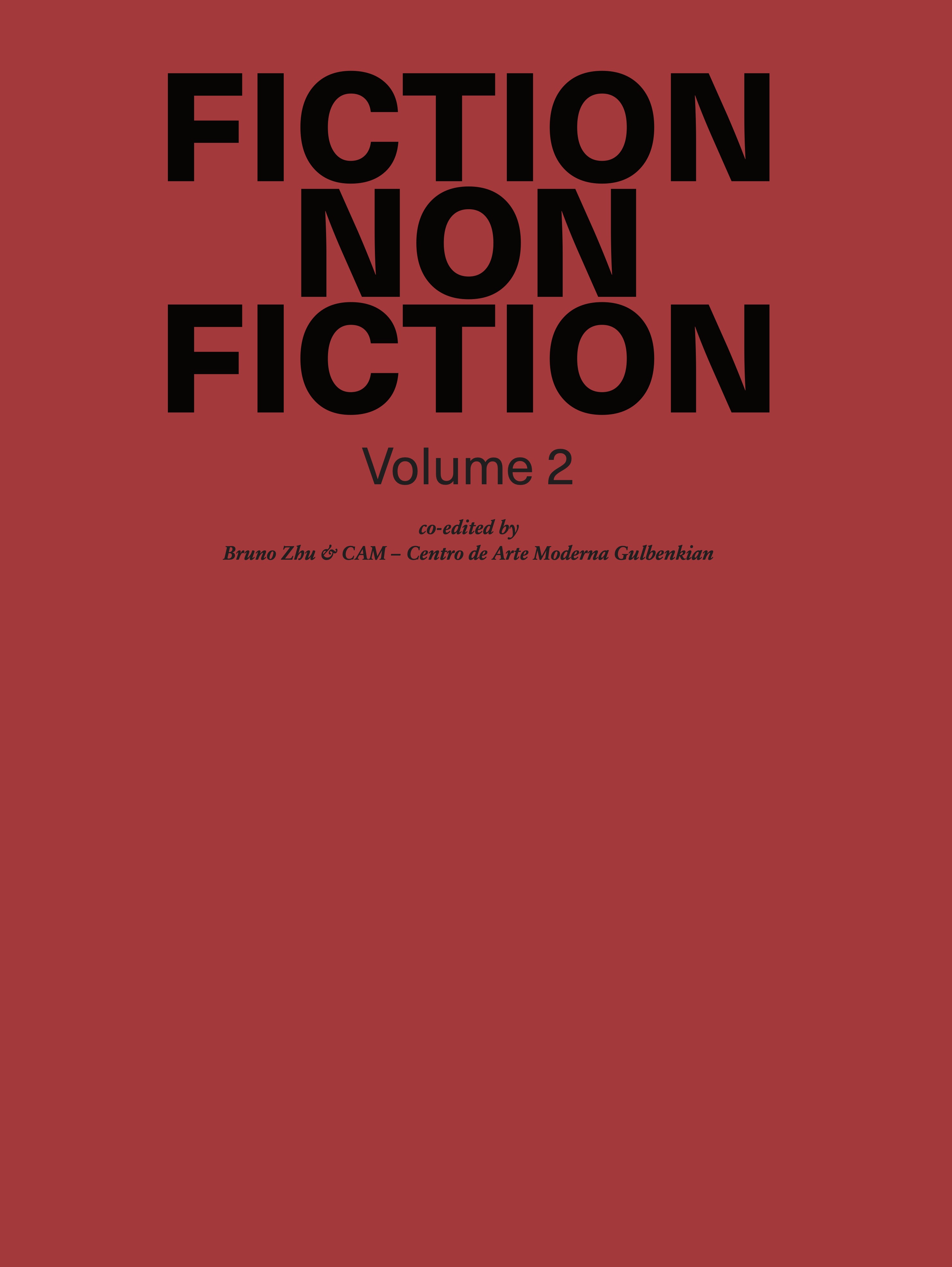
Fiction Non Fiction is a series of readers that pairs voices in literary criticism with the material histories of labor, gender, and race. Each volume proposes a close-reading of fictitious and theoretical works to explore how identity politics have been narrativized by liberal institutions across space and time.
Volume II, published on the occasion of Belas Artes, Bruno Zhu's exhibition at CAM – Centro de Arte Moderna Gulbenkian, Lisbon, is anchored by the centrality of how one looks. Ranging from domestic scenes in the female-owned prazos of Zambezi Valley, the trade of Indian calico, the 19th century British Nonconformist campaign in Southern Tswana, and accounts of Chinese workers by writer Eça de Queiroz, this reader surveys the role of dress in colonial and postcolonial contexts.
Featuring contributions by Jean Comaroff, Simon Gikandi, Stuart Hall, Kate Haulman, Eugénia Rodrigues, Regina A. Root, Victoria L. Rovine, and José Carvalho Vanzelli, Volume II addresses how fashion facilitated idealized images of the Other to serve the unity of the colonial topos.
Bruno Zhu (born 1991 in Porto) lives and works between Portugal and The Netherlands.
Influenced by fashion design, publishing, and scenography, Zhu's object-led installations explore notions of agency, authorship, consumption, and power.