First monograph / artist's book.
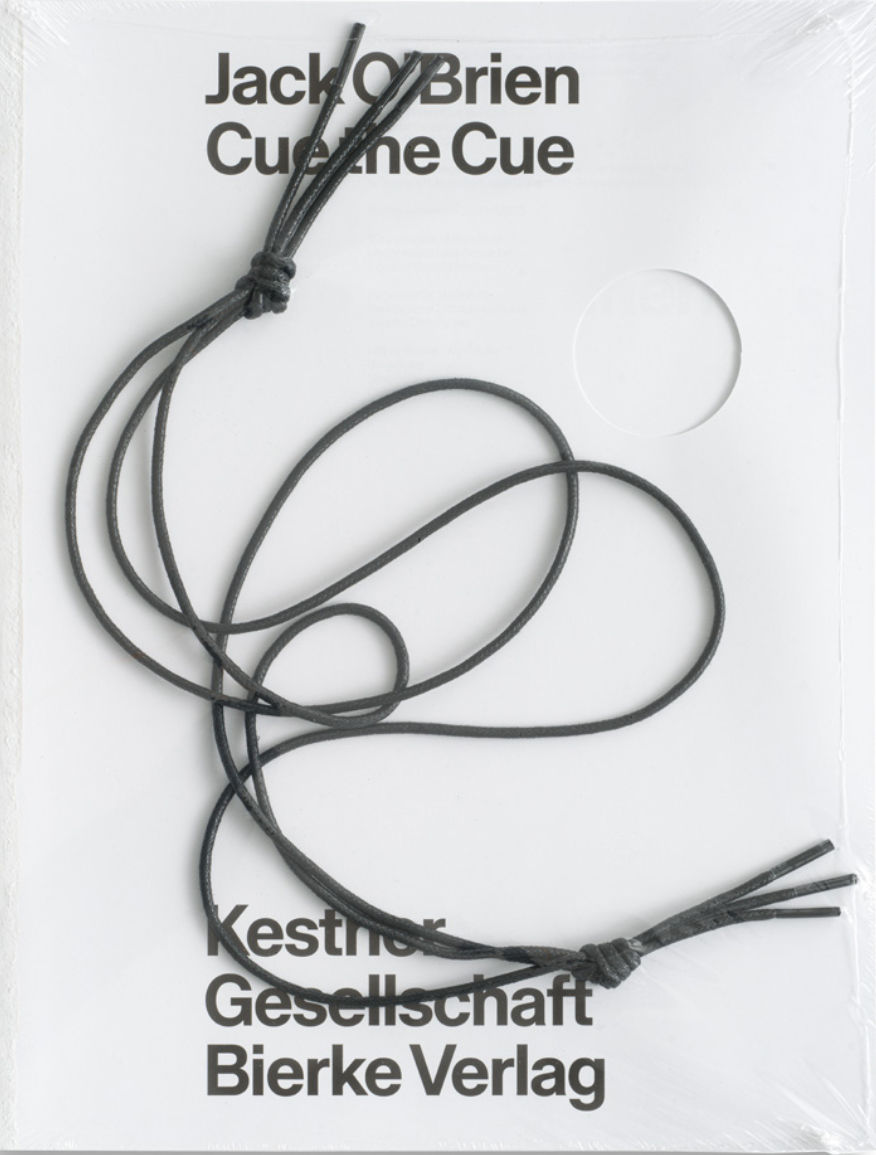
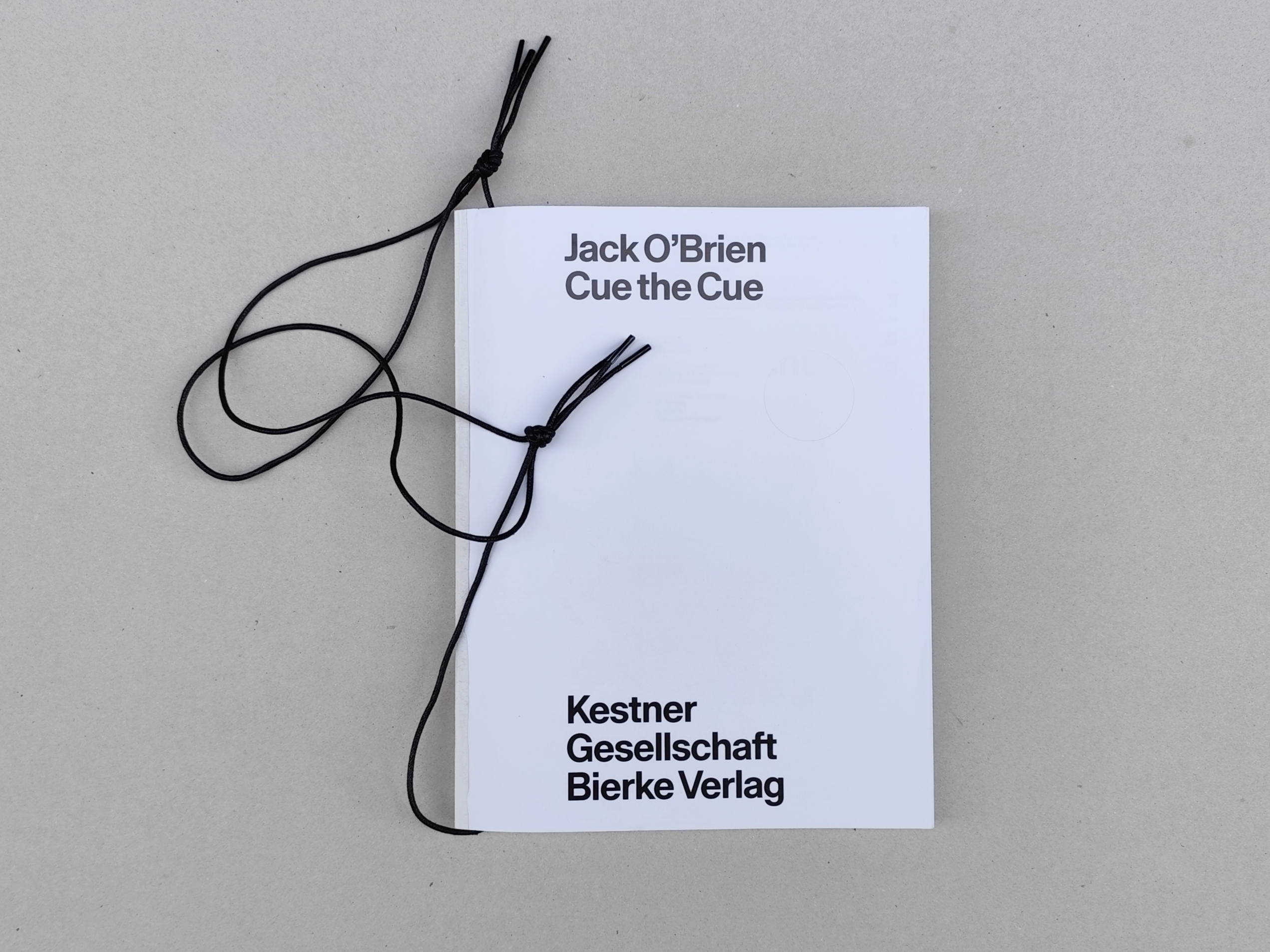
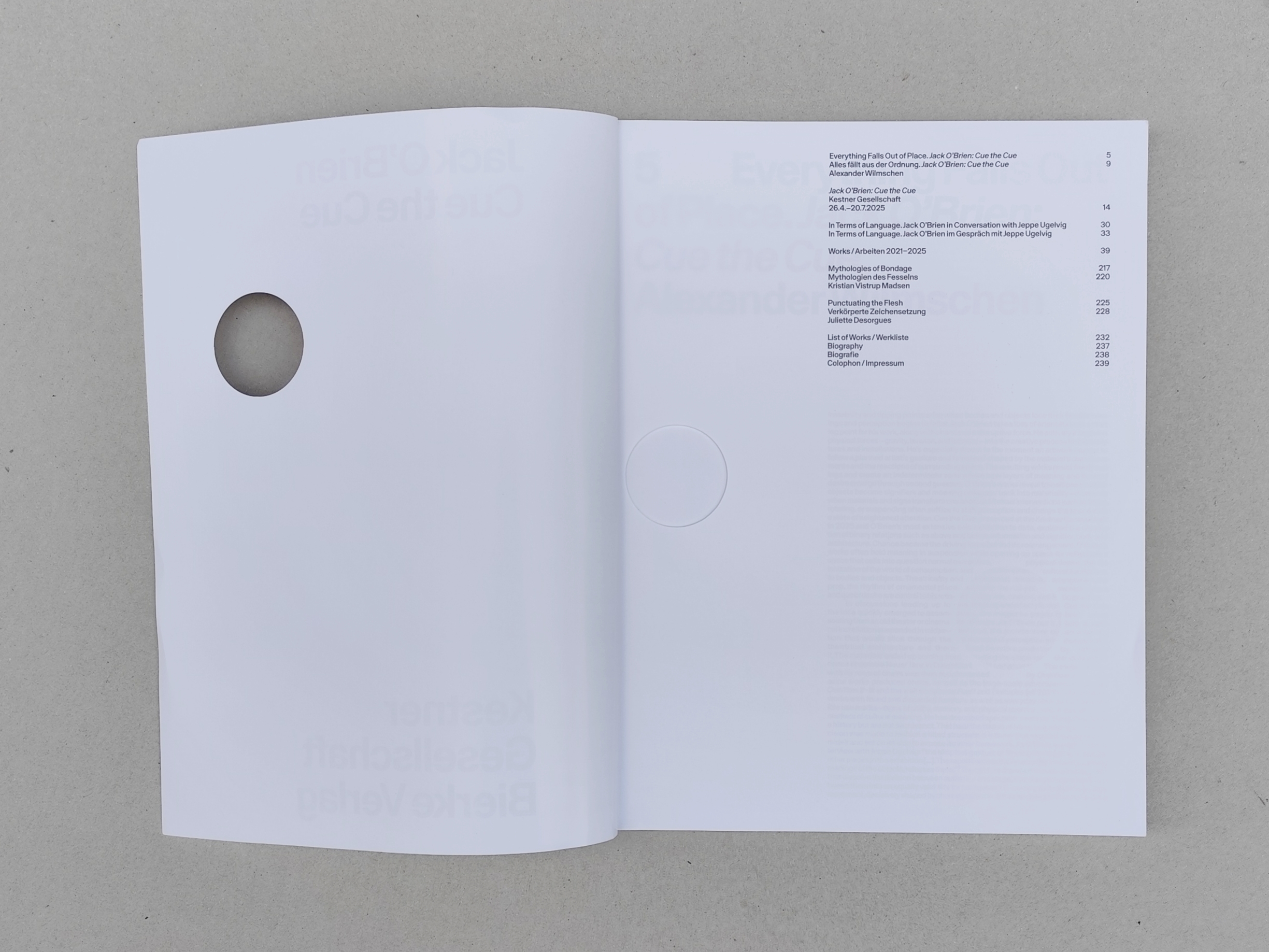
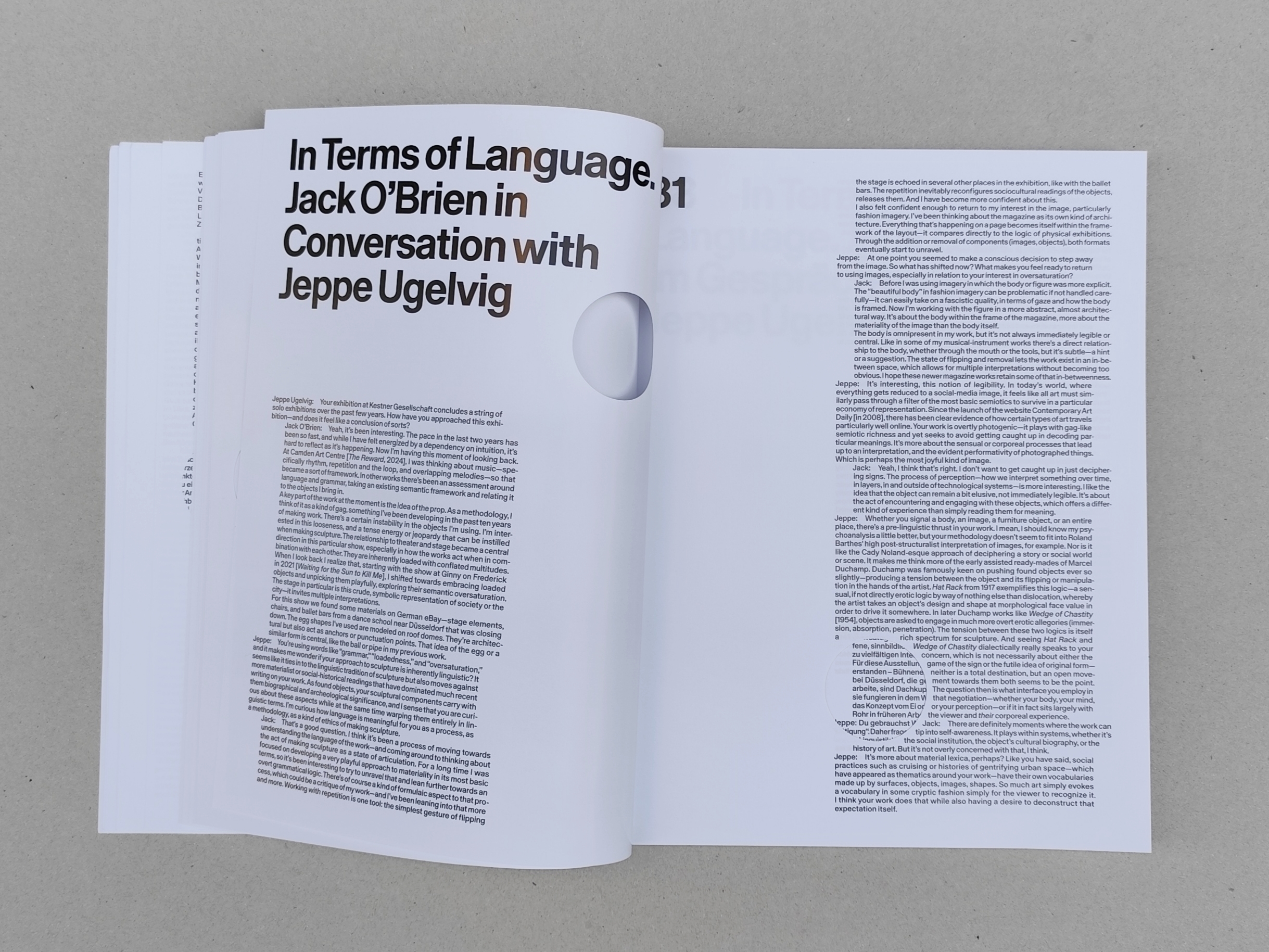
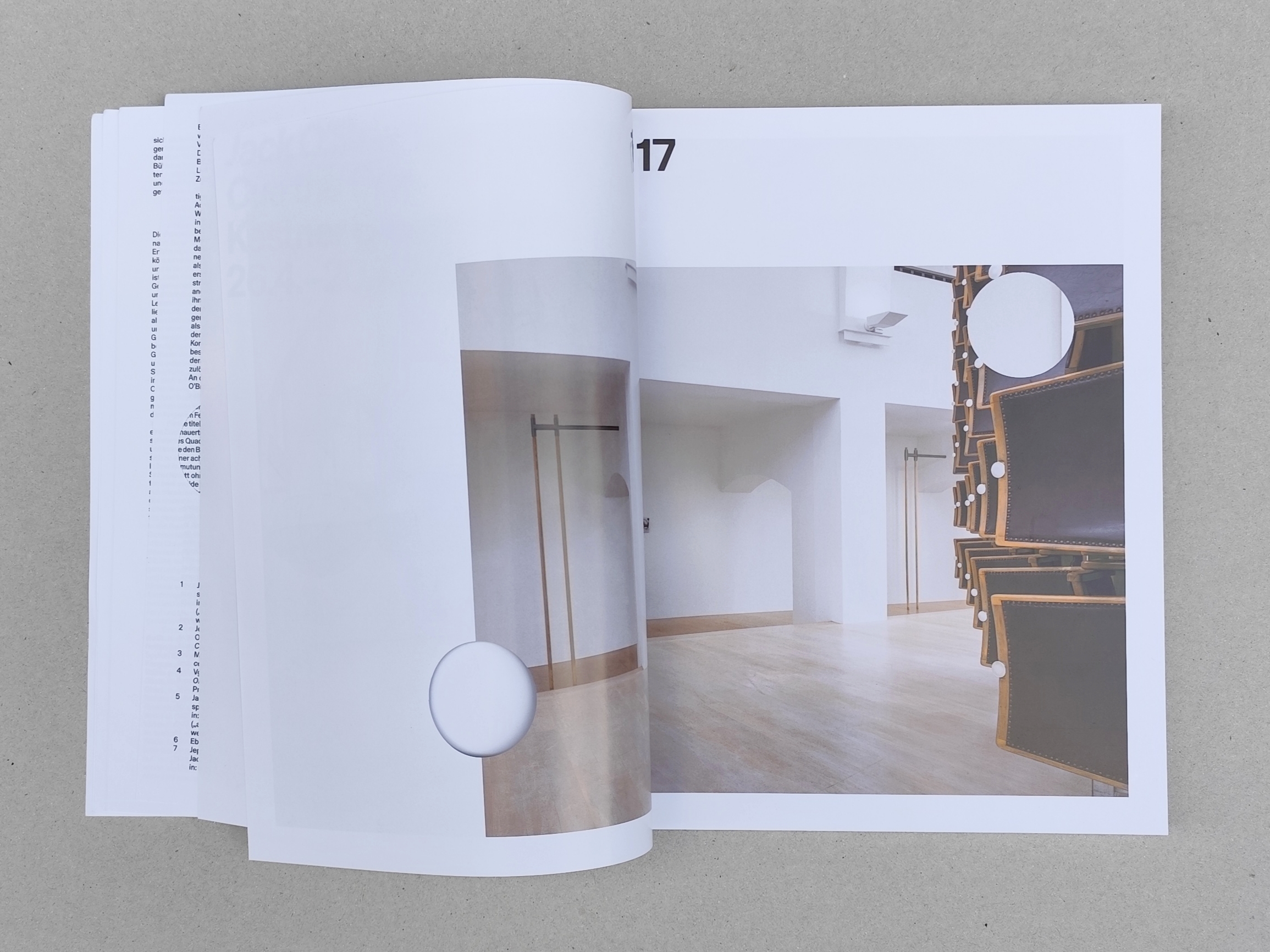
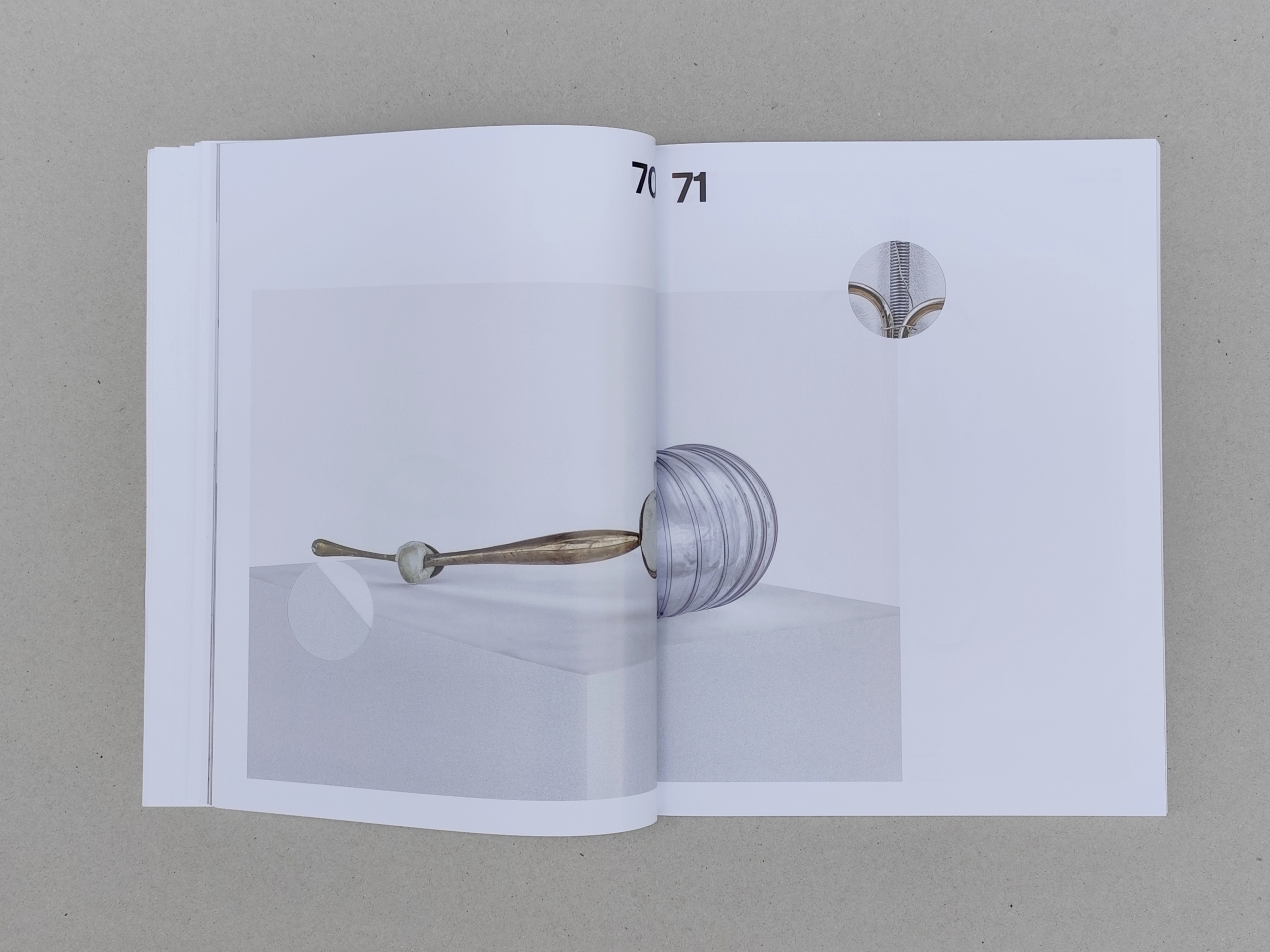
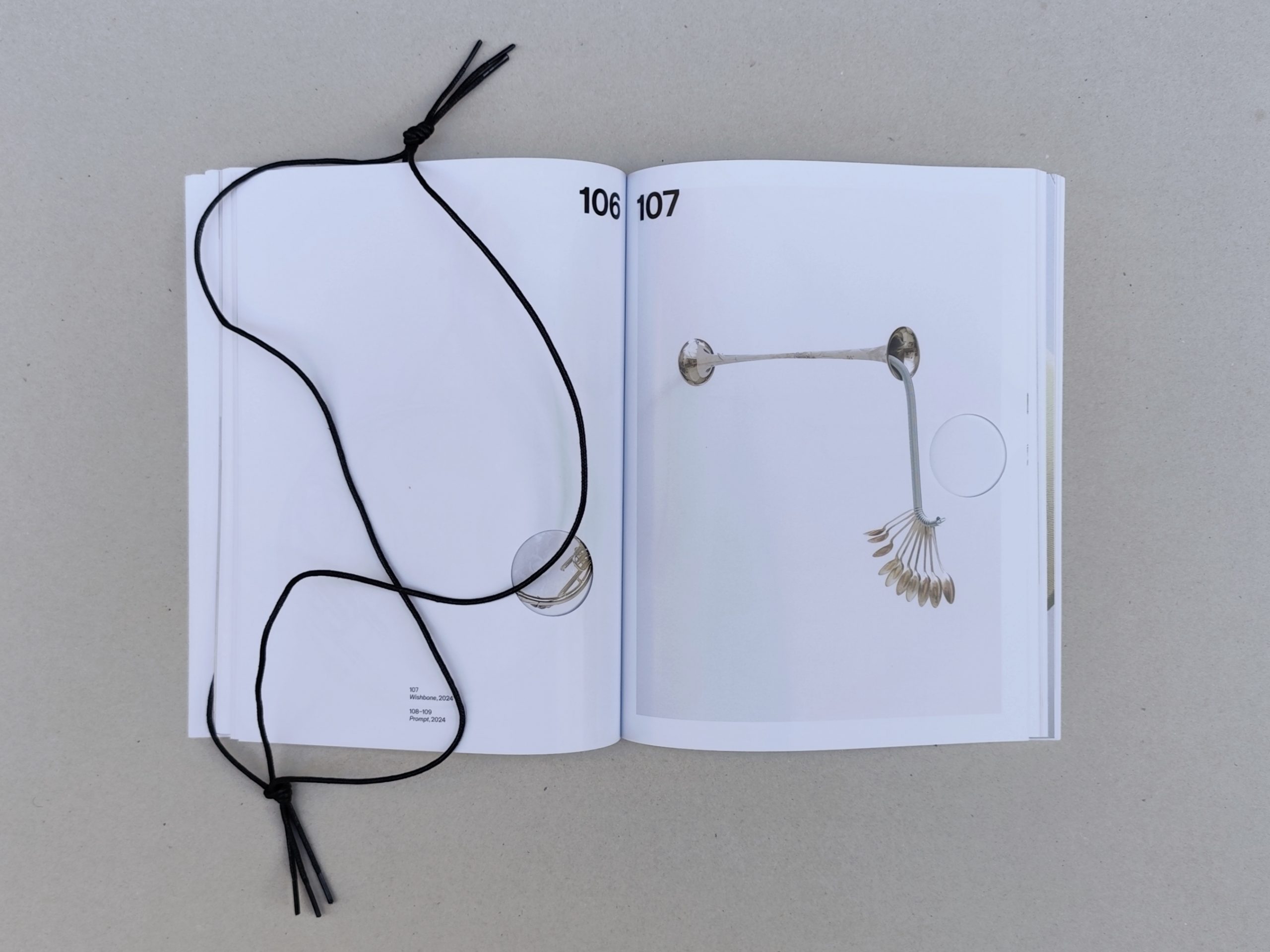
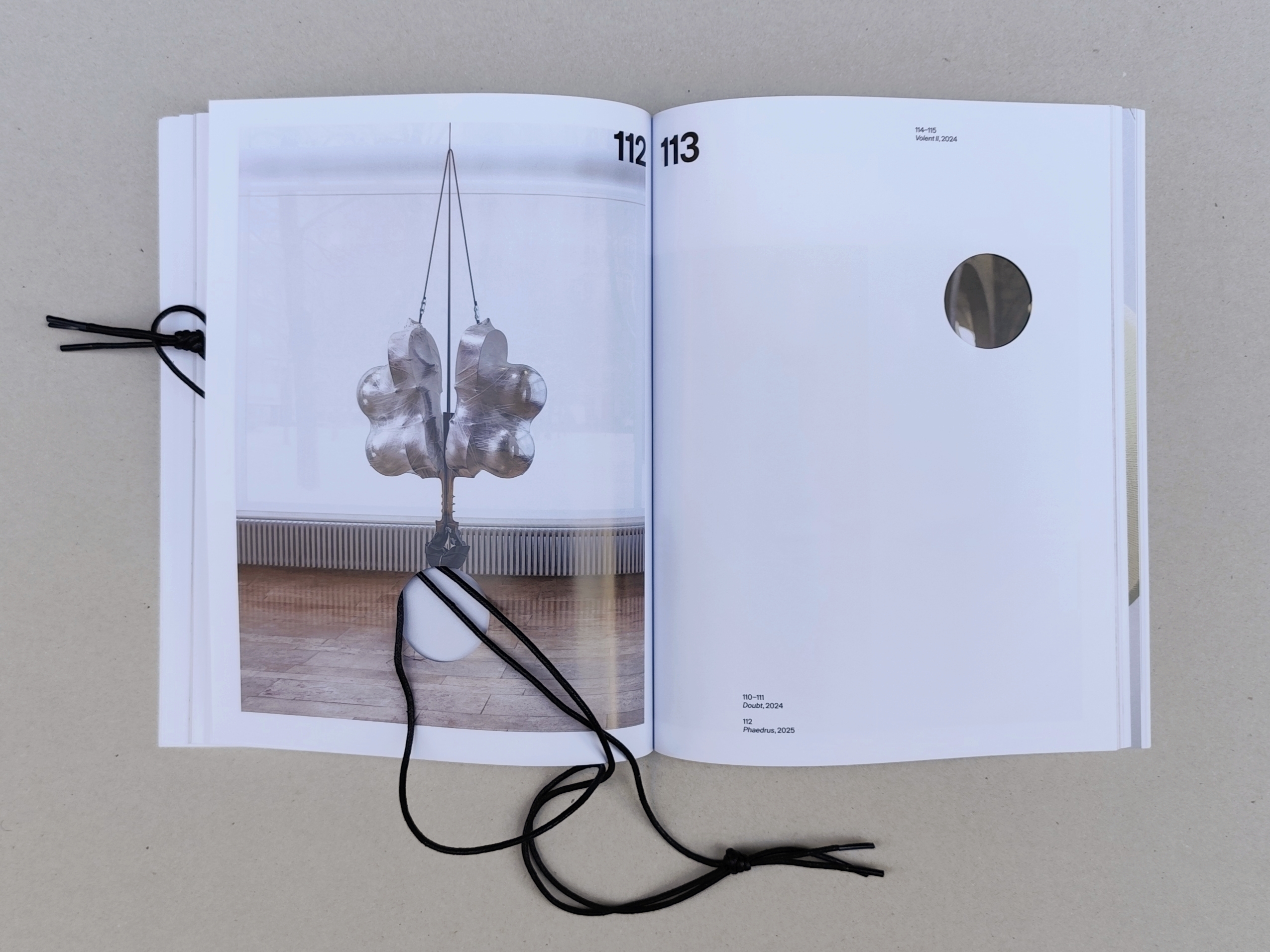
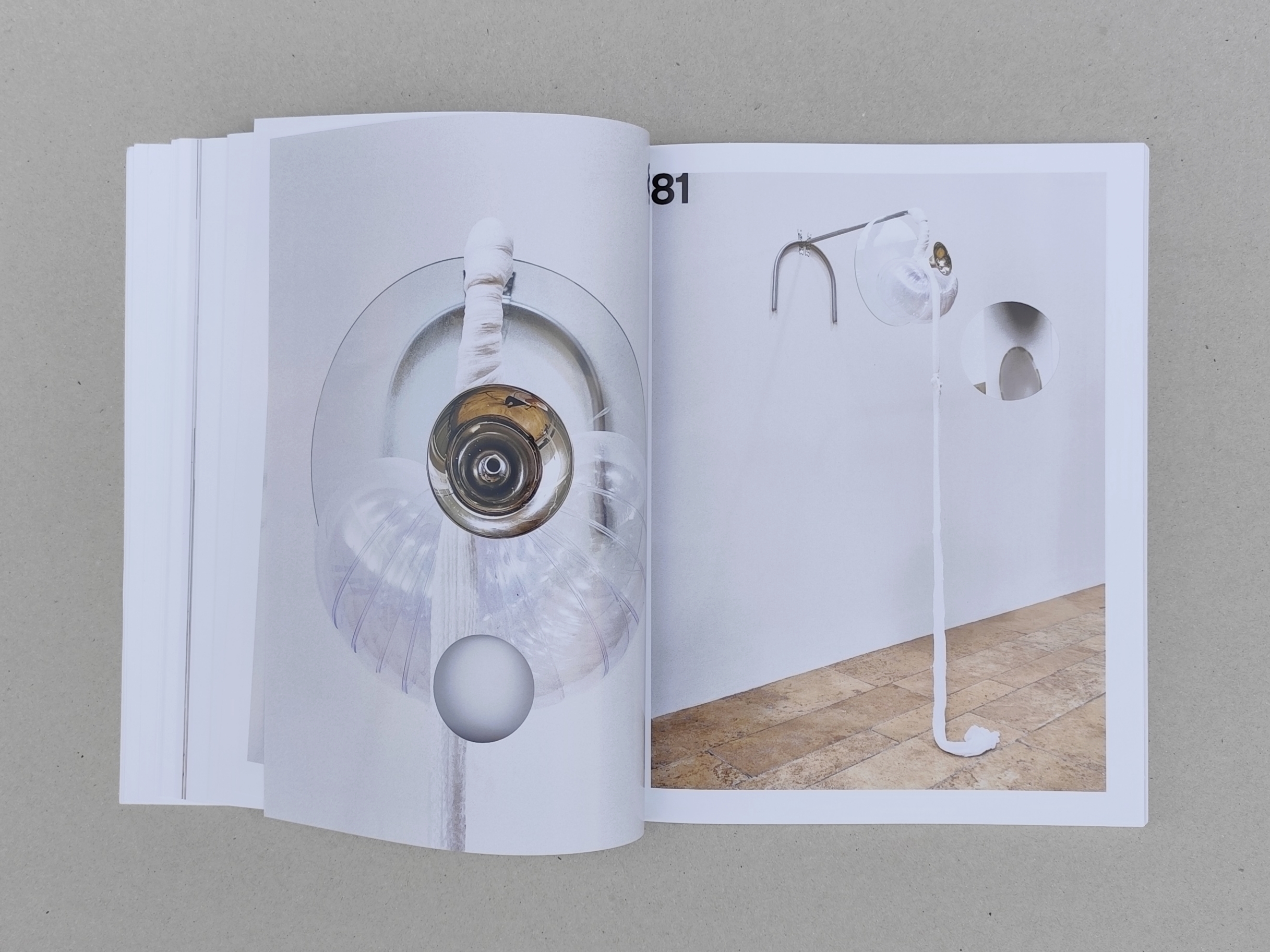
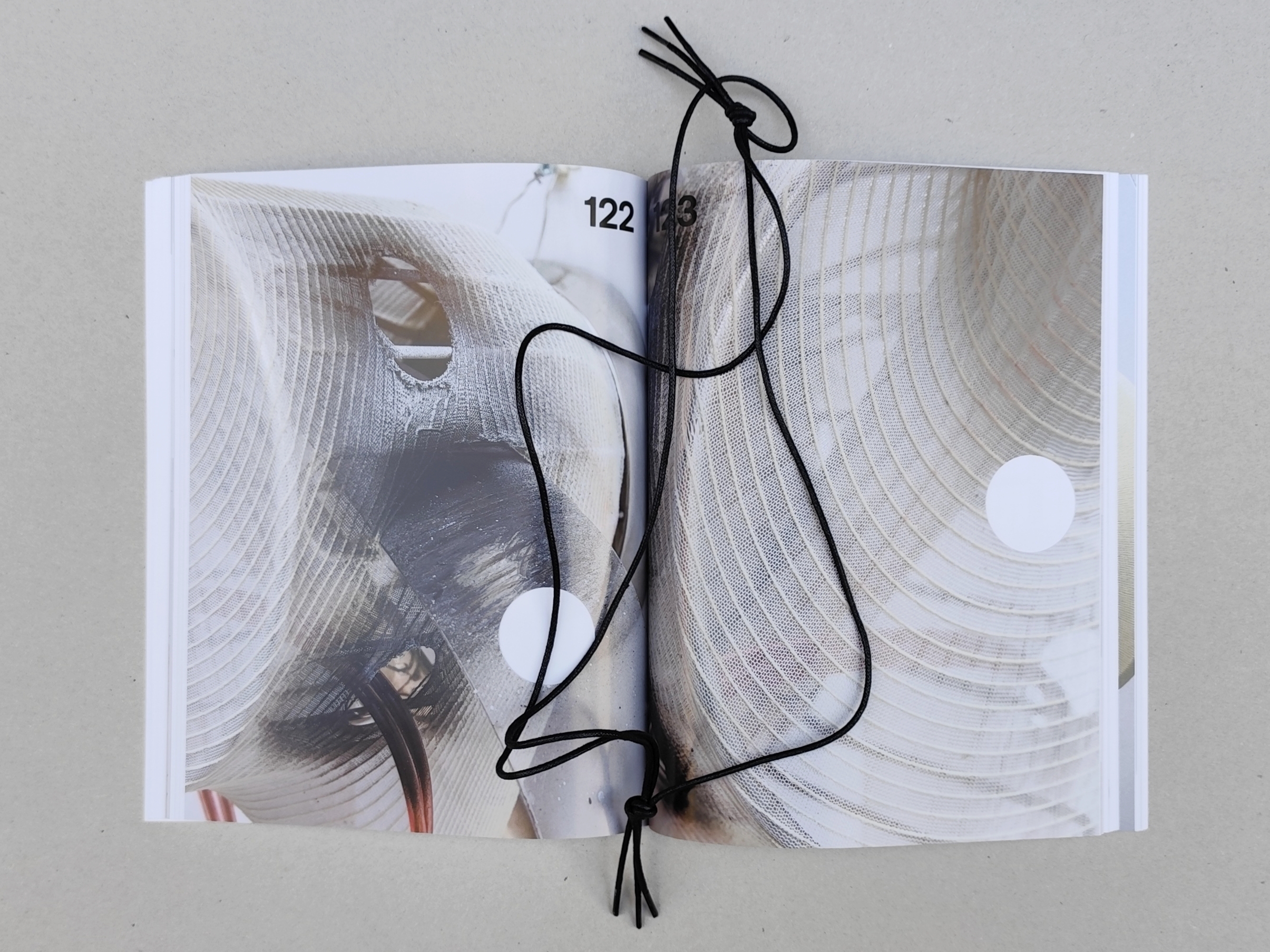
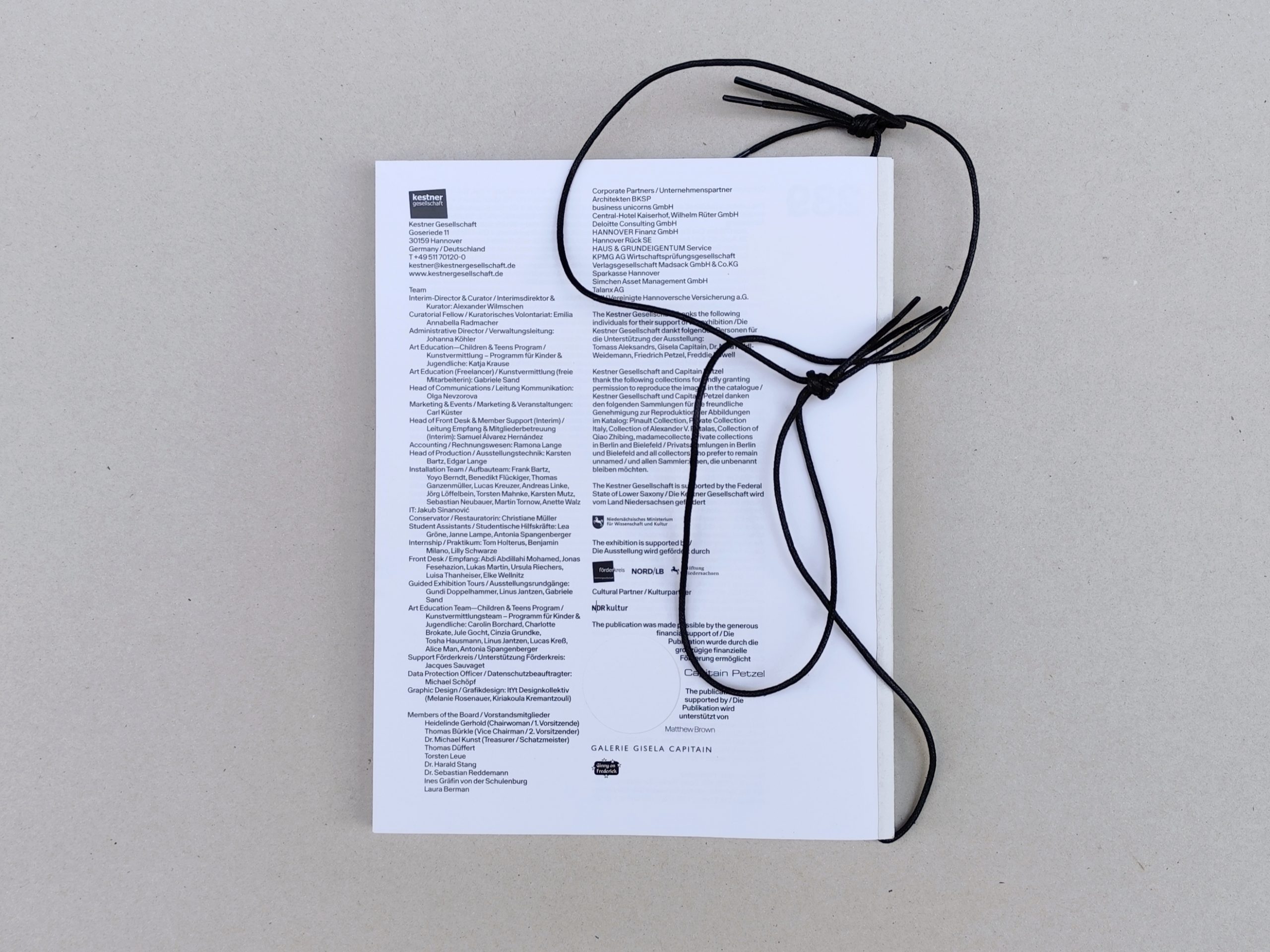
This publication accompanying his most comprehensive exhibition to date exhibition, at Kestner Gesellschaft Hannover, is Jack O'Brien's first monograph. Conceived by the artist himself, it complements the exhibition in both form and content, documenting his practice from 2021–2025 and transfers it into a different medium. Developed as an artist's book it stands in direct relation to the magazine collages in the exhibition. The torn book cover, perforated paper pages, and a shoelace sealed under cellophane make the publication itself a sculptural gesture.
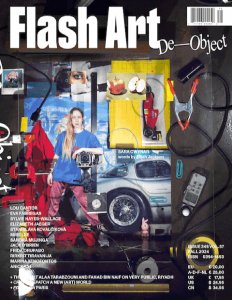
O'Brien negotiates themes such as staging, visibility, queer identity, and the circular dynamic between consumption, body, and performance. The title refers to the English "cue"—a theatrical cue—and at the same time to its repetition. This double meaning reflects O'Brien's working method, in which material, form, and gesture continually oscillate between suggestion and withdrawal, presence and dissolution. O'Brien works with found and discarded objects, which he transforms through gestures of wrapping, binding, and perforation. His sculptures, installations, and collages use industrial materials such as cellophane, shrink wrap, and synthetic textiles.
The catalogue brings together the first substantial essays on O'Brien's work. Alexander Wilmschen introduces the exhibition, in which chance becomes the driving force of reordering, and situates O'Brien's work within the context of queer phenomenology.
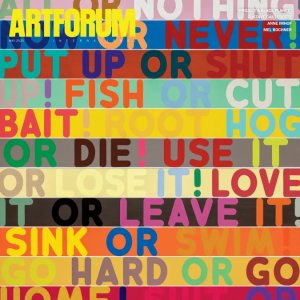
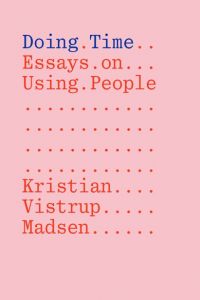
Kristian Vistrup Madsen examines the sadomasochistic dimensions of the work. Juliette Desorgues reads the sculptures as embodied punctuation. In conversation with Jeppe Ugelvig, O'Brien reflects on his artistic methodology and language.
The result is a monograph which also formally works with the moments of controlled instability that are so striking in the exhibition: floating, supported and warped.
Jack O'Brien (born 1993 in London)'s work explores the interplay of material, personal experience, and cultural critique. His sculptures, often made from found and repurposed objects combined with consumer materials like shrink wrap, epoxy, and fabric, evoke a sense of precarity and tension, reflecting both physical and social fragility. By forcing rigid materials into uneasy confrontations and binding them in unexpected ways, O'Brien mirrors the complexities of human relationships and identity. His abstraction destabilizes fixed forms, creating works charged with nervous energy, as if on the verge of collapse. This precariousness becomes a metaphor for broader dynamics of identity, particularly within queer cultural histories, while his materials act as "eloquent texts" that engage political and personal narratives.