A collection of essays and interviews that provides an ideal introduction to Alain Badiou's thought.
"The affect of a truth is the immanence of something infinite within finitude. I agree with Benedictus de Spinoza that sometimes 'we feel and know by experience that we are eternal'."
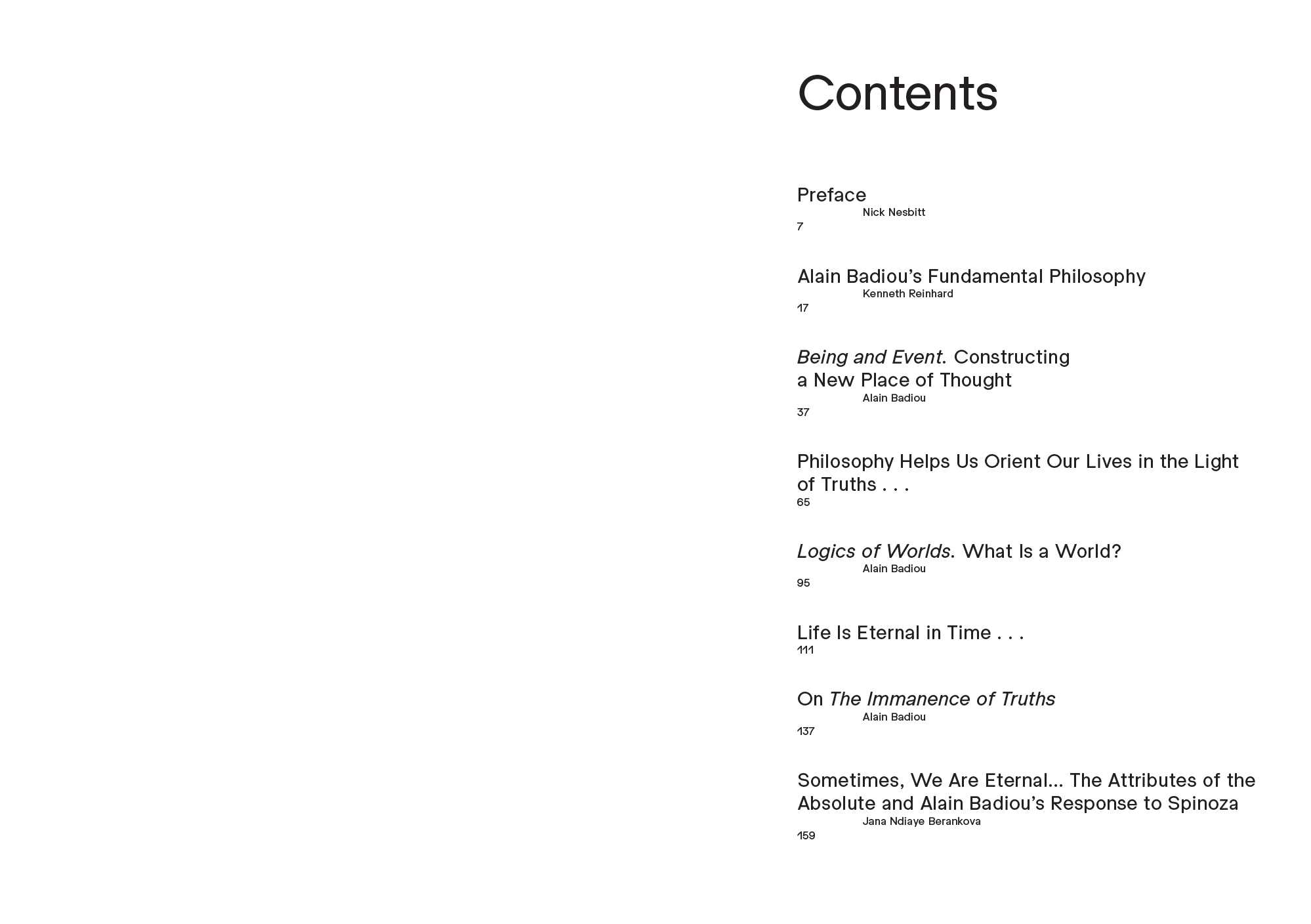
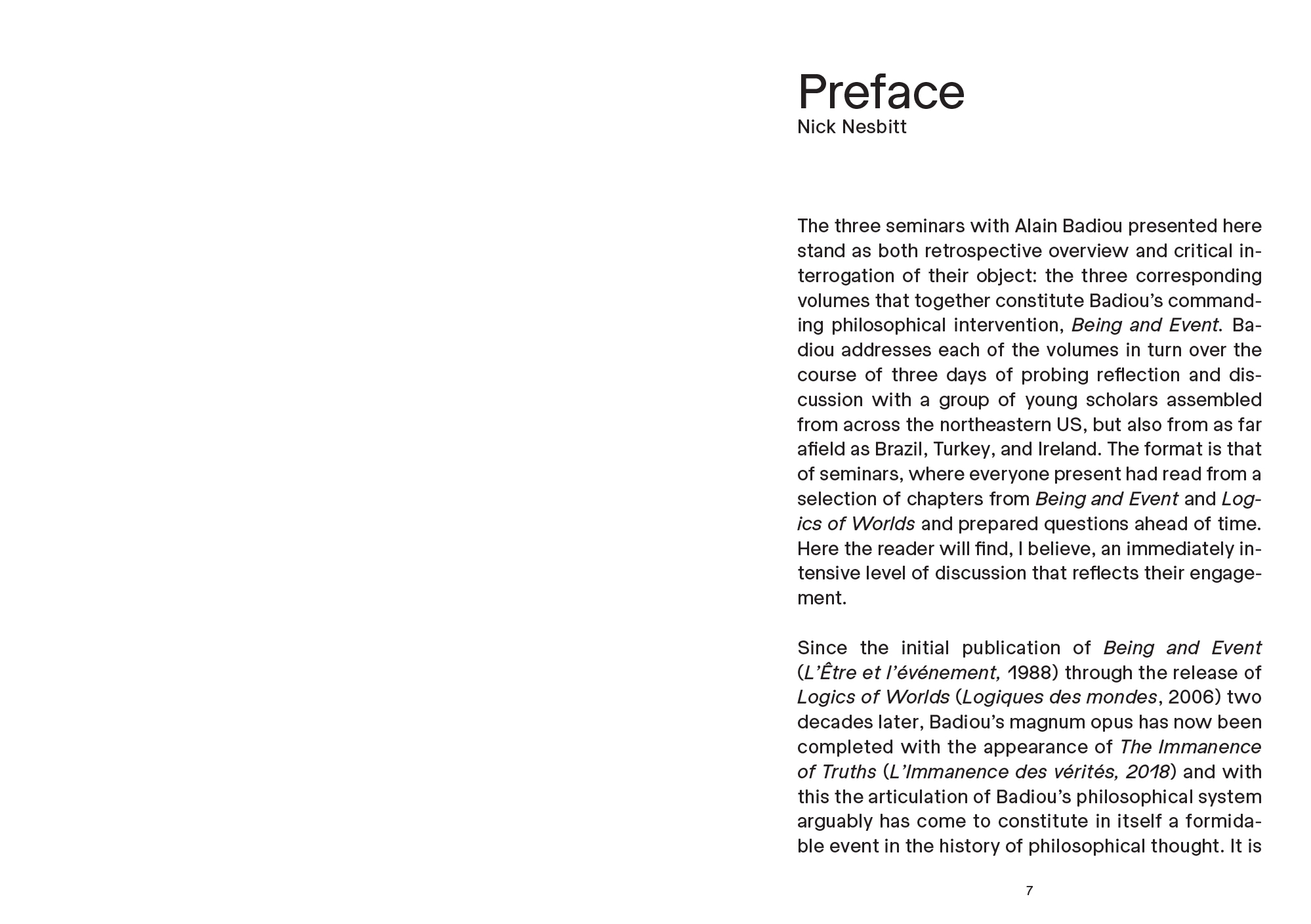
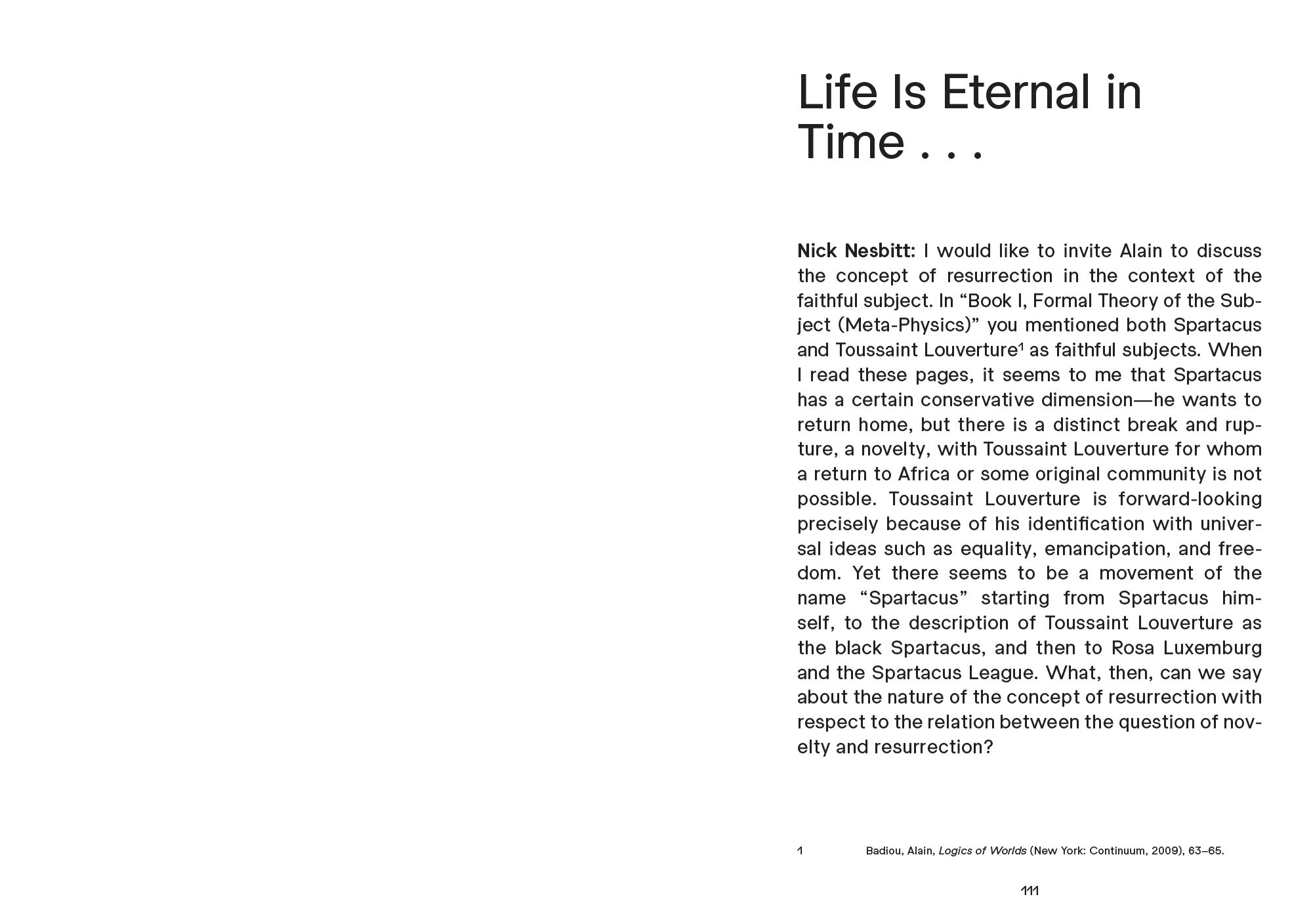
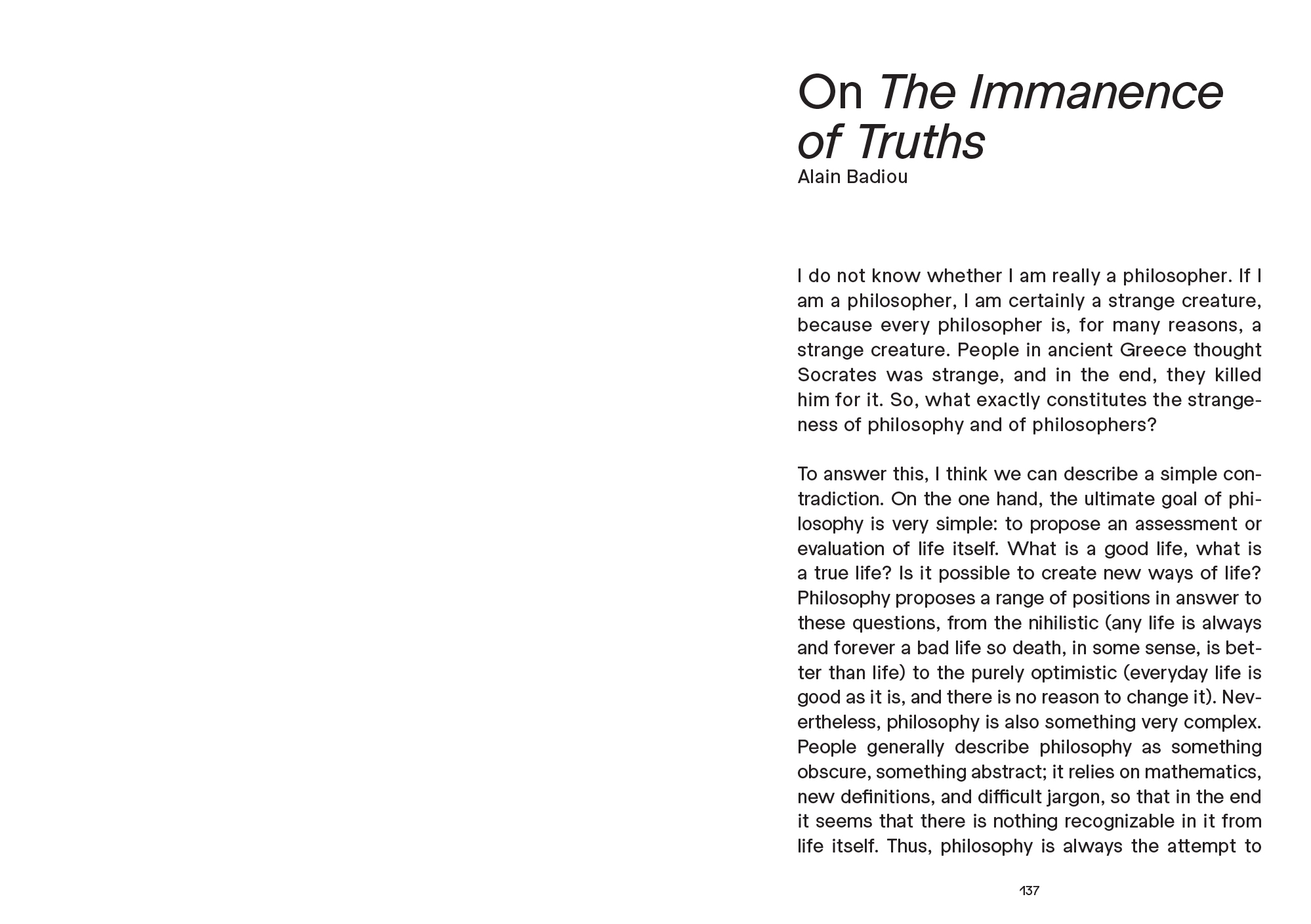
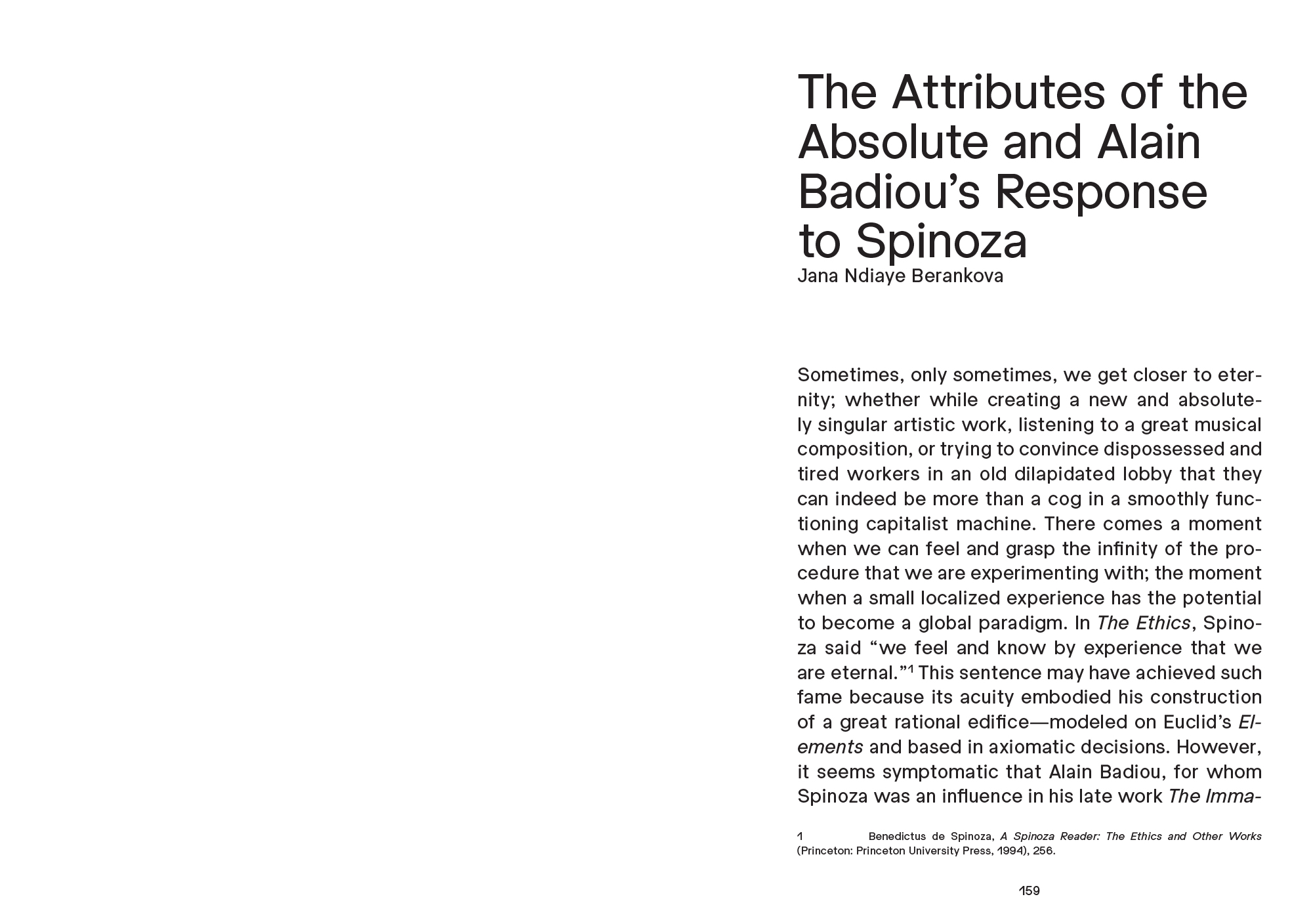
Sometimes, We Are Eternal is a compelling introduction to Badiou's thought and a rare glimpse into the monumental final volume of the Being and Event trilogy, The Immanence of Truths. Human beings can live as immortals; they can become eternal—sometimes. Philosophy helps us to orient our lives in the light of truths. In this collection of essays and interviews, Alain Badiou, in conversation with his disciples and attentive readers, explains his intellectual trajectory, the intricacies and problems that brought him to write the Being and Event trilogy, all while making rare self-critical remarks. He addresses a variety of topics ranging from his recent rethinking of the notion of the absolute, the universality of love, Toussaint Louverture, Marxism, the necessity of revolution, and the plurality of logics. The book includes an introduction by Nick Nesbitt, Kenneth Reinhard's article "Alain Badiou's Fundamental Philosophy," and
Jana Ndiaye Berankova's postface on The Immanence of Truths, in which she discusses the attributes of the absolute and Badiou's dialogue with Spinoza.
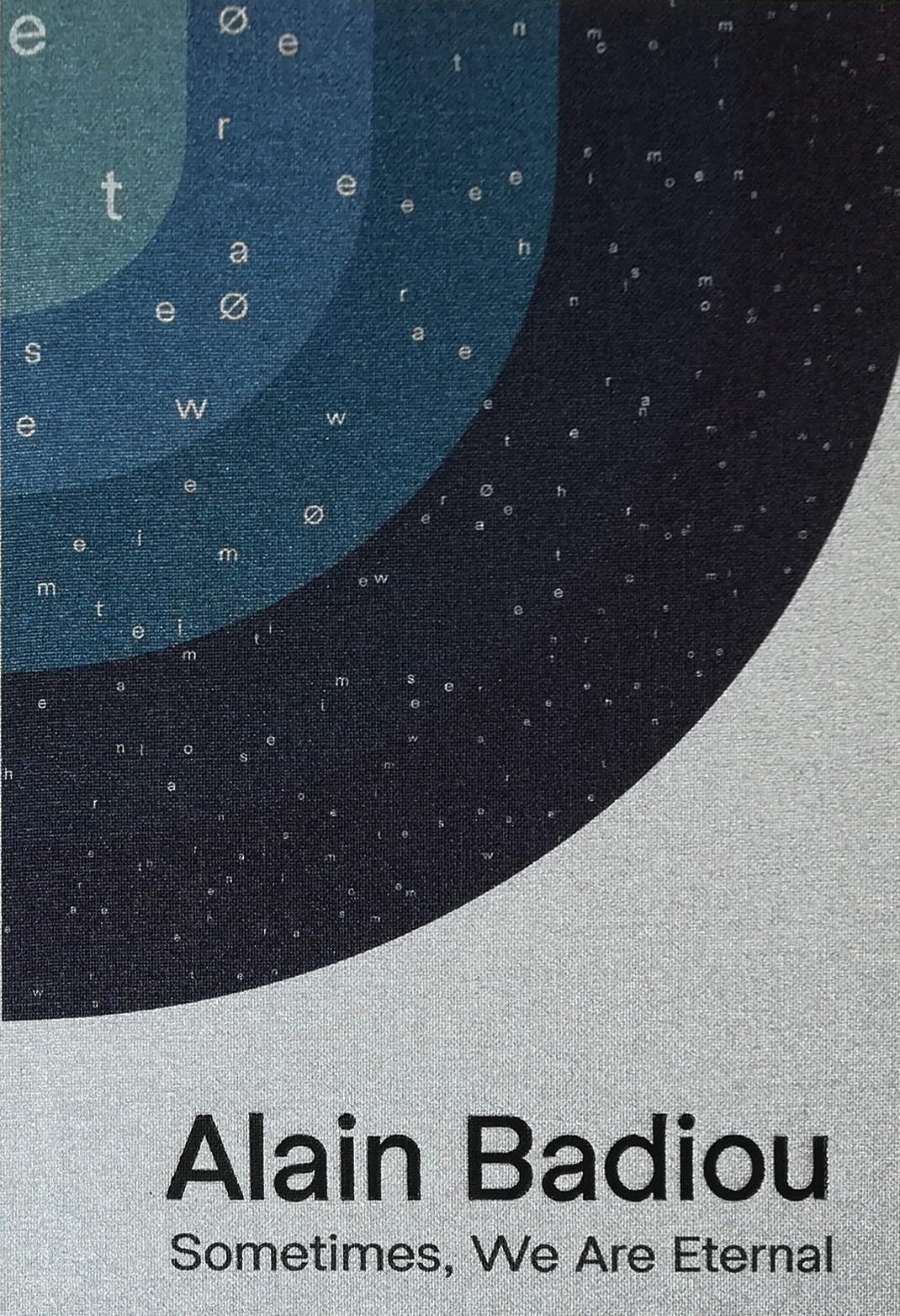
The book is published as a hardcover edition bound in a color-printed silver fabric and includes translucent graphic pages.
Alain Badiou (born 1937 in Rabat) is a French philosopher and playwright. He is a professor emeritus and former chair of the Department of Philosophy of the École Normale Supérieure in Paris and one of the founding members of the Faculty of Philosophy of the Université Paris VIII. His major works include
Being and Event (1988),
Logics of Worlds (2006) and
The Immanence of Truths (2018). His philosophical oeuvre connects continental and analytical philosophical traditions along with his reflections on set theory and contemporary mathematics.
See also
M=O? – Mathematics Equals Ontology?.