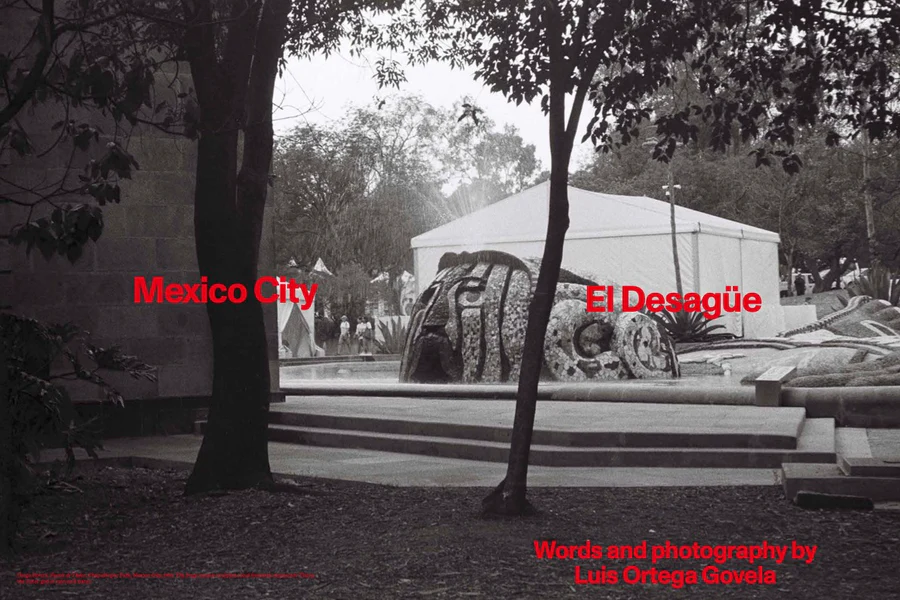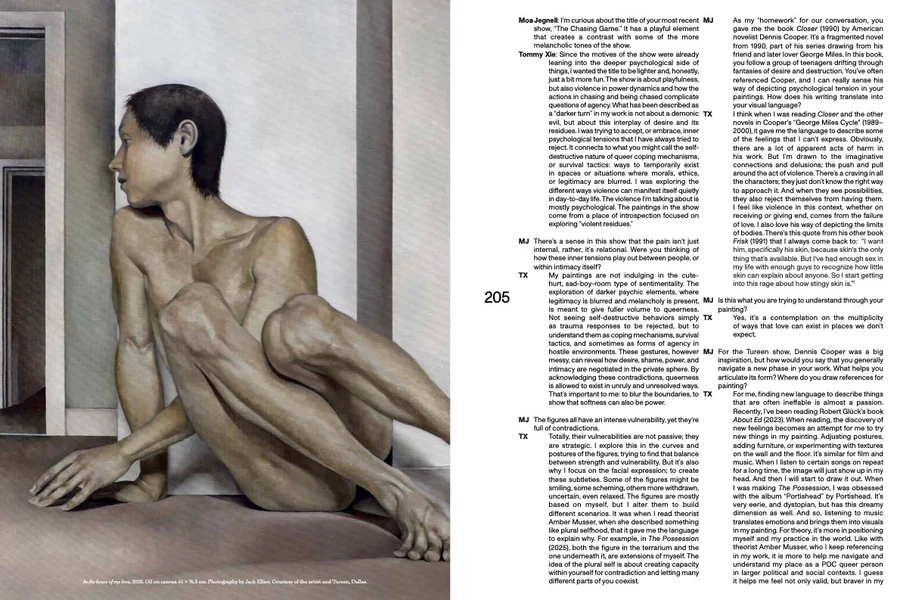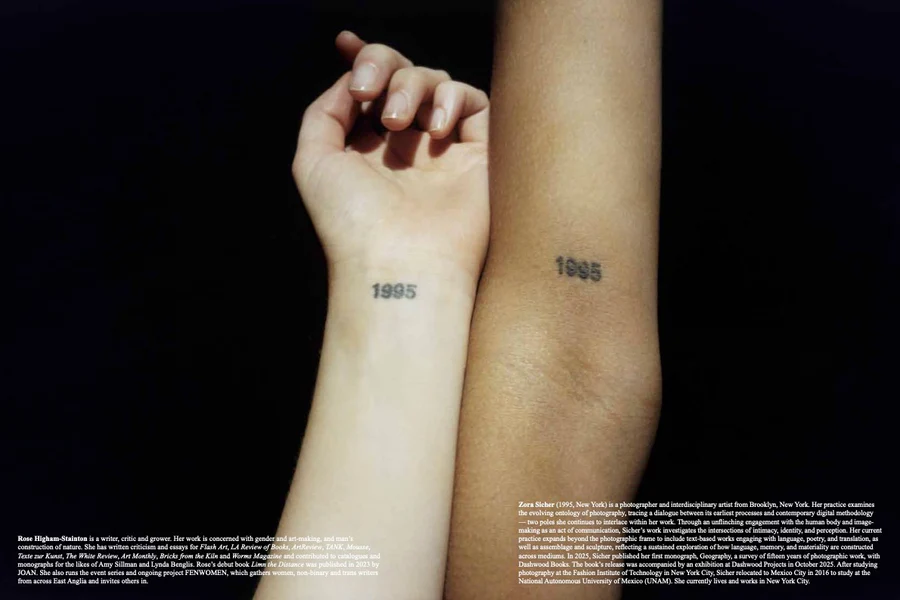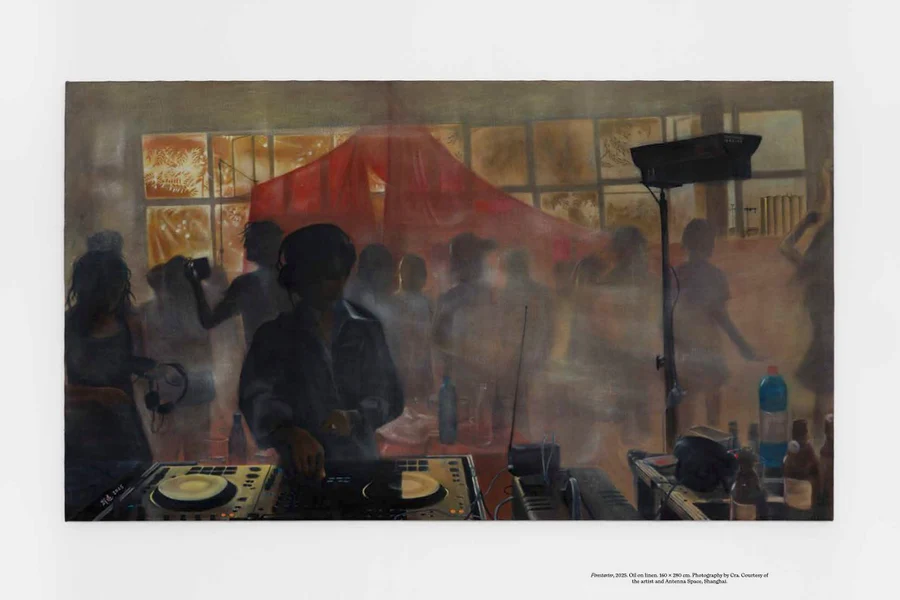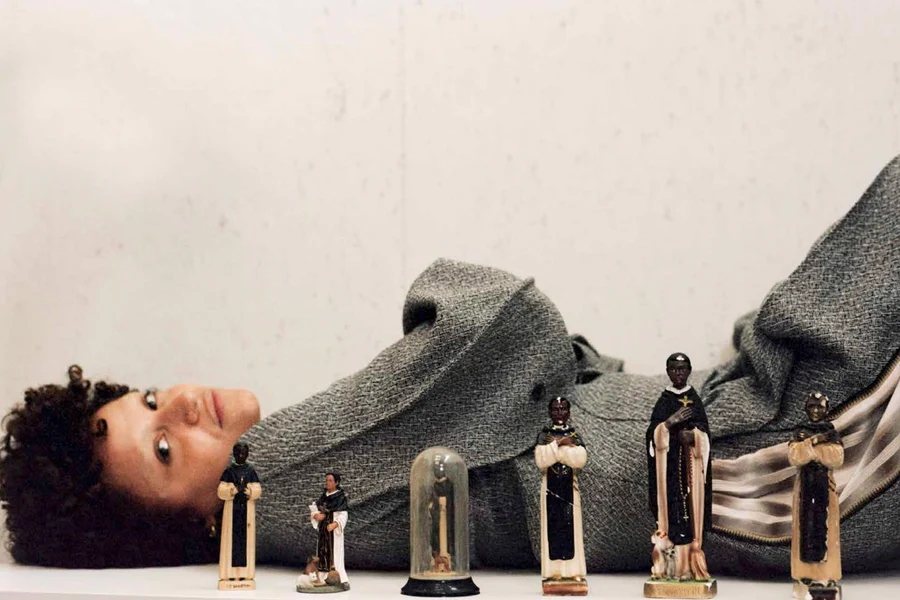
Rene Matić en conversation avec Bianca Stoppani ; Josiane M.H. & Emily Pozi ; Olivia Kan-Sperling en conversation avec Jamieson Webster ; Olivia van Kuiken par P. Eldridge ; Tasneem Sarkez par Leo Cocar ; focus sur Mexico City : El Desagüe par Luis Ortega Govela ; alfatih en conversation avec Jazmina Figueroa ; Ruoru Mou en conversation avec Olivia Aherne ; Adam Patrick Grant par Michela Ceruti ; Siyi Li par Margaret Kross ; Ruofan Chen par Matthew Lawson Garrett ; Megan Mi-Ai Lee en conversation avec Marie Catalano ; Tommy Xie en conversation avec Moa Jegnell ; davi de jesus do nascimento par Mateus Nunes ; un essai visuel de Zora Sicher (texte de Rose Higham-Stainton) ; comptes-rendus : « to ignite our skin » SculptureCenter, New York par Qingyuan Deng ; Basel Abbas & Rouanne Abou-Rahme « Prisoners of Love: Until the Sun of Freedom » Nottingham Contemporary par Amy Jones ;
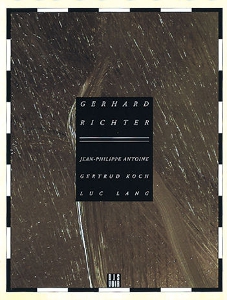
Gerhard Richter Fondation Louis Vuitton, Paris par Siobhan O'Leary ; Eleanor Antin « A Retrospective » Mudam, Luxembourg par Andreas Schlaegel ;
Cyprien Gaillard « Wassermusik » Haus der Kunst, Munich par Philipp Hindahl ; Tobias Pils « Shh » mumok, Vienna par Frank Wasser ;
Lutz Bacher « Burning the Days » Astrup Fearnley Museet, Oslo par Sonja Teszler...
We seem to pass through eras faster than we can name them, moving from one aesthetic threshold to the next long before we've had time to understand the last. In this continual churn, labels dissolve almost as soon as they appear, leaving us suspended in a state of cultural overexposure, where every "new wave" is both urgent and already outdated. "The z issue" emerges from this condition of perpetual motion: a moment to consider how art is shaped when time feels accelerated, identities feel fluid, and generational markers blur at the edges. Rather than searching for a definitive term to encapsulate the present, we turned to the artists who are living it most intensely—those under the age of thirty whose practices reveal an era not defined by a singular style but by a restless negotiation between authenticity and sacrifice, solitude and collaboration, the physical and the digital. Their work does not describe the times; it metabolizes them.
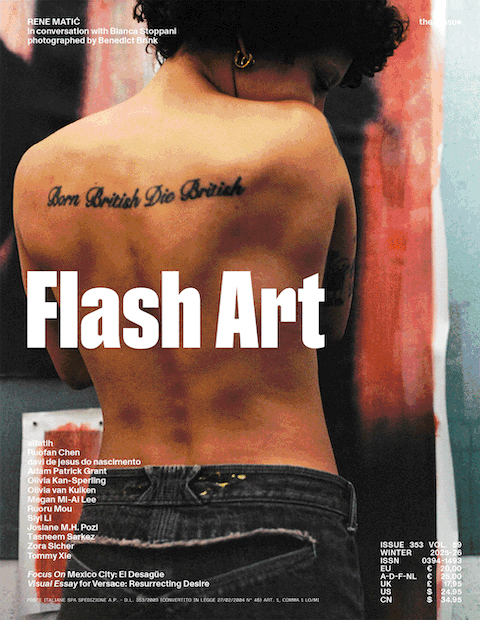
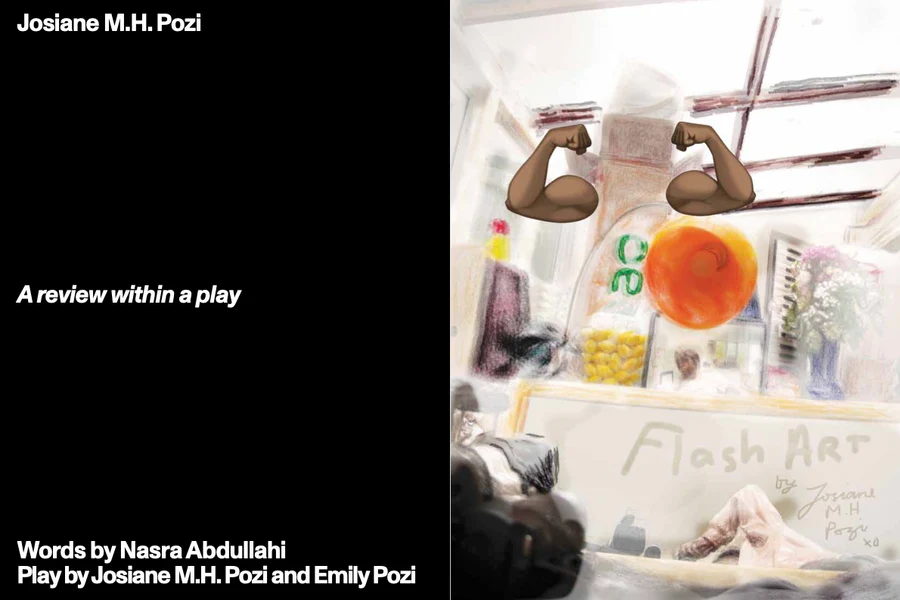
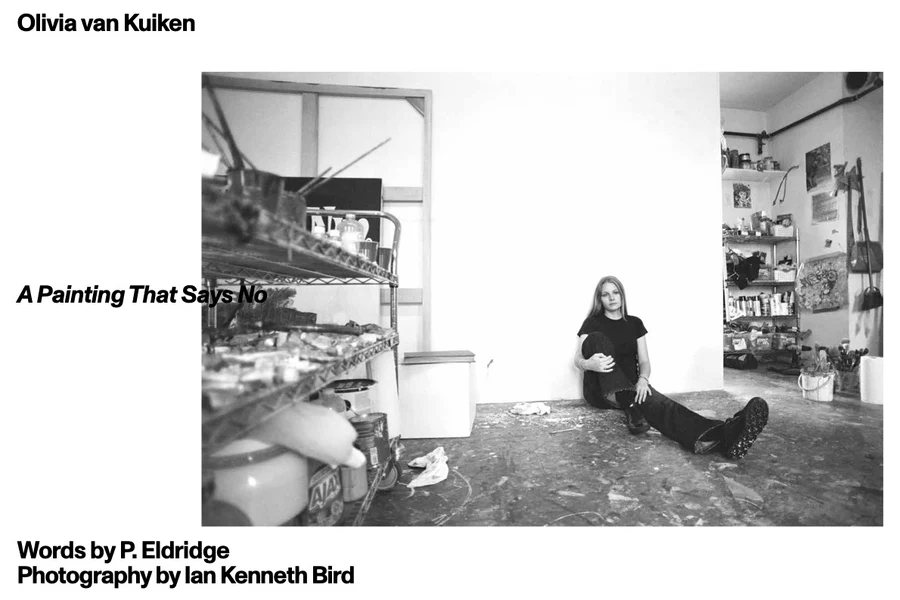
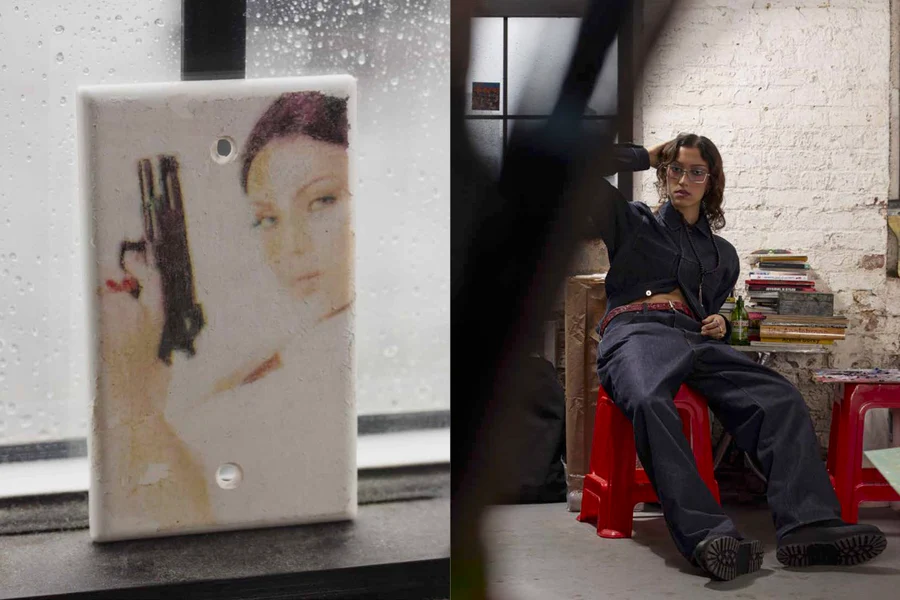
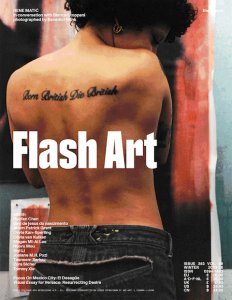
The winter issue gathers five cover stories that chart the shifting textures of a generation in motion. Rene Matić—photographed by Benedict Brink in their studio at Studio Voltaire in London, dressed in Kiko Kostadinov—joins Bianca Stoppani in a conversation in which love, memory, and disruption thread through reflections on belonging and faith. From the ferocity of This Is England to tender "beyond repair" Black dolls and self-portraits, they discuss how Matić turns political fracture into a search for the closest thing to freedom. Josiane M. H. Pozi, who created a new artwork titled in my home, in my studio, for flash art! (2025) for the occasion, moves between Nasra Abdullahi's lucid review of her show at Carlos/Ishikawa, London, and the bedroom play-script she performs with her sister Emily, until their voices merge into a single consciousness—a choreography of getting ready, in which clutter becomes ritual and attention becomes devotion. In New York, Olivia van Kuiken—photographed by Ian Kenneth Bird and wearing New Balance—anchors her cover story within P. Eldridge's exploration of how bodies, seams, and multiplied limbs smuggle duration into stillness. Through refusal, mess, and provisional meaning, Eldridge traces an ethics of looking where delay becomes the real timekeeper. Olivia Kan-Sperling, captured by Diane Severin Nguyen in New York wearing Commission, meets psychoanalyst Jamieson Webster on the shared terrain of modernism and psychoanalysis: dissolving narratives, unstable identities, and the hysteric's slippery relation to language. Calling her writing practice "hysteric literature," Kan-Sperling turns bad English, Orientalist kitsch, and fanfic desire into tools of self-sabotage and revelation, exposing the traps of authorship and representation. The final cover features Tasneem Sarkez—photographed by David Brandon Geeting in her New York studio, wearing Kuboraum eyewear and Stone Island—whom Leo Cocar frames as an artist who treats images like linguistic seeds: compressed objects and portraits behaving as morphemes of cultural meaning. Working in the gaps of translation shaped by her Libyan heritage and the Arab diaspora, Sarkez lets drabness flicker between specify and universality, withholding and revealing in equal measure.
Ce numéro paraît sous plusieurs couvertures différentes, distribuées aléatoirement.
Flash Art est un magazine international trimestriel dédiée à l'art contemporain, explorant les évolutions du paysage culturel à travers le travail d'artistes, d'écrivains, de curateurs et de diverses personnalités du monde de l'art, de la culture, de la mode, etc. L'un des plus anciens magazines d'art européens, Flash Art a été fondé à Rome en 1967 par le critique d'art et éditeur italien Giancarlo Politi, avant de s'installer à Milan en 1971. Originellement en langues italienne et anglaise, le magazine a été scindé en deux publications à partir de 1978 (Flash Art Italia et Flash Art International). Distribué dans le monde entier, le magazine, l'un des plus lus dans son domaine, fait aujourd'hui référence.